
San Niccolò
Quiet Oltrarno neighbourhood below Piazzale Michelangelo
The quiet eastern tip of the Oltrarno on the south bank of the Arno, with the Porta San Niccolò, wine bars and the climb to Piazzale Michelangelo and San Miniato al Monte.
Contents
Getting your bearings
San Niccolò is the eastern part of the Oltrarno on the south bank of the Arno. Broadly defined, the neighbourhood runs from the Ponte Vecchio along the Lungarni to Piazza Ferrucci and up the slopes below Piazzale Michelangelo and the Forte di Belvedere. From the Ponte Vecchio, Via de' Bardi heads east and continues past Piazza Santa Maria Soprarno and Piazza de' Mozzi into Via di San Niccolò.
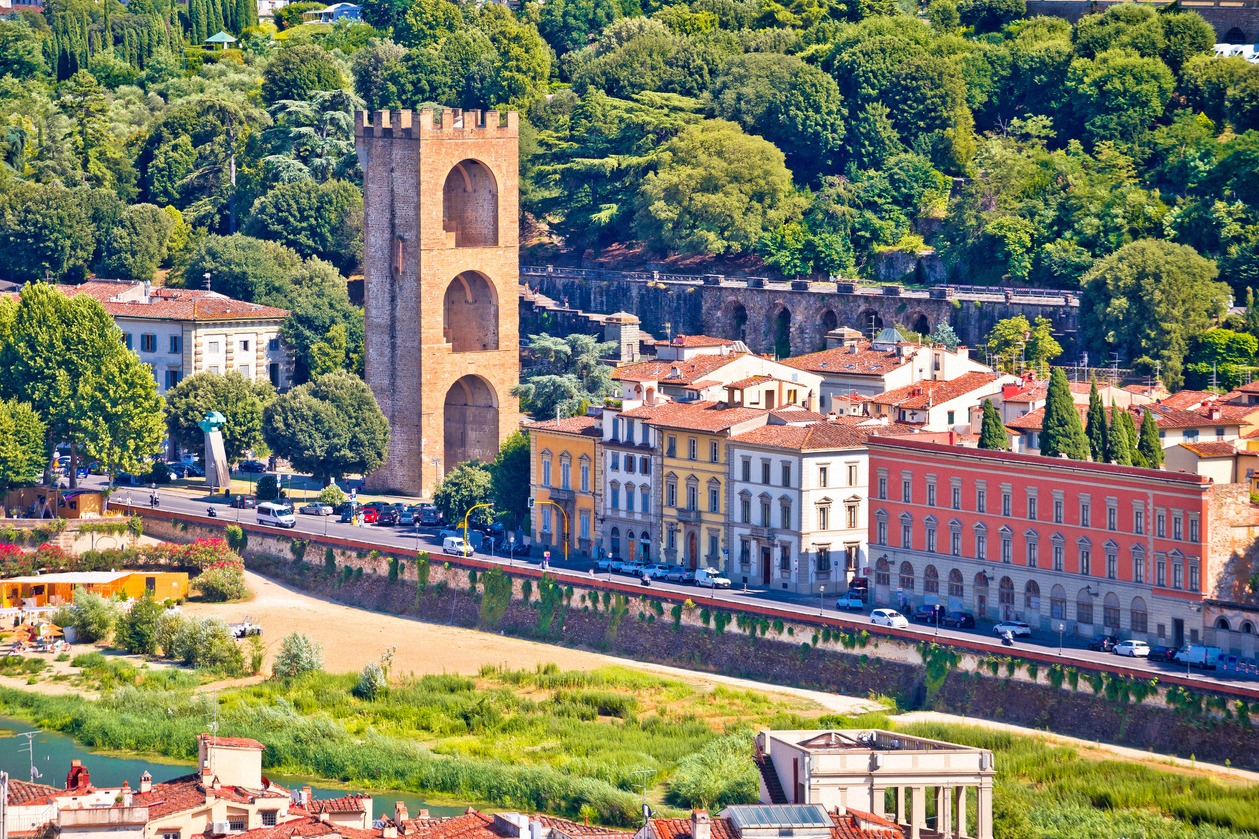
At the eastern end, on Piazza Poggi, stands the Porta San Niccolò, a gate tower built in 1324 to defend the Oltrarno. Today it is free-standing, cut off from the city wall. It is the only city gate in Florence to have kept its original height. A little further on, a stretch of the old city wall survives, including the Porta di San Miniato.
The quiet side of the Arno
San Niccolò lies off the main tourist routes. Plenty of craft workshops still operate in its lanes, and in the evening the pubs, restaurants, trattorias and wine bars fill up. The view across the river takes in the centre, yet the neighbourhood itself stays small-scale and quiet.
Reminders of the city's history turn up on many street corners. The church of Santa Maria de' Bardi once stood on Piazza Santa Maria Soprarno; it was closed in 1785 and demolished between 1869 and 1870, the years when Florence was the capital of Italy. Above the neighbourhood is the Forte di Belvedere, built by Bernardo Buontalenti for Ferdinando I in 1590.
Key sights
The main walk here leads uphill. From Piazza Poggi the ramps climb to Viale Michelangelo, a sequence of steps, grottoes and fountains that Giuseppe Poggi designed along with the avenue itself. They are lit at night. If you would rather stay on the road, take Via del Monte alle Croci. At the top is Piazzale Michelangelo, completed in 1875 to Poggi's design, with a bronze copy of Michelangelo's David. Five to ten minutes further uphill stands the Romanesque church of San Miniato al Monte, whose front terrace offers almost the same view, only quieter.
In the neighbourhood itself, the Museo Stefano Bardini stands on Piazza de' Mozzi. The Giardino Bardini, named after the same antiques dealer, is a terraced garden on the hillside with a Baroque staircase, an English woodland garden and a wisteria pergola. Its entrances are at Via dei Bardi 1 rosso and Costa San Giorgio 2.
Getting there
San Niccolò is within walking distance of the centre: cross the Ponte Vecchio and follow the south bank east. The climb up the ramps and steps to Piazzale Michelangelo takes a good 15 to 20 minutes, steep but short. If you would rather not walk, take the bus: circular routes 12 and 13 run up the hill in opposite directions and stop at the Piazzale, roughly every 15 to 20 minutes during the day. Bus 12 comes from Santa Maria Novella station, and you can catch the 13 close to the centre at Ponte alle Grazie. Routes and tickets are covered in the Public Transport in Florence guide.
Who it suits and when to go
San Niccolò is at its best in the late afternoon. That leaves time for the climb, for sunset at the Piazzale, which is very crowded at that hour, and for vespers with Gregorian chant, which begin daily at 18:30 at San Miniato. Afterwards, head back down into the neighbourhood and round off the evening in its bars and restaurants. For a quieter Piazzale, come early in the morning.
From late March into April the wisteria pergola in the Giardino Bardini is in bloom, though the peak lasts only about ten days. On the evening of 24 June, the feast of the city's patron saint, the traditional ‘fochi’, fireworks over the city, are set off from the Piazzale. And if you want to combine gardens, a palace and views, pair San Niccolò with the Oltrarno for a full day south of the Arno.
Around San Niccolò
Piazzale Michelangelo
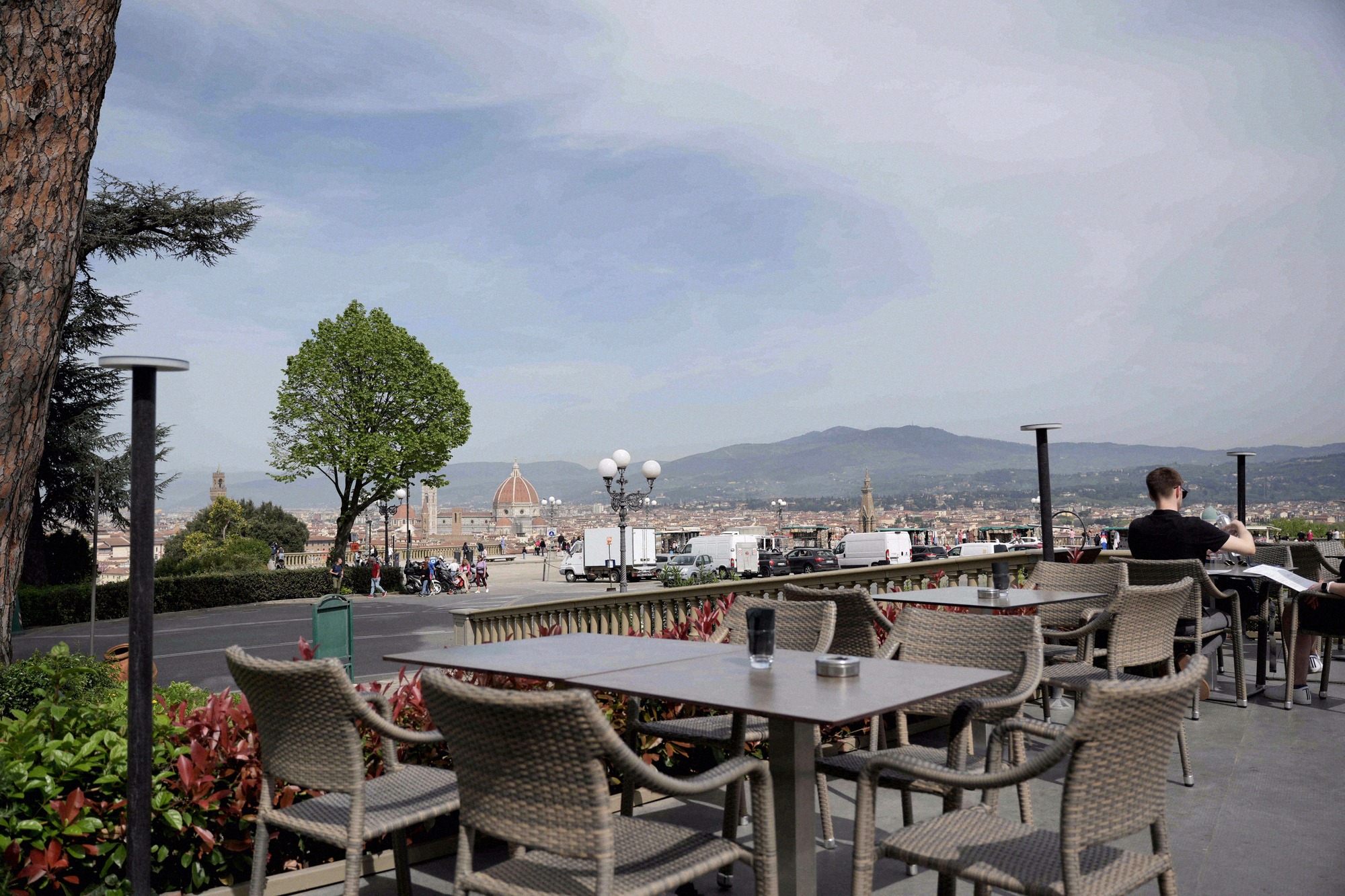
Florence's most famous viewpoint above the south bank of the Arno, the panorama with the Duomo, Palazzo Vecchio and the bridges, free to enter and best at sunset.
San Miniato al Monte
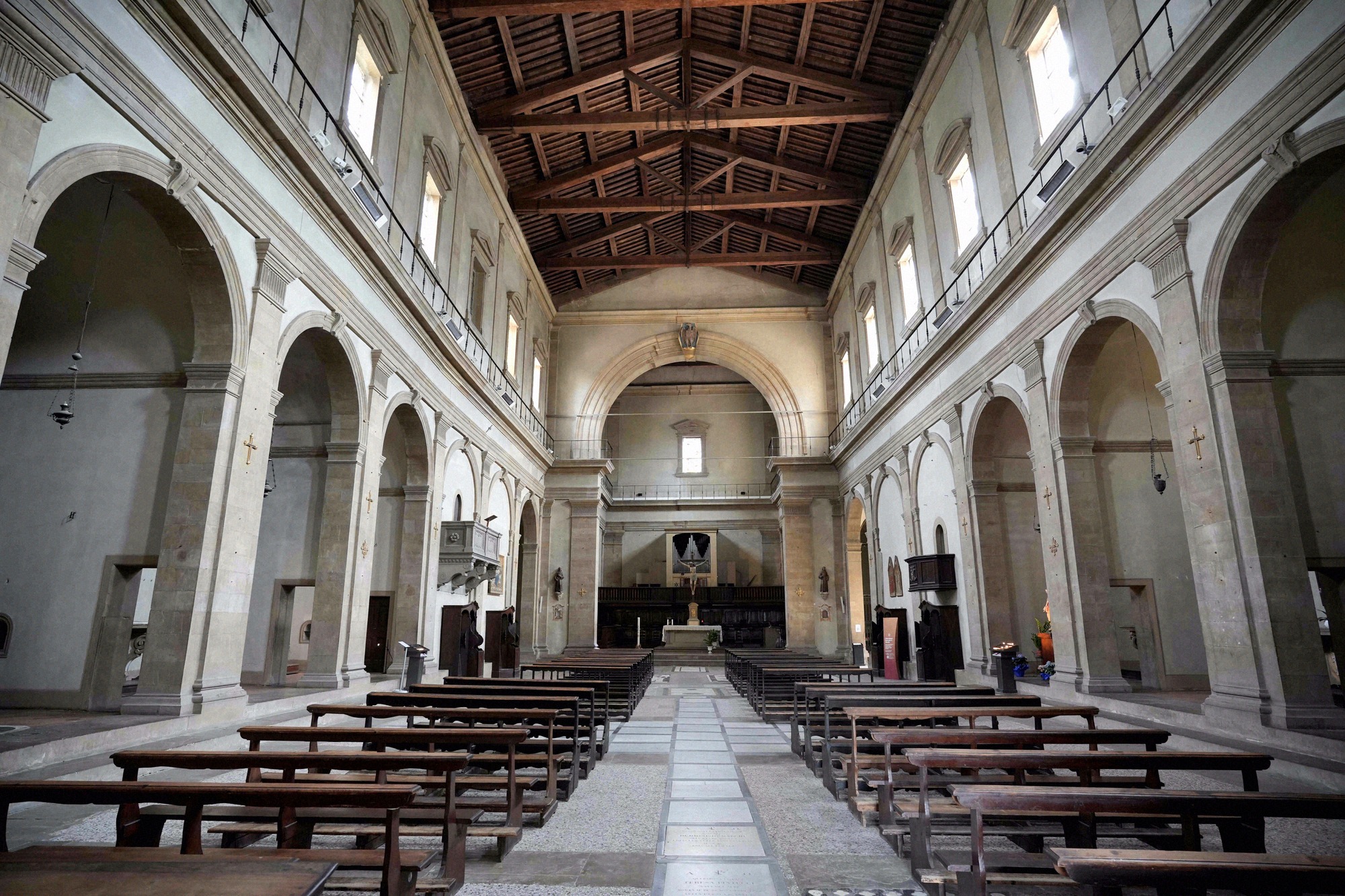
The Romanesque hilltop church above Piazzale Michelangelo is one of Italy's finest, with a marble facade, golden apse mosaic and daily Gregorian vespers.
Giardino Bardini
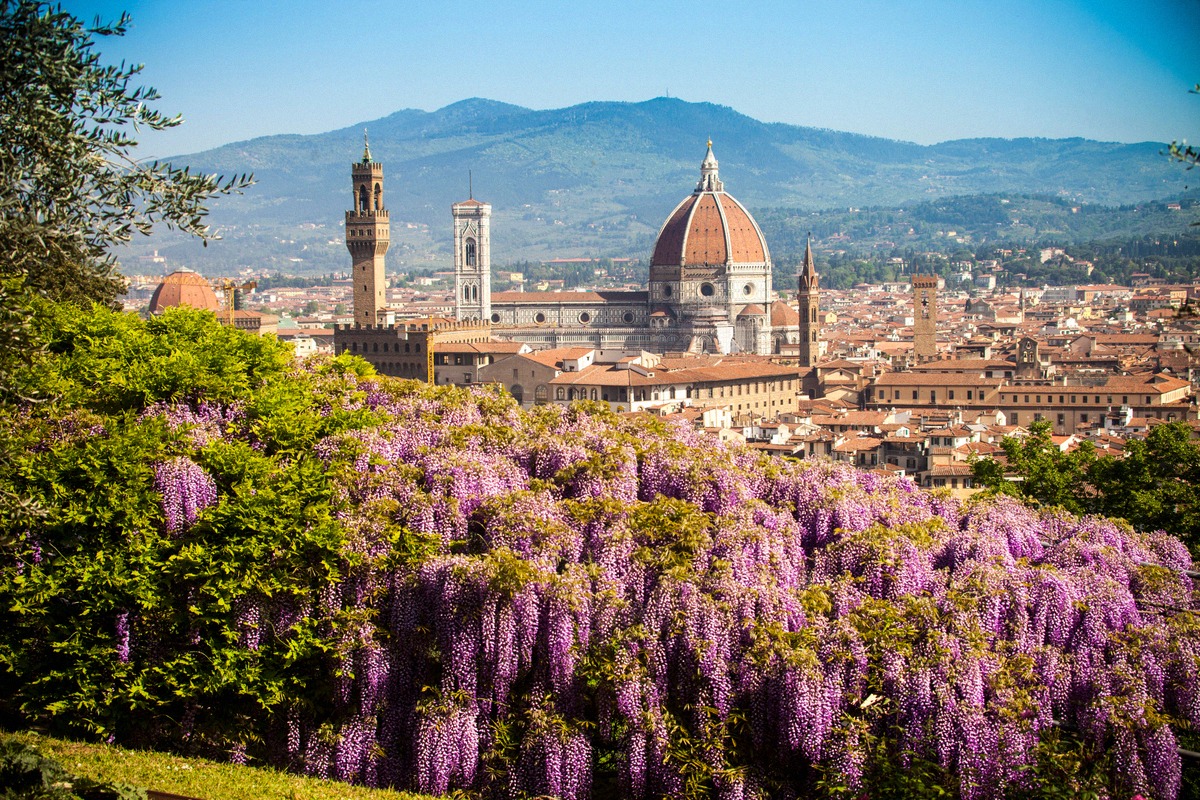
This quiet terraced garden in the Oltrarno combines a Baroque staircase, the famous wisteria pergola and one of Florence's finest, most relaxed rooftop views.