
With audio guide
Palazzo Pitti with the Palatine Gallery
Reserved entry to Palazzo Pitti with the Palatine Gallery and the palace's other museums, plus a digital audio guide to Florence.
4.5 (1,157) · Tiqets
From €24
Book TicketMedici palace with seven museums in the Oltrarno
The Medici family's vast Renaissance palace in the Oltrarno now houses seven museums under one roof, led by the Galleria Palatina and its world-leading Raphael collection.
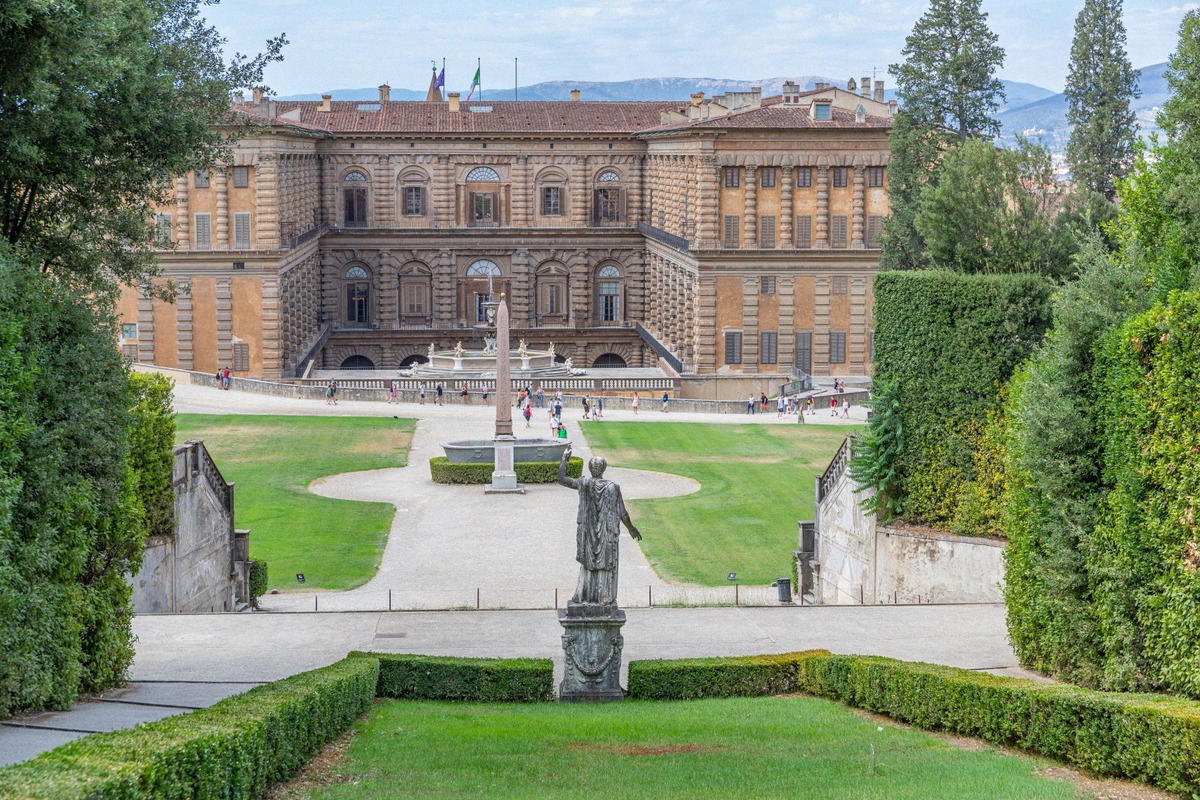
Tickets
With audio guide
Reserved entry to Palazzo Pitti with the Palatine Gallery and the palace's other museums, plus a digital audio guide to Florence.
4.5 (1,157) · Tiqets
From €24
Book TicketThe Palazzo Pitti is the city's most imposing palace, a massive Renaissance building in the Oltrarno district on the far side of the Arno, just a few minutes from the Ponte Vecchio. Behind its stern, rusticated stone facade lies not a single museum but an entire complex: seven collections under one roof, plus the sprawling Giardino di Boboli, which climbs the hillside directly behind the palace.
Unlike the Uffizi, the Pitti is rarely besieged by queues. If you want to see some of Florence's most celebrated paintings without fighting through packed rooms, this is often the better choice. The Galleria Palatina alone justifies the visit, it holds the world's largest concentration of works by Raphael.
Construction began in 1458 for the Florentine banker Luca Pitti (1398-1472), a rival of the Medici; the palace was left unfinished at his death. The turning point came in 1549, when none other than Eleonora di Toledo, wife of Cosimo I de' Medici, bought the building and made it the main residence of the Grand Duchy of Tuscany. Over the following centuries the Medici kept expanding the palace and laid out the Boboli Gardens behind it.
After the Medici line died out, the Pitti served the Lorraine dukes and then, in 1865, when Florence briefly became the capital of a newly unified Italy, Vittorio Emanuele II of the House of Savoy used it as a royal residence. That triple history, banker, grand dukes, kings, is still palpable in every room, from the private-collection feel of the Galleria Palatina to the grand state apartments.
The palace isn't a single continuous route but a sequence of independent collections. The main ones:
You don't need to see everything. If time is short, focus on the Galleria Palatina and the apartments and skip the rest.
The Palazzo Pitti is open Tuesday to Sunday, 8:15 to 18:30, and closed on Mondays. These hours apply year-round with no seasonal variation; the ticket office closes an hour before the museum itself. It's also closed on 1 January and 25 December.
A single ticket costs €16 on the day at the venue, or €19 booked online in advance (including a €3 booking fee). Reduced-price entry, including for EU citizens aged 18 to 25, is €3; admission is free for defined groups such as under-18s and on the first Sunday of every month. Tickets are issued in your name and handled by the Galleria degli Uffizi, book via tickets.uffizi.it, the call centre or the museum ticket desks on site. A reservation is compulsory for the Imperial and Royal Apartments.
If you're also taking in the neighbouring Boboli Gardens, the combined Palazzo Pitti and Boboli ticket is better value: €22 on the day, €25 booked in advance, valid for one day and including the Giardino Bardini. If you also want to see the Uffizi within five days, the PassePartout (Uffizi, Pitti and Boboli) at €40 comes with priority entry.
For 2026: the Saturn Room in the Galleria Palatina was temporarily closed from February to May, and the Treasury of the Grand Dukes on the mezzanine remains closed until further notice. It's worth checking the official notices before you go, as strikes can also affect individual days.
Allow 2 to 3 hours for the palace alone, or a good half day combined with the Boboli Gardens. Mornings are the most pleasant time to visit; queues like those at the Uffizi are rare here, which makes the Pitti the calmer alternative.
The palace stands at Piazza dei Pitti 1 in the Oltrarno, south of the Arno. The Pitti bus stop right outside the entrance is served by several lines (including 11, C3, C4, 6A/6B and 23); the tram doesn't run directly there, and the nearest tram stop is about a 15-minute walk away. Since the Oltrarno is largely a traffic-restricted ZTL zone, walking or taking the bus makes more sense than driving, more on this in the public transport guide.
The Pitti pairs naturally with the Giardino di Boboli right behind it and the quieter Giardino Bardini; from there it's a short climb up to San Niccolò and the Piazzale Michelangelo. That makes it easy to build a full day in the Oltrarno around the palace, gardens and viewpoint. If you're interested in the painters featured in the Galleria Palatina, the art guide has more background; for tips on booking ahead, see the ticket guide.
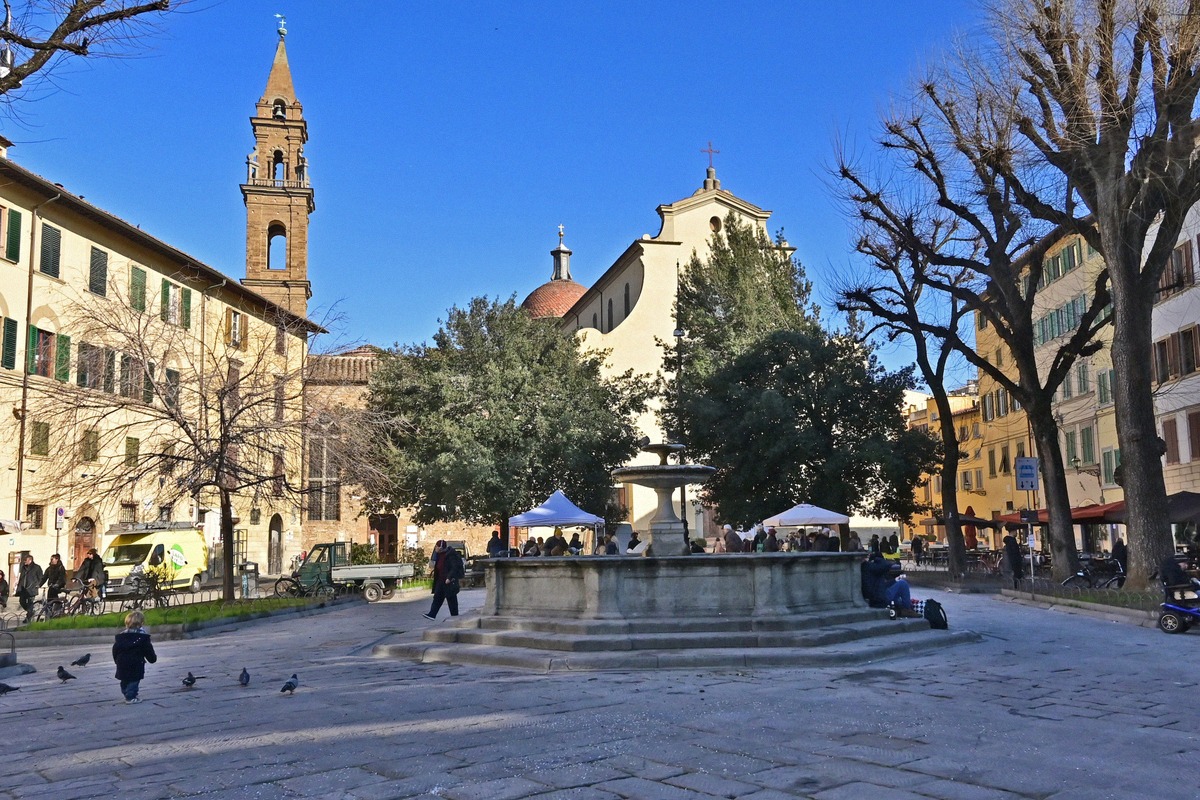
The relaxed heart of Florence's artisan quarter, built around an octagonal fountain, a neighbourhood market by day, a gathering spot by night, plus a Michelangelo crucifix inside the basilica.
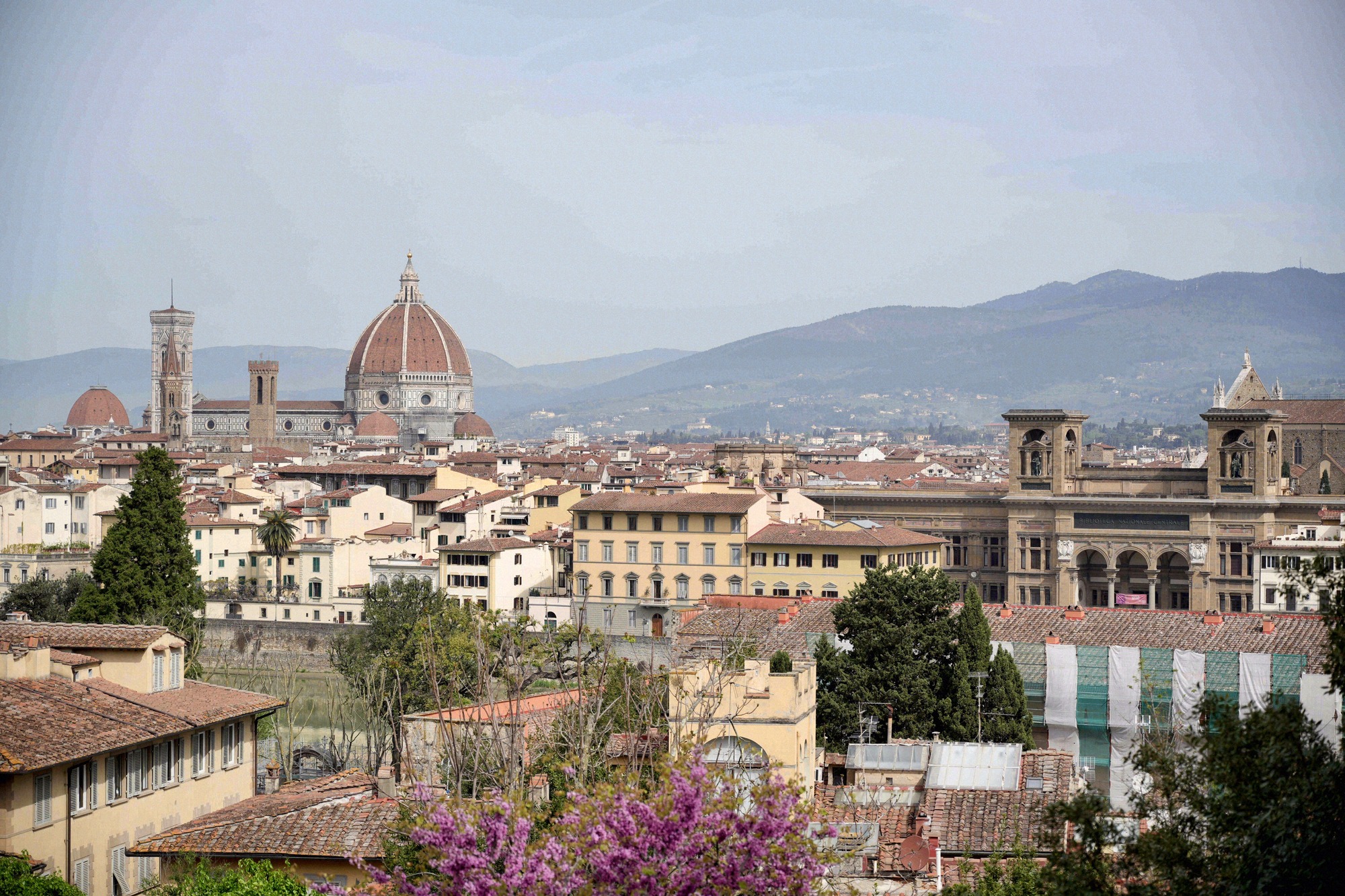
The Boboli Gardens behind the Palazzo Pitti are a textbook Renaissance garden, terraces, statues, grottoes and open views over the rooftops of Florence.
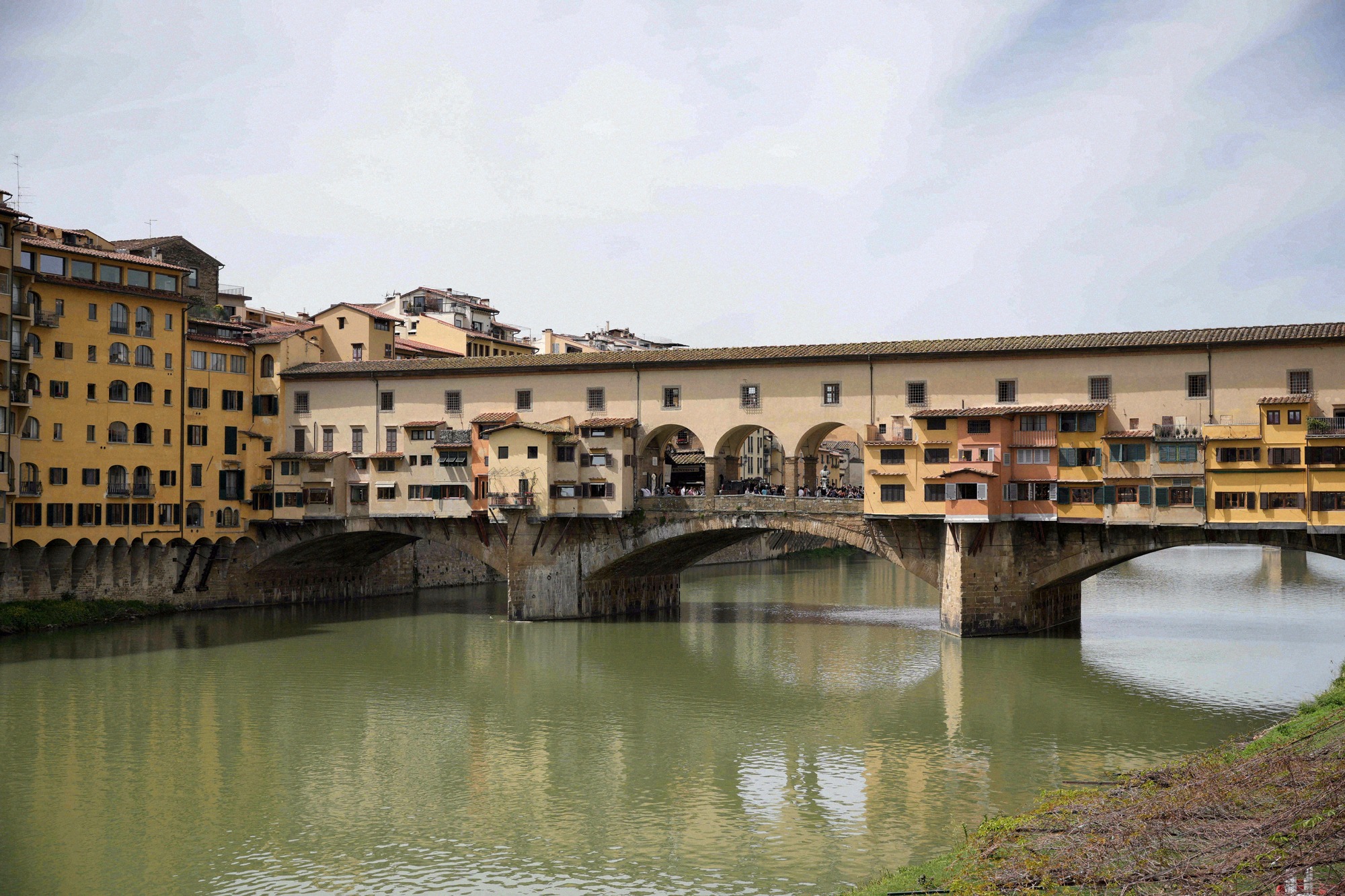
The Ponte Vecchio is Florence's oldest bridge, still lined with small goldsmiths' shops since 1593, with the reopened Vasari Corridor running above the Arno.
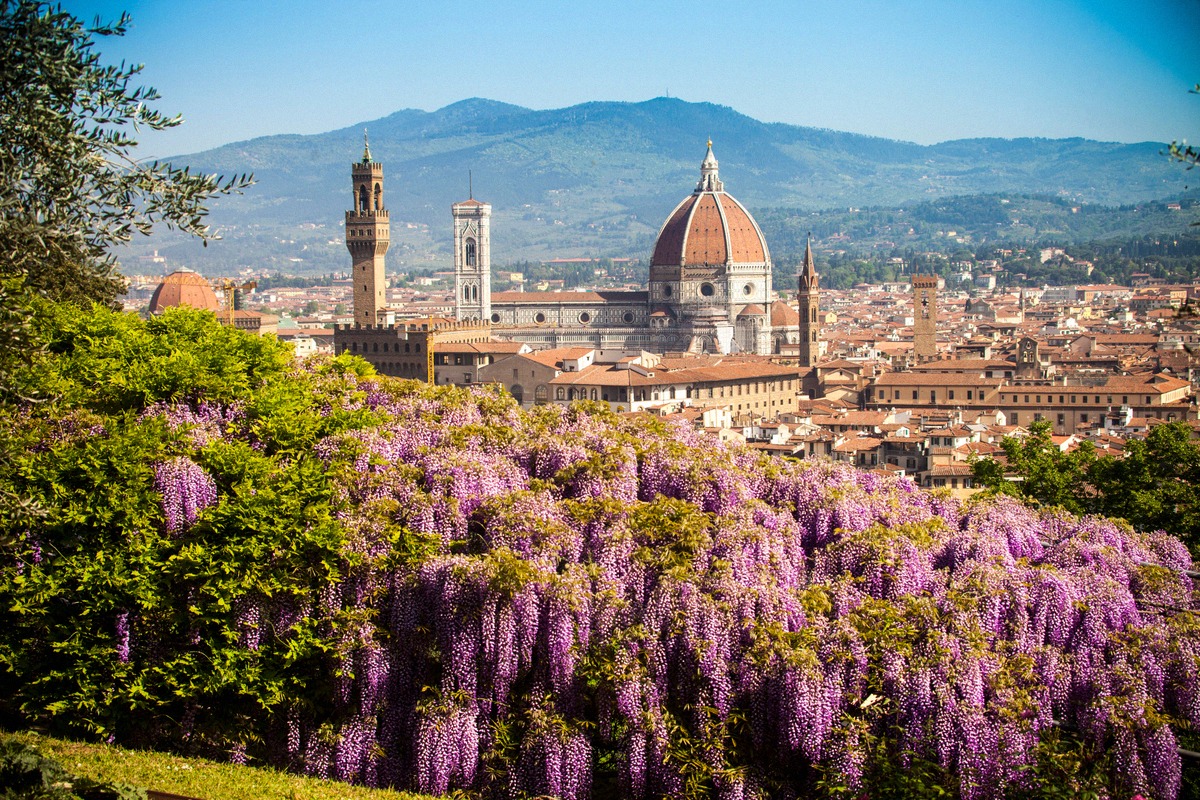
This quiet terraced garden in the Oltrarno combines a Baroque staircase, the famous wisteria pergola and one of Florence's finest, most relaxed rooftop views.
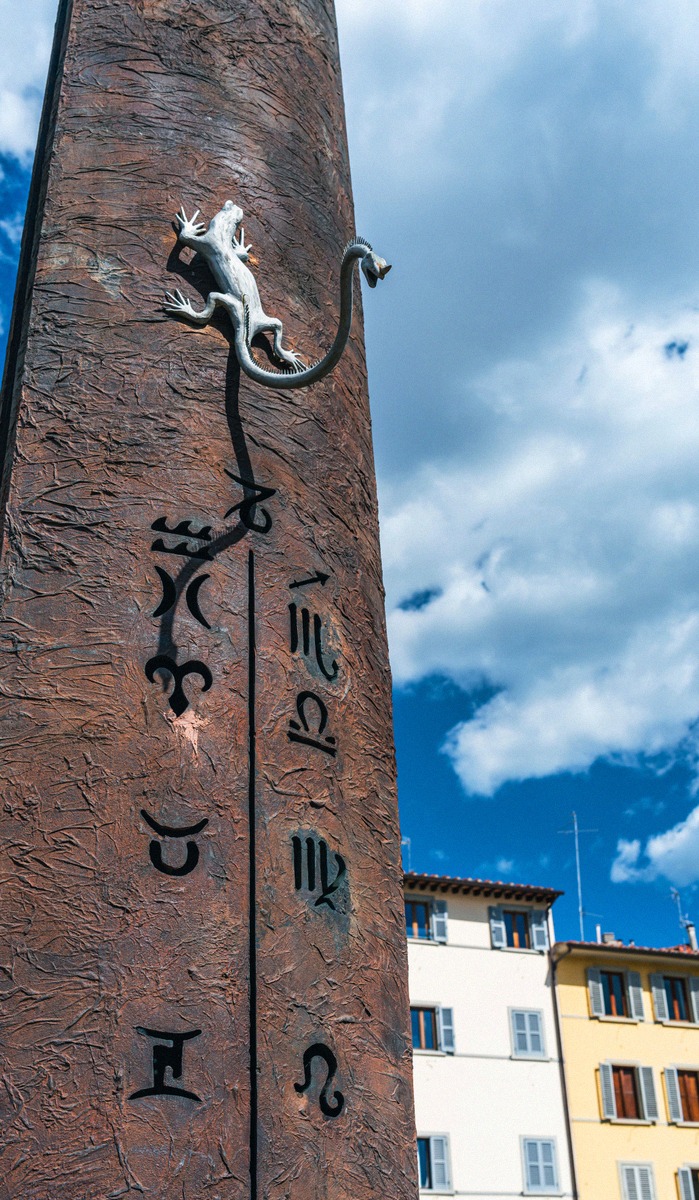
Right on the Arno behind the Uffizi, this science museum displays over 1000 historic instruments, ornate globes and Galileo's only two surviving telescopes.
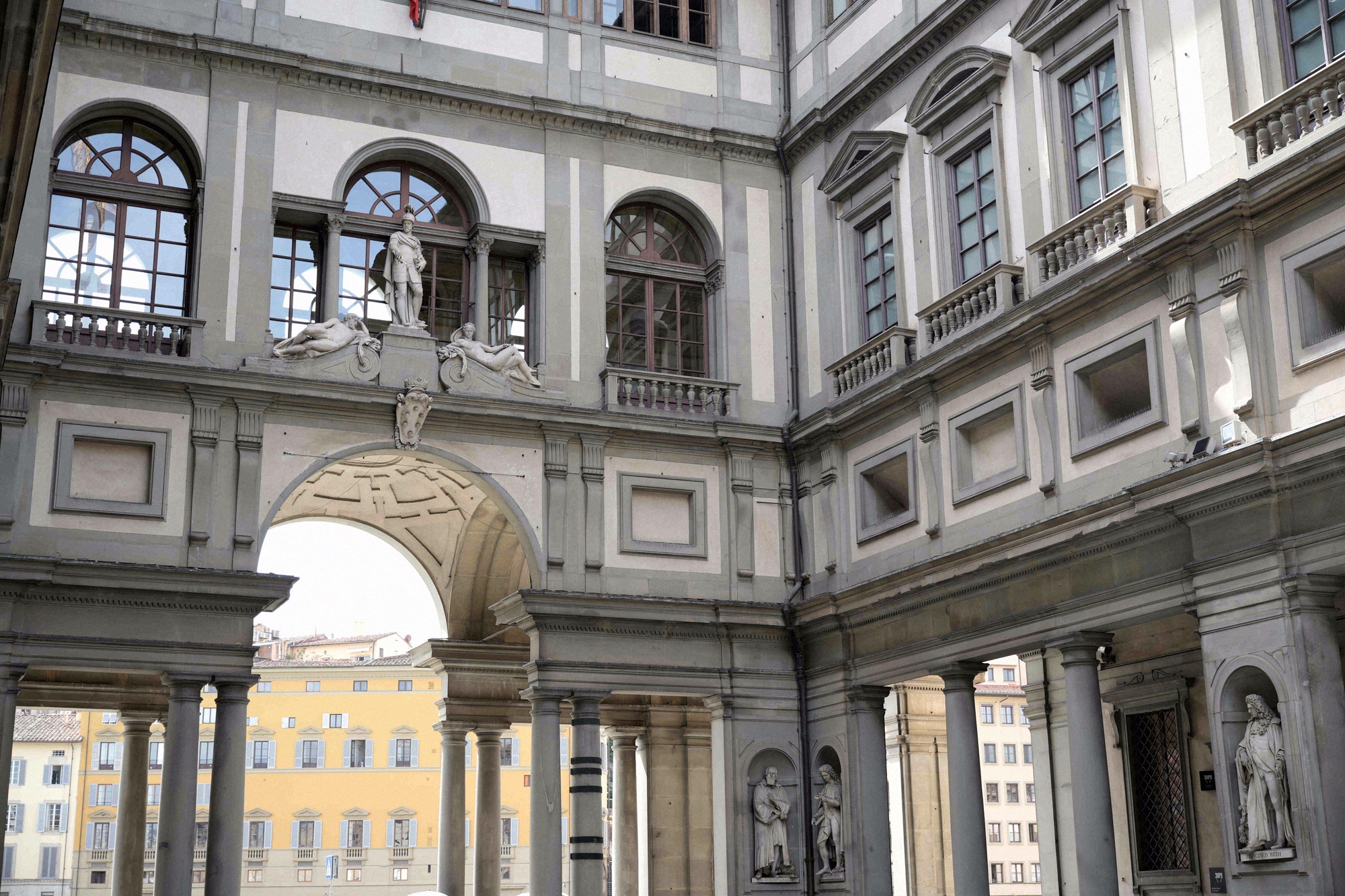
The Uffizi Gallery holds the world's finest Renaissance collection - Botticelli, Leonardo, Raphael, Caravaggio. Book a timed-entry ticket in advance.