
Uffizi
Uffizi admission
Entry to the Galleria degli Uffizi and its Renaissance rooms.
From €39
Book TicketRenaissance gallery of the Medici on the Arno
The Uffizi Gallery holds the world's finest Renaissance collection - Botticelli, Leonardo, Raphael, Caravaggio. Book a timed-entry ticket in advance.
Tickets
Uffizi
Entry to the Galleria degli Uffizi and its Renaissance rooms.
From €39
Book TicketWith the Vasari Corridor
Entry to the Uffizi and a reserved walk through the Vasari Corridor across the Ponte Vecchio.
From €79
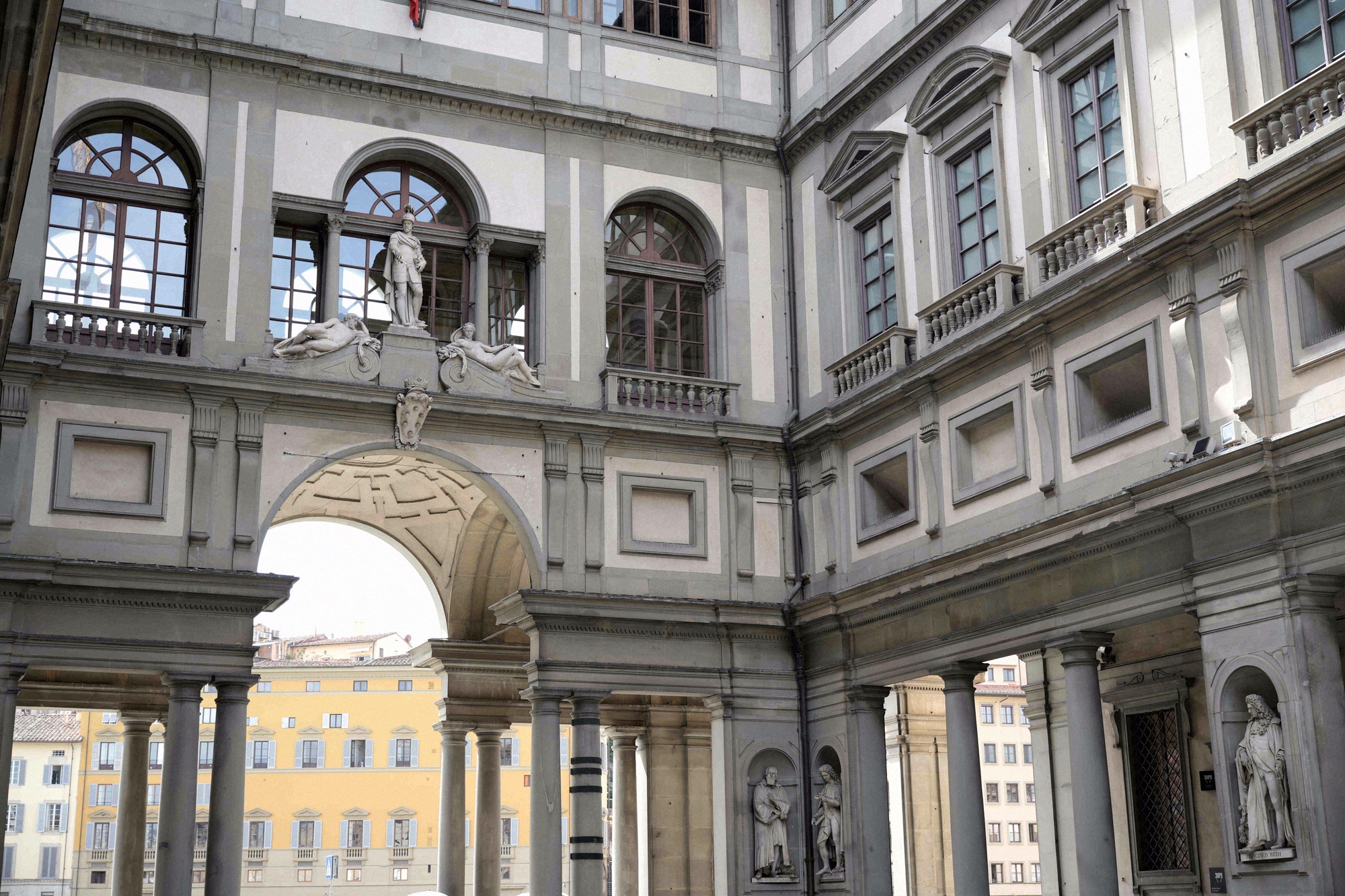
Book TicketThe Uffizi Gallery (Galleria degli Uffizi) is one of the world's most famous art museums and holds the most important collection of Renaissance art anywhere. It is housed in the former administrative building of the Medici, the Italian uffizi simply means "offices", which Giorgio Vasari built from 1560 for Cosimo I. The gallery runs as a long, light-filled corridor across the top floor of two wings, with windows looking out over the Arno and the rooftops of the old town.
The Medici family's private art collection became a public museum in 1769, one of the oldest in the world. Its future was secured by Anna Maria Luisa de' Medici, the last of her line, who in 1743 stipulated by contract that the collection could never leave Florence. Thanks to this "Patto di famiglia" (family pact), the city's art treasures have remained here ever since.
The collection is arranged chronologically, running from the medieval period through to the Baroque. The most famous rooms belong to Sandro Botticelli: here hang The Birth of Venus and Primavera, two of the most reproduced paintings in art history. Right next door is Leonardo da Vinci's early Annunciation and his unfinished Adoration of the Magi.
Further on is Michelangelo's Doni Tondo, his only completed panel painting in Florence, along with Raphael's Madonnas and portraits, Titian's Venus of Urbino, and two key works by Caravaggio, the Medusa Shield and Bacchus. There are also works by Giotto, Piero della Francesca, Dürer and Rembrandt. For background on the period and its artists, see the guide Renaissance Art.
Since December 2024 the Vasari Corridor has also reopened, the elevated passage almost a kilometre long that Vasari built in 1565 so the Medici could cross unseen from the Uffizi over the Ponte Vecchio to the Palazzo Pitti. After an eight-year restoration it now operates as a step-free panoramic walkway across the river, by separate reservation only, with a maximum of 25 people per group.
Visiting without a reservation is possible but unwise: the queues outside the entrance are among the longest in the city. A timed-entry ticket is effectively the only way to skip the line, there is no separate fast-track fare.
Combined and multi-day tickets are available across several venues: the Uffizi plus the Vasari Corridor for €43 (€47 in advance), or the corridor alone for €20 (€24 in advance). The 5-day PassePartout covering the Uffizi, Pitti and Boboli costs €40, or €58 with the corridor included. For how to secure tickets for Florence's museums in time, see the guide Booking Tickets; whether a pass is worth it for a longer stay is covered in the Firenze Card guide.
The gallery is open Tuesday to Sunday from 8:15 to 18:30, with last entry at 17:30. Closed on Mondays, as well as on 1 January and 25 December. There is no seasonal summer/winter schedule, these hours apply all year round.
The most relaxed time to visit is at first entry, 8:15, before the day's tour groups arrive, or from 16:00, when the afternoon discount also applies. Midweek and the low season mean shorter queues. Allow 2.5 to 3.5 hours for a full visit, this is a practical estimate rather than an official figure, and if time is short the collection can comfortably be narrowed down to the Botticelli, Leonardo and Caravaggio rooms.
The Uffizi sits right on Piazza della Signoria, next to the Palazzo Vecchio, in the heart of the Centro Storico. From the entrance it's a short walk to the Ponte Vecchio, over which the Vasari Corridor leads to the Palazzo Pitti and the Boboli Gardens in the Oltrarno.
That makes the gallery the natural centrepiece of a full day in the old town: the Uffizi in the morning, followed by the Palazzo Vecchio and the cathedral, or a walk across the Arno to the quieter district on the far bank. If you want to see Michelangelo's marble masterpiece, pair the visit with the Accademia Gallery, advance reservation is compulsory there too. For a compact overview of Florence's key sights, see Attractions in Florence.
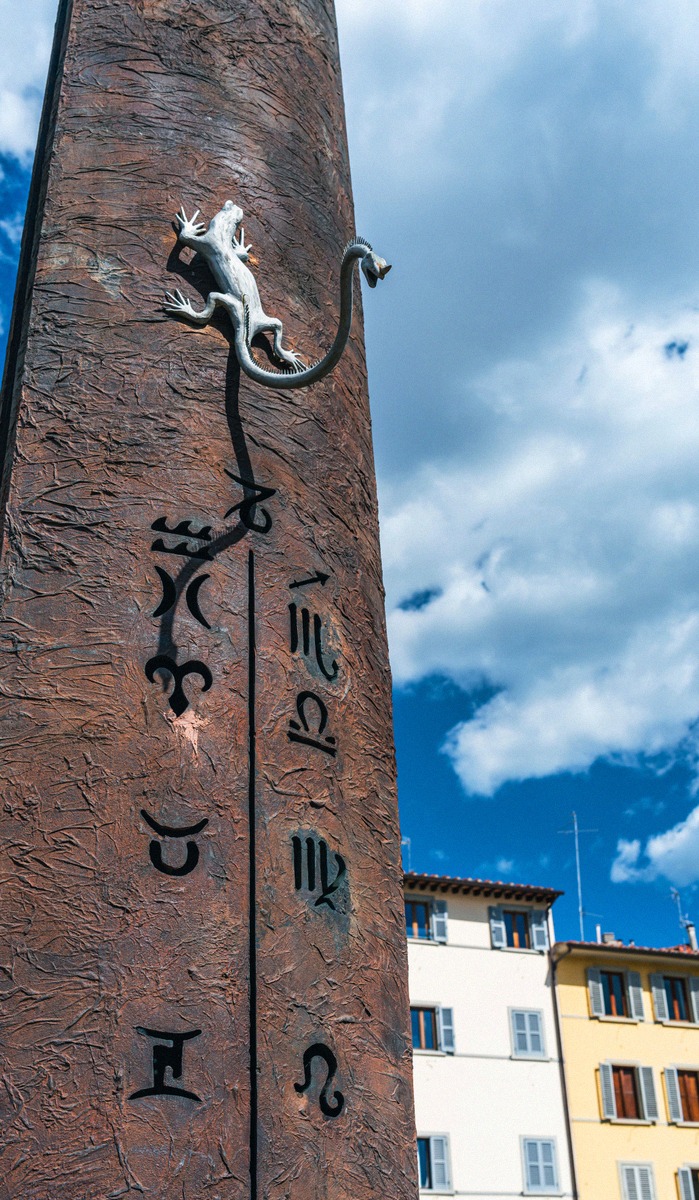
Right on the Arno behind the Uffizi, this science museum displays over 1000 historic instruments, ornate globes and Galileo's only two surviving telescopes.
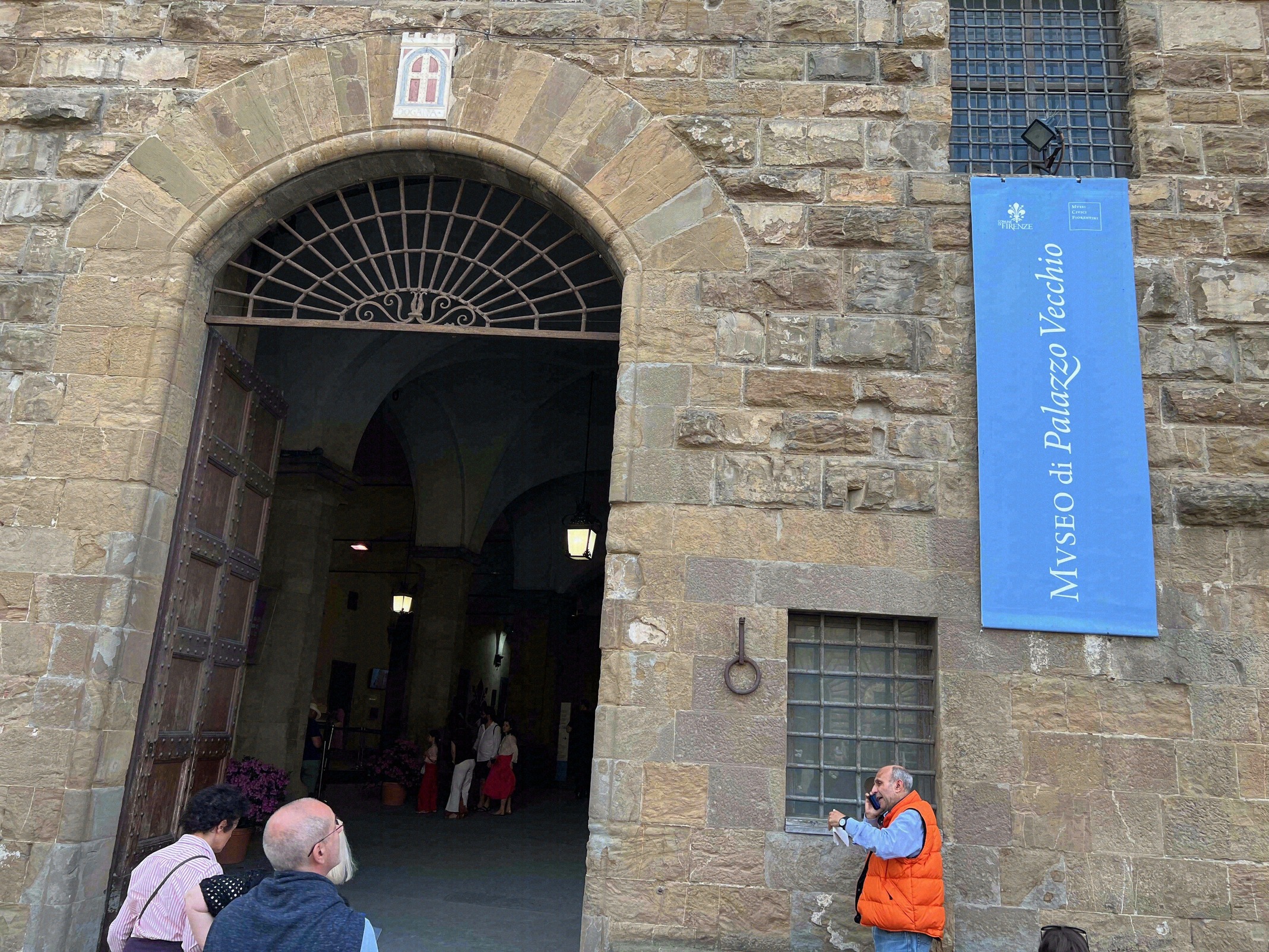
Palazzo Vecchio on Piazza della Signoria has been Florence's town hall since the 14th century, home to the Hall of the Five Hundred and the Torre di Arnolfo.
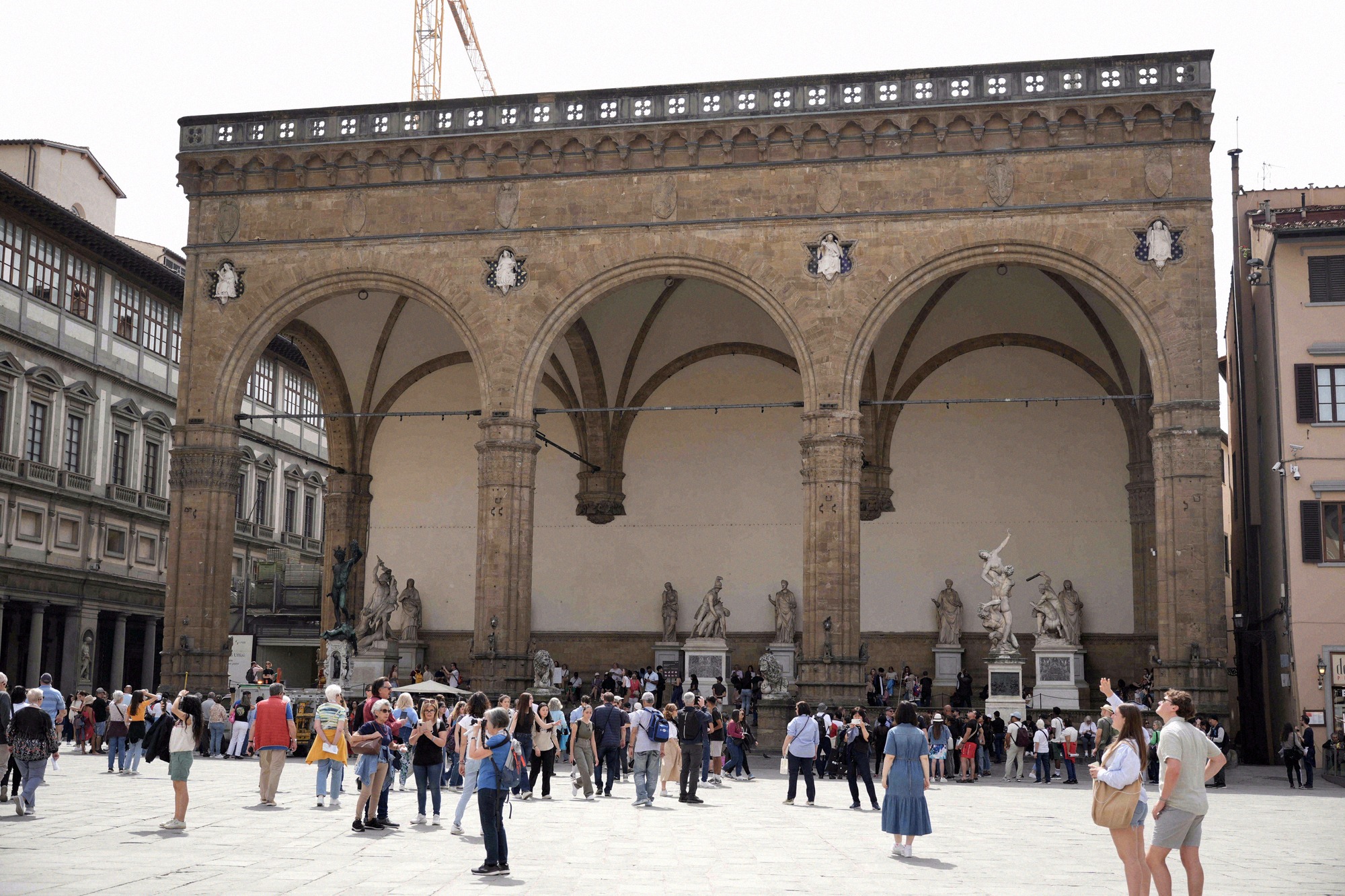
Florence's political square is a free open-air museum in front of the Palazzo Vecchio, with the Neptune Fountain, a copy of David and Renaissance sculpture in the Loggia dei Lanzi.
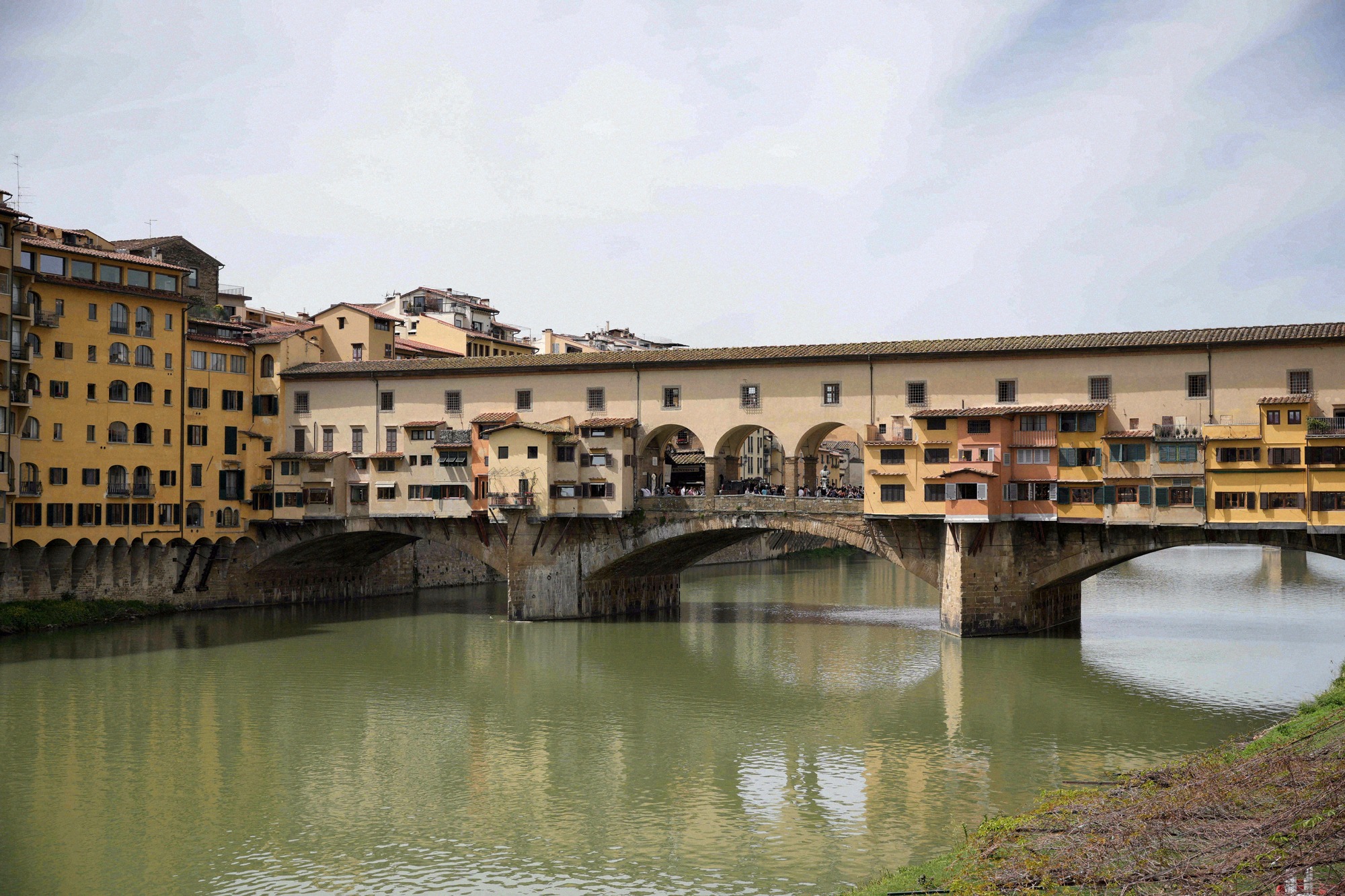
The Ponte Vecchio is Florence's oldest bridge, still lined with small goldsmiths' shops since 1593, with the reopened Vasari Corridor running above the Arno.
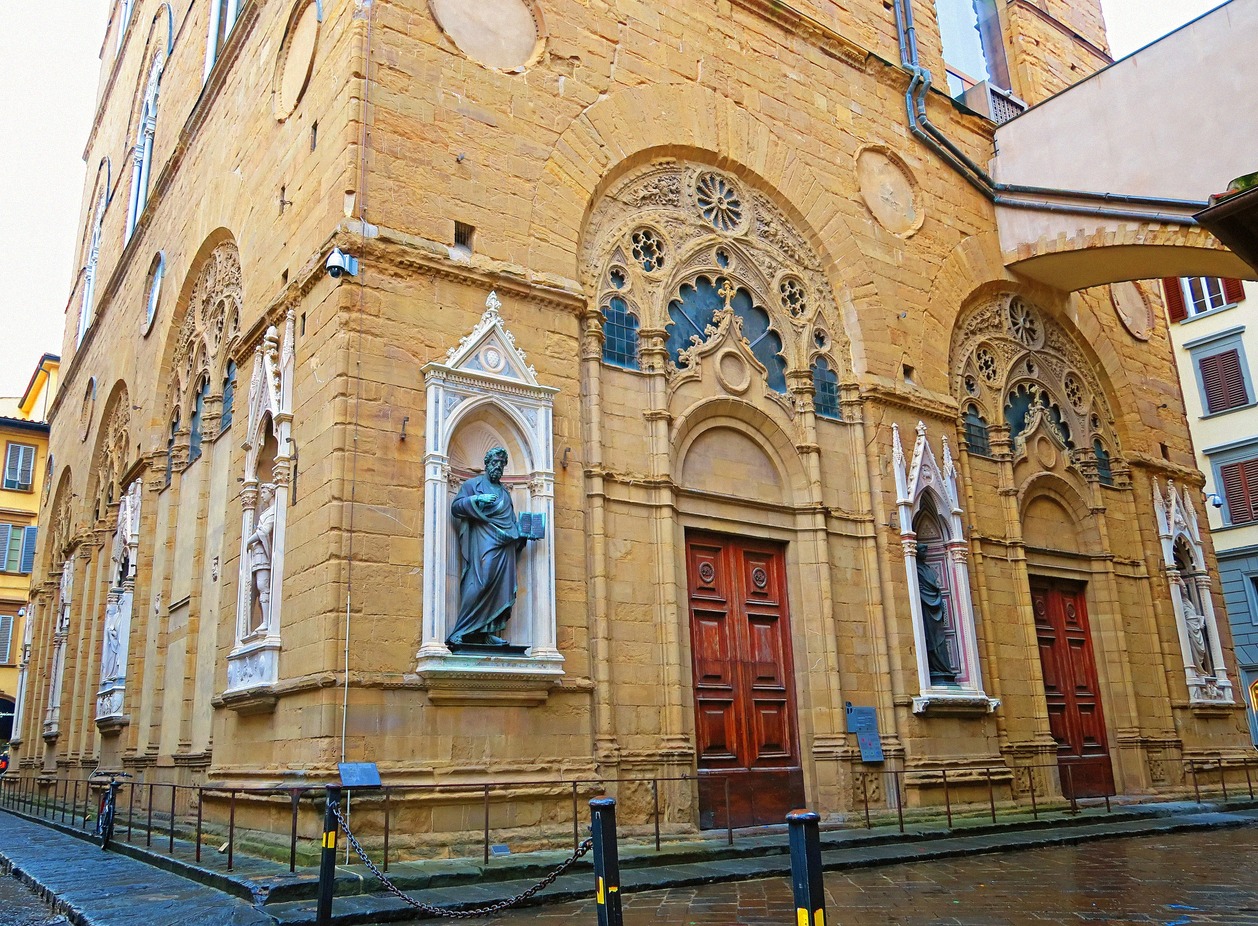
This solid guild church between the Duomo and Piazza della Signoria was once a grain market, famous for the saints' statues in its facade niches and the sculpture museum upstairs.
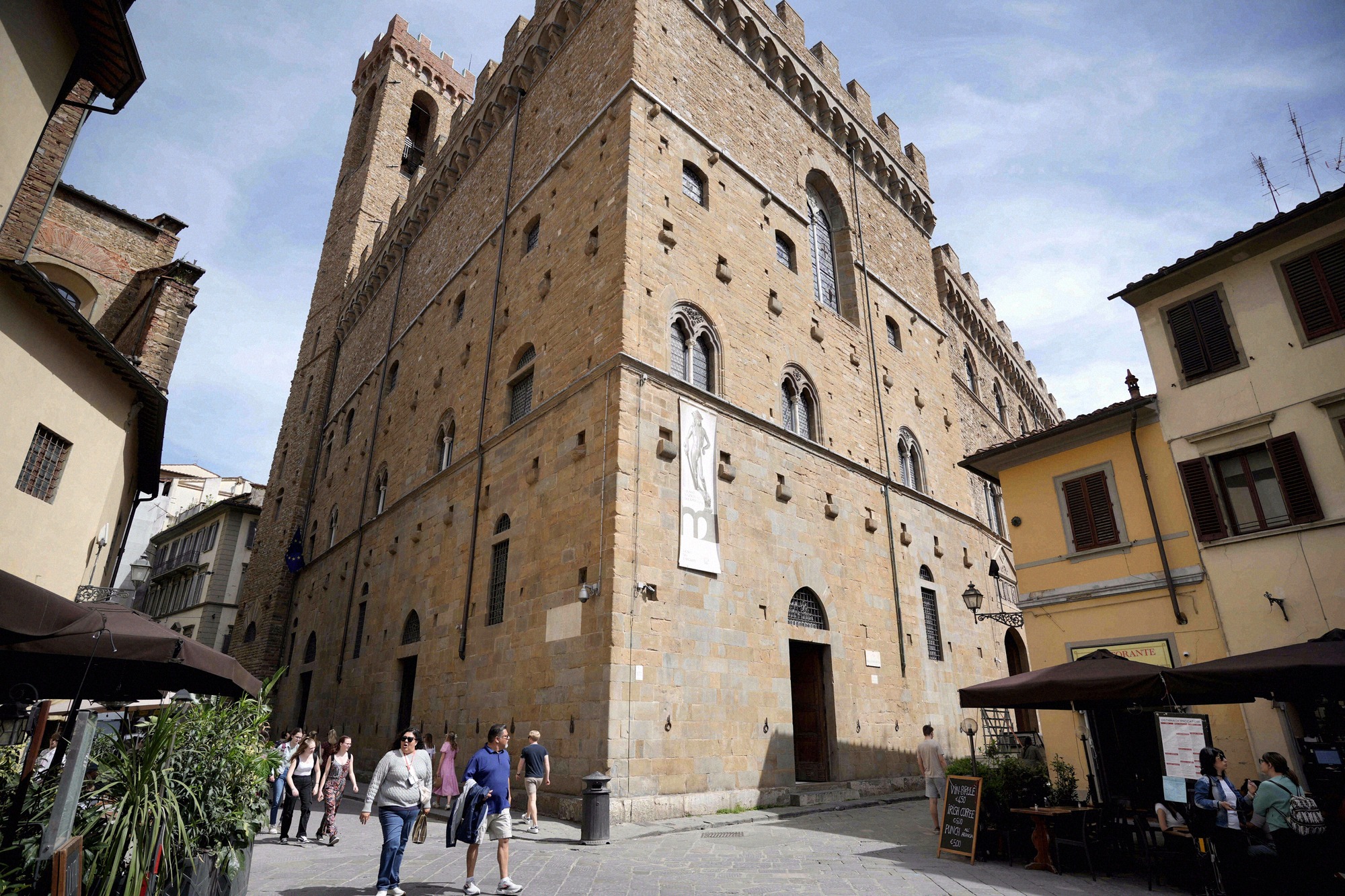
Florence's oldest public building holds the world's finest collection of Renaissance sculpture, including Donatello's bronze David and works by Michelangelo.