
With audio guide
Galleria dell'Accademia with audio guide
Entry to Michelangelo's David and the gallery's collections with a digital audio guide.
4 (1,043) · Tiqets
From €36
Book TicketMichelangelo's David in the original
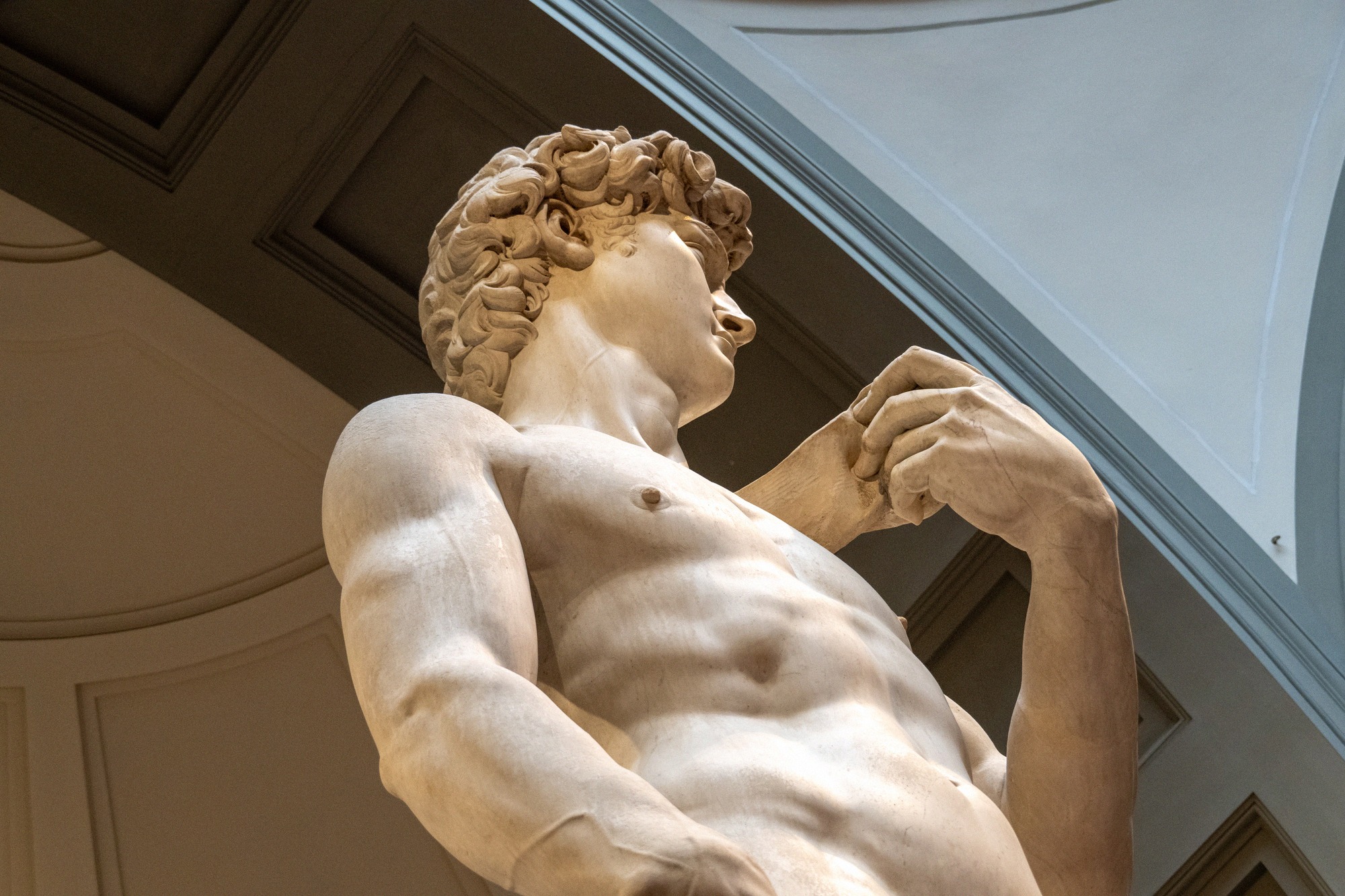
The Accademia Gallery holds the original of Michelangelo's David, five metres carved from a single block of Carrara marble, flanked by the unfinished Prigioni and Tuscan panel painting.
Tickets
With audio guide
Entry to Michelangelo's David and the gallery's collections with a digital audio guide.
4 (1,043) · Tiqets
From €36
Book TicketThe Galleria dell'Accademia is home to a single world-famous work: Michelangelo's David. Working from a single block of Carrara marble, the sculptor, then only in his mid-twenties - carved the figure between 1501 and 1504: 5.17 metres tall and around 8.5 tonnes, the first colossal marble statue of the High Renaissance since antiquity. David is shown before his fight with Goliath: coiled watchfulness, the sling slung over one shoulder, his gaze fixed on his opponent. For the fiercely independent Florentine Republic he was a symbol, the small standing up to the great.
From 1504 to 1873 the David stood outdoors in front of the Palazzo Vecchio. Only once the marble began to suffer from the weather was it moved into the Accademia's purpose-built Tribuna, a bright, top-lit apse at the end of the main hall. What you see today on Piazza della Signoria and at Piazzale Michelangelo are copies, the original stands only here.
On the way to the Tribuna, Michelangelo's "Prigioni" ("prisoners" or "slaves") line the corridor
The Accademia is more than a room built around one statue, even if the David dominates the visit. The collection also includes Tuscan panel painting from the 13th to 16th centuries, with gold-ground altarpieces, and a notable collection of historic musical instruments, including pieces once owned by the Medici family. Anyone tracing Michelangelo's work across Florence should pair this visit with the New Sacristy in the Medici Chapels and his early marble tondo in the Bargello.
The full price has been €20 since 1 February 2026 (up from €16), plus a €4 booking fee. EU citizens aged 18 to 25 pay a reduced rate of just €2, and entry is free under 18. The official advance sales channel is B-Ticket / Firenze Musei, authorised by Italy's Ministry of Culture; phone bookings are also possible on +39 055 294883.
There's no separate fast-track option: booking a timed entry slot in advance is the skip-the-line route. For how to book tickets for Florence's museums in good time, see the Booking tickets guide.
Open Tuesday to Sunday from 8:15 to 18:50, with last entry 30 minutes before closing at 18:20. Closed on Mondays, as well as 1 January and 25 December. In summer there are traditionally Tuesday evening openings until around 22:00, a special extended opening with a surcharge, with exact dates announced separately each year (in 2025, roughly early June to late July).
Crowds here are just as reliable as at the Uffizi. It's quietest at first entry, 8:15, or in the late afternoon, and midweek is noticeably calmer than weekends. Even with a booking, there can be some queuing at the entrance, so arriving early pays off. Allow 1 to 1.5 hours for the visit, the museum is compact.
The Accademia is at Via Ricasoli 58/60, centrally placed between Piazza San Marco and the Duomo, in the San Lorenzo & San Marco district. It's around a five-minute walk from the Duomo. Just around the corner (roughly 180 metres) is the Museo di San Marco with its Fra Angelico frescoes, and a little further on is Piazza della Santissima Annunziata, home to Brunelleschi's Ospedale degli Innocenti foundling hospital.
The visit combines well into a half-day route: on via the Medici Chapels and Mercato Centrale back towards San Lorenzo. For background on Michelangelo and the era, see the Renaissance Art guide.
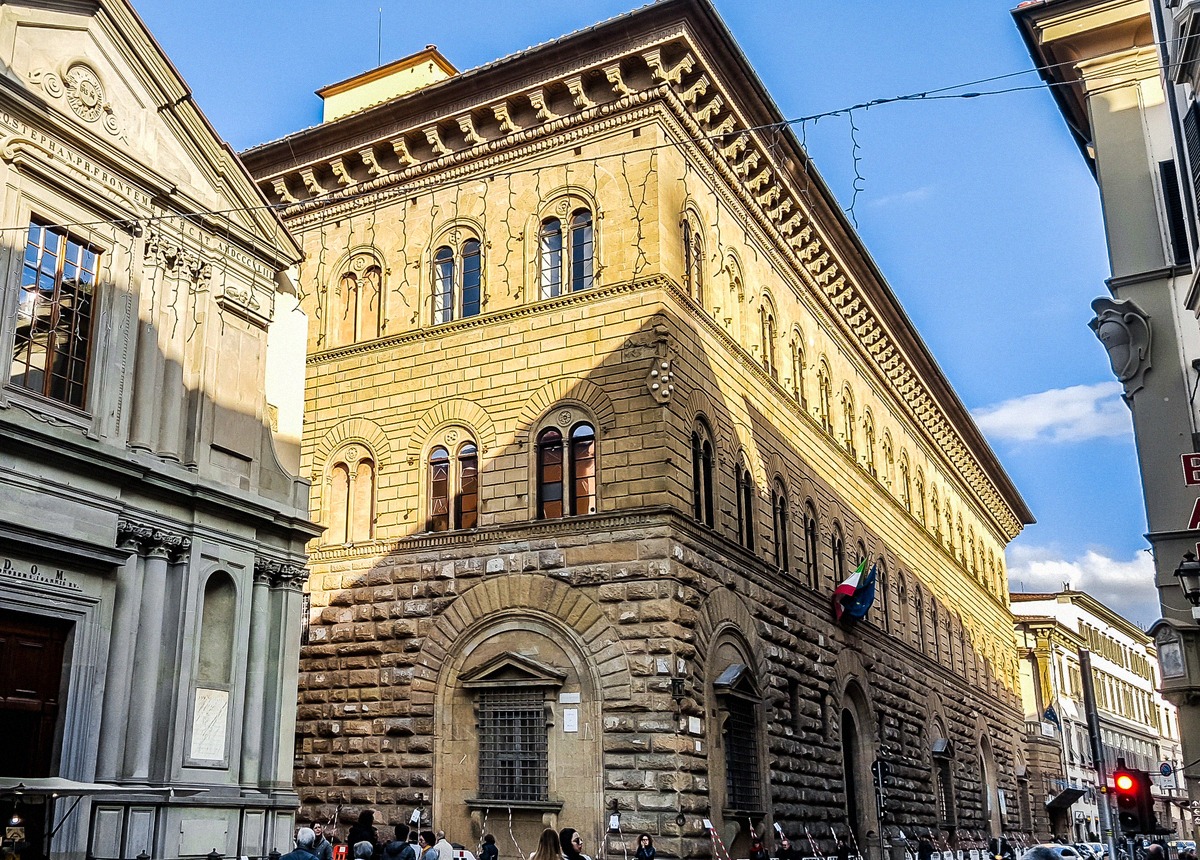
The first great Medici city palace, built from 1444 by Michelozzo. Famous for Benozzo Gozzoli's radiant fresco cycle of the Magi and Luca Giordano's Baroque Hall of Mirrors.
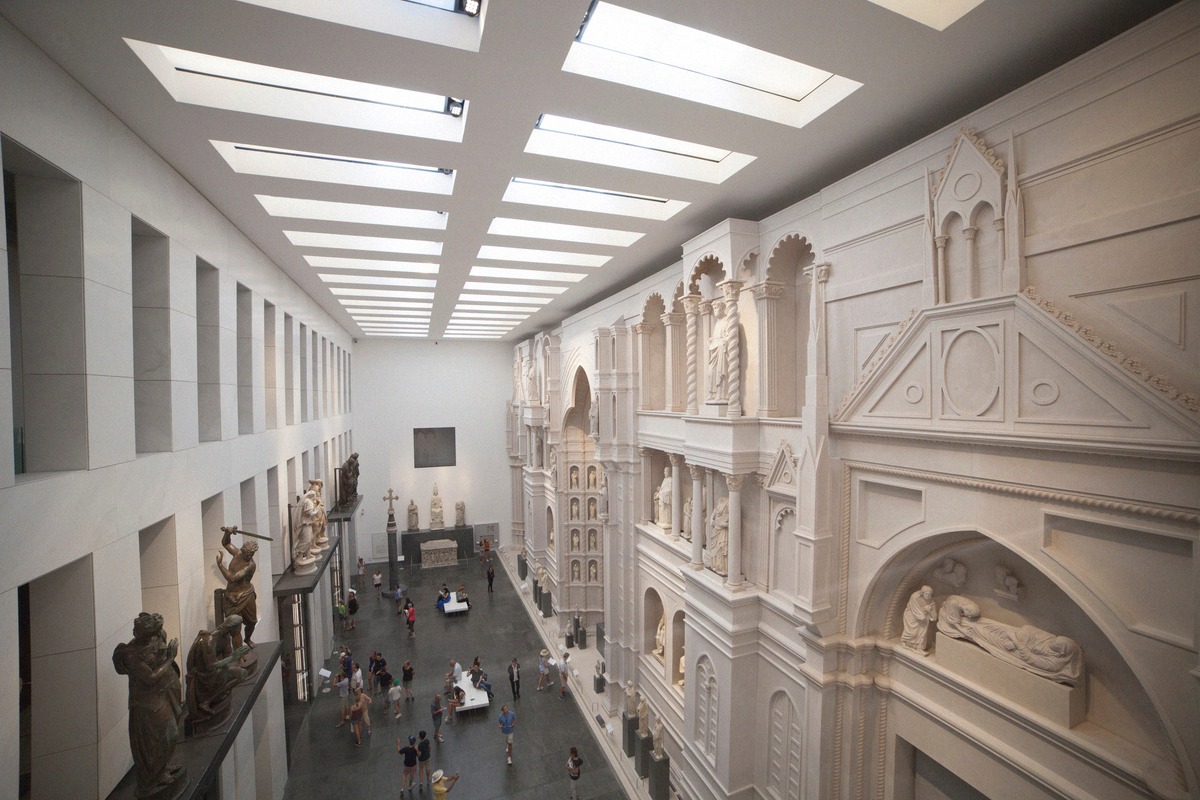
The Opera del Duomo Museum holds the originals from the cathedral square - Ghiberti's Gates of Paradise, Donatello's sculptures and Michelangelo's Bandini Pietà, in a 2015 building with a reconstructed facade.
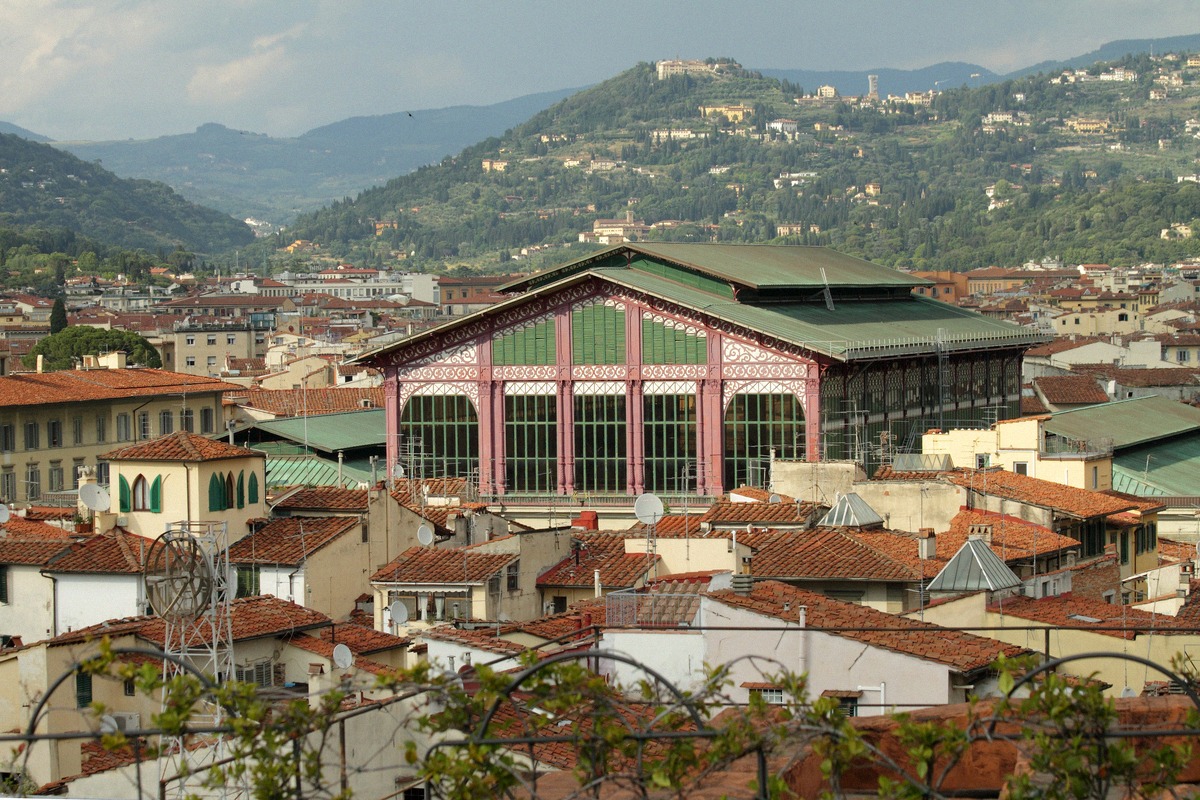
The Mercato Centrale near San Lorenzo, a cast-iron hall from 1874, combines a fresh-produce market downstairs with a food court of over twenty stalls upstairs.
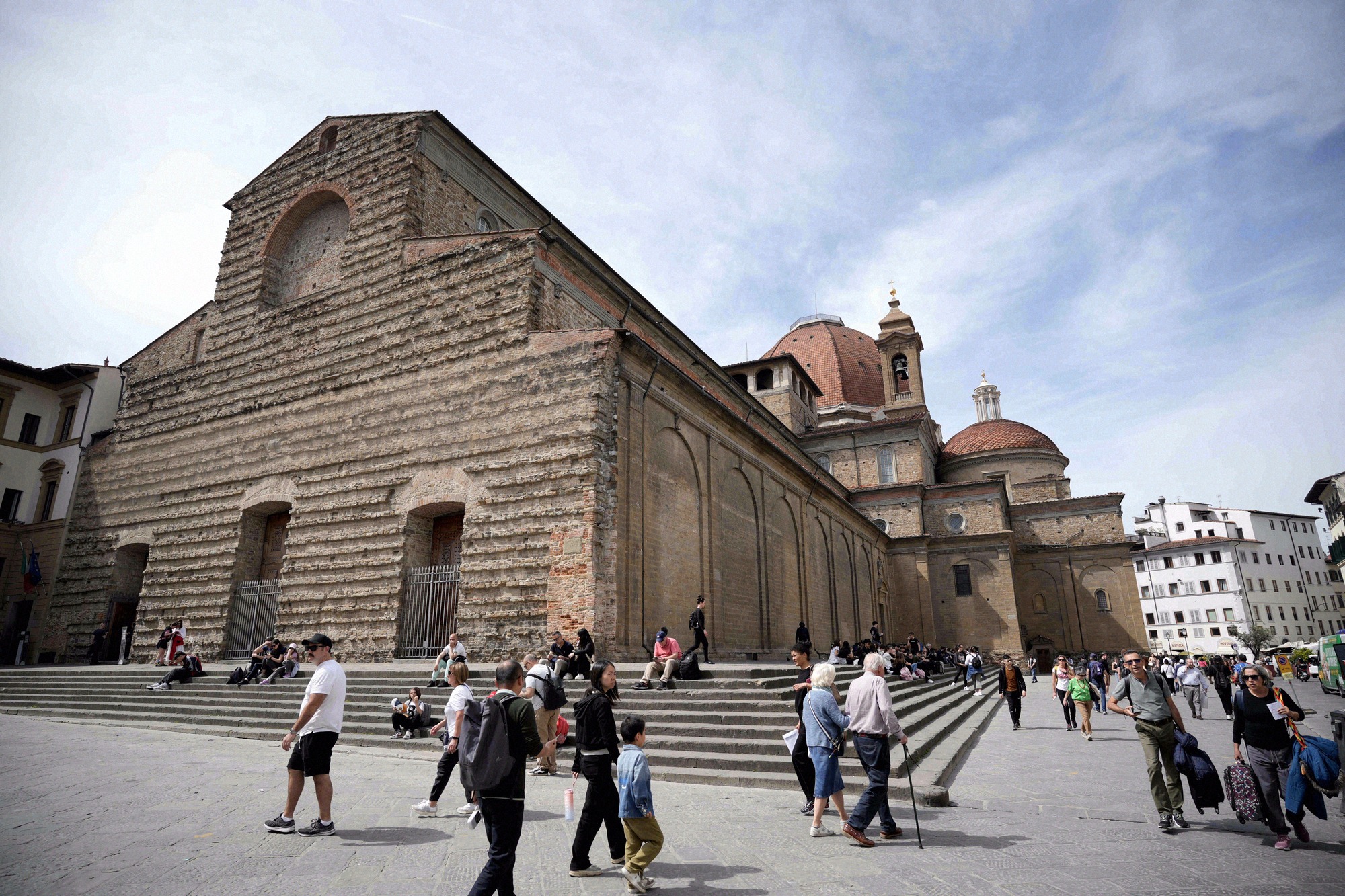
The Basilica di San Lorenzo was the Medici family's parish and burial church, with Brunelleschi's Renaissance architecture, Donatello's bronze pulpits and Michelangelo's Biblioteca Laurenziana.
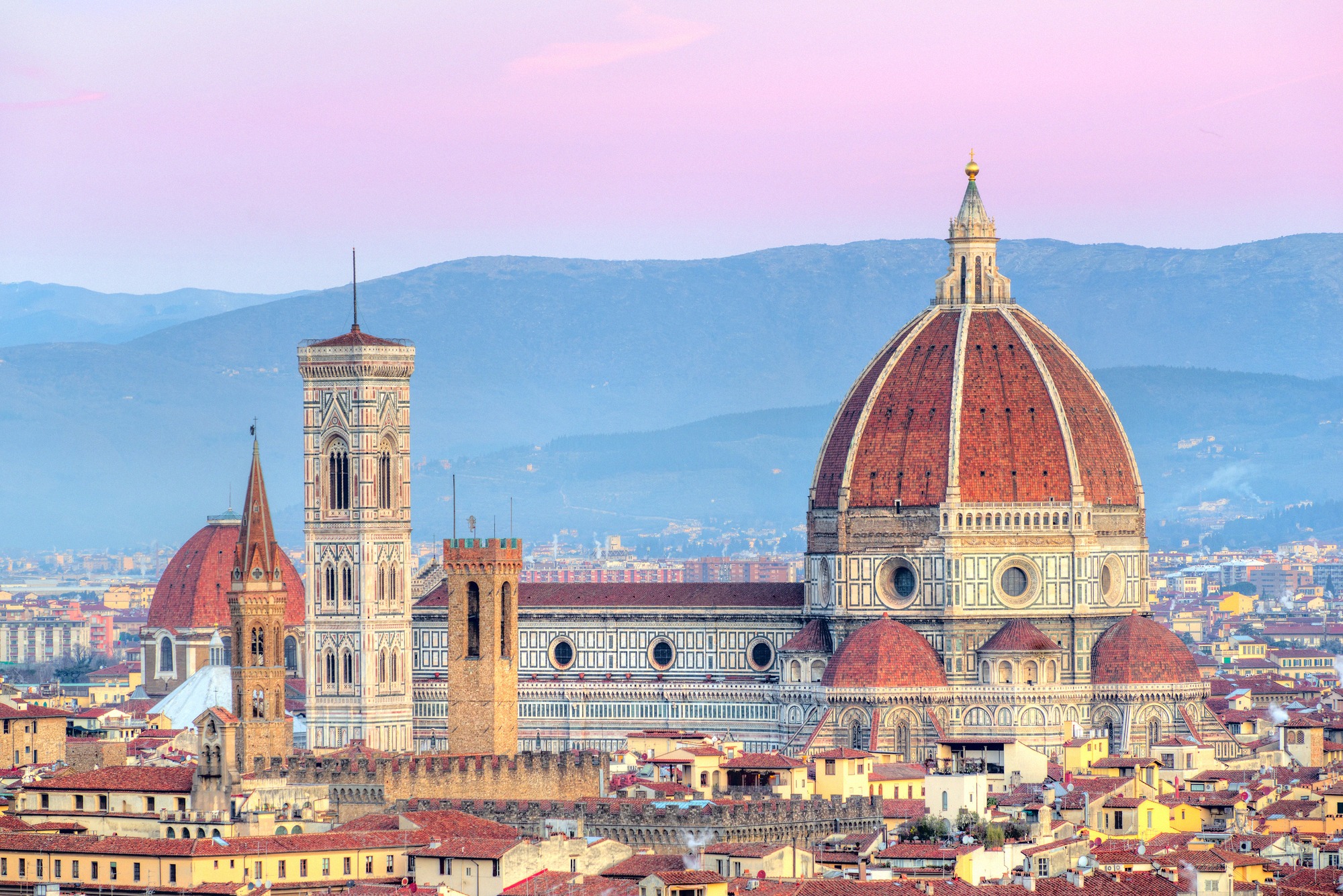
Santa Maria del Fiore, Florence's Gothic cathedral, is topped by Brunelleschi's world-famous dome. Entry is free; climbing the dome needs advance booking.
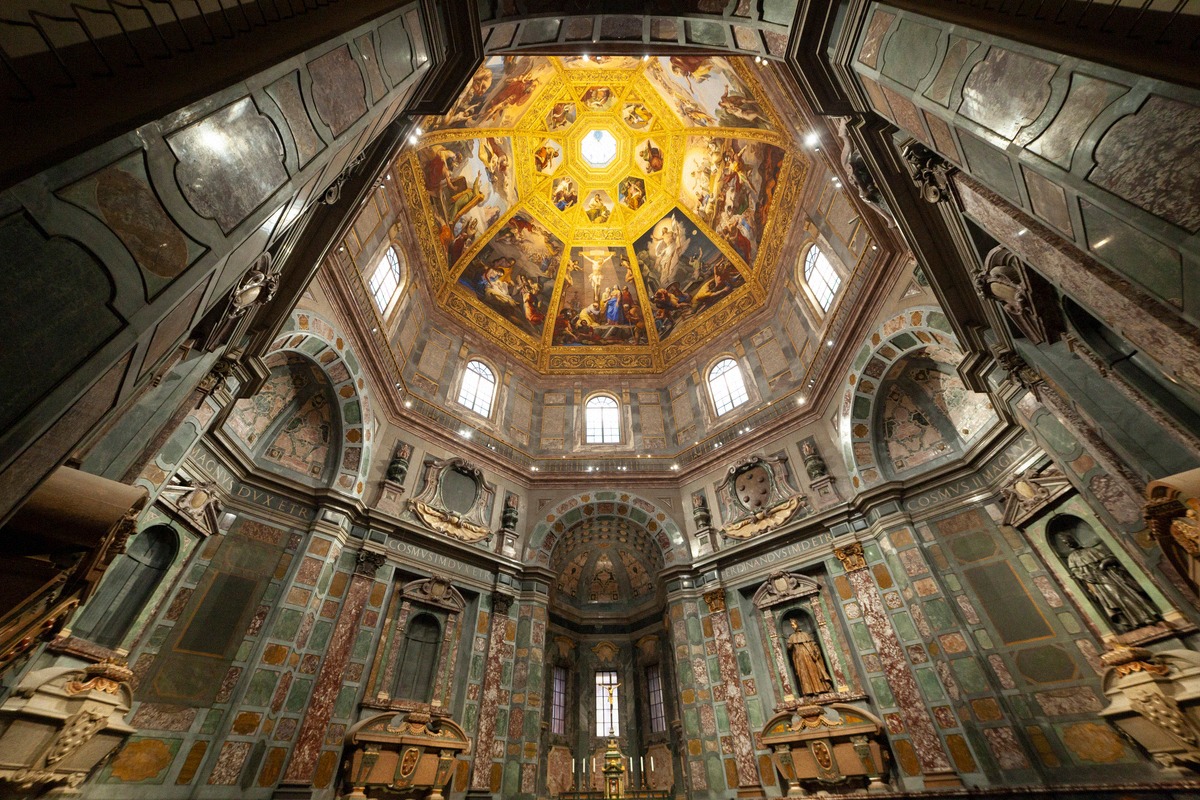
The Medici family's mausoleum behind San Lorenzo combines the opulent Chapel of the Princes with Michelangelo's New Sacristy and its famous Times of Day allegories.