
Piazza della Signoria
Political main square with open-air sculpture
Florence's political square is a free open-air museum in front of the Palazzo Vecchio, with the Neptune Fountain, a copy of David and Renaissance sculpture in the Loggia dei Lanzi.
Contents
Florence's political stage
The Piazza della Signoria has been the political heart of Florence since the Middle Ages, the square where the Republic held its assemblies, celebrated triumphs, and in 1498 burned the reforming friar Savonarola at the stake. It's framed by the massive Palazzo Vecchio with its 94-metre tower, Florence's old town hall and still in use today. Together with the Palazzo Vecchio, the square is part of the UNESCO World Heritage Site "Historic Centre of Florence", inscribed in 1982, which specifically names the Piazza della Signoria.
Unlike most of the city's sights, the square costs nothing and is open around the clock. Anyone walking through the Centro Storico is almost bound to pass through it, it's a few minutes' walk from the cathedral, and the Uffizi adjoin it directly to the south.
An open-air sculpture museum
The square is packed with sculpture, each piece with its own story:
- The Neptune Fountain (Fontana del Nettuno) was built between 1560 and 1574, to a design that emerged from a competition involving Baccio Bandinelli; it was carried out by Bartolomeo Ammannati, with assistants including Giambologna and Vincenzo de' Rossi. The white marble sea god quickly earned Florentines' nickname "Il Biancone" (the big white one).
- In front of the Palazzo Vecchio's entrance stands a copy of Michelangelo's David. The original stood here from 1504 to 1873, before being moved for protection to the Accademia Gallery; today's marble copy only took its place in 1910.
- Alongside it, Giambologna's equestrian statue of Cosimo I de' Medici and Bandinelli's sculpture group Hercules and Cacus.
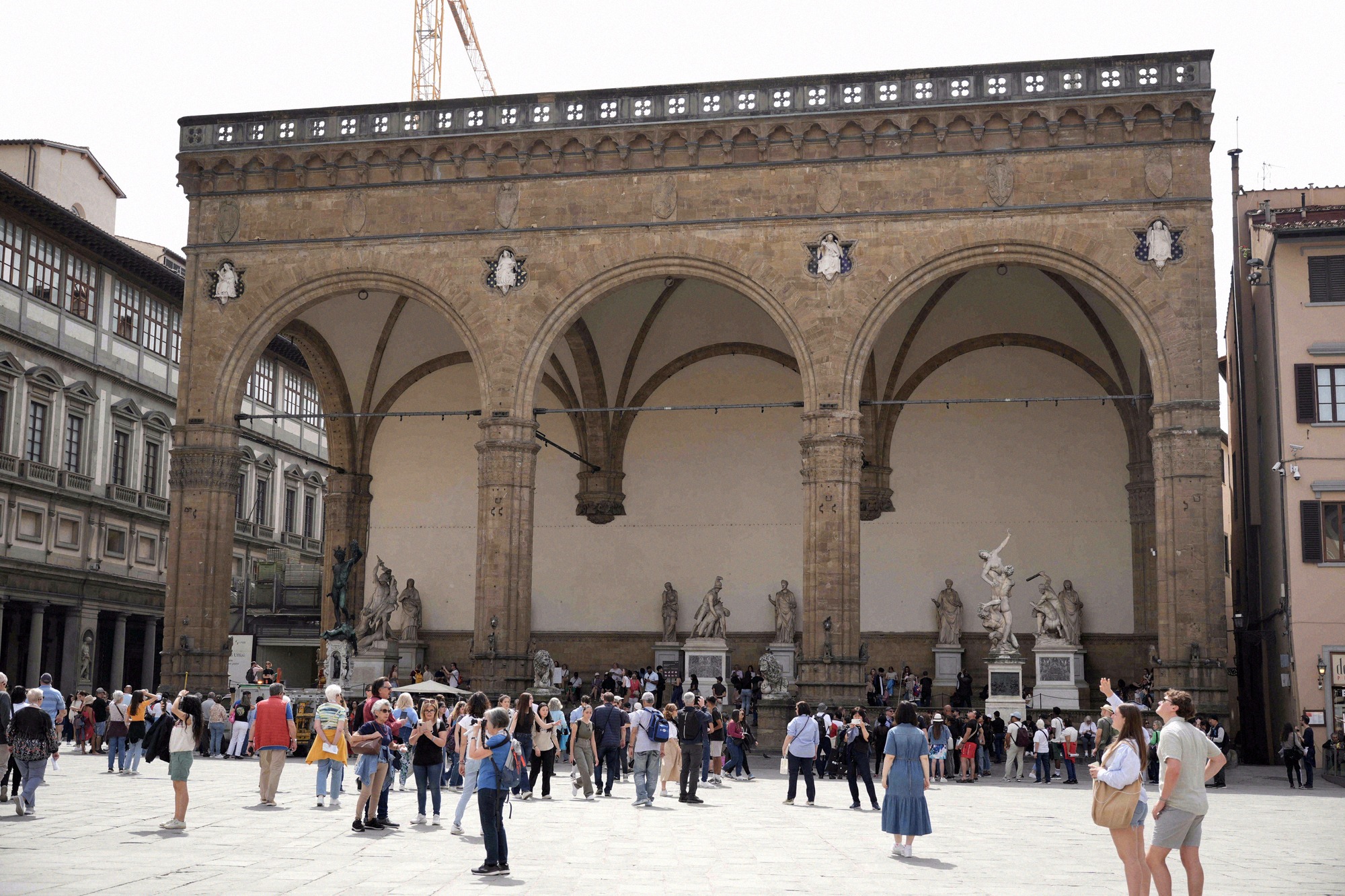
But the square's real highlight is the Loggia dei Lanzi, the open arcade on its south side.
The Loggia dei Lanzi
The Loggia dei Lanzi is an open Gothic arcade from the late 14th century that today reads like a free open-air sculpture museum. It's managed by the Gallerie degli Uffizi; there's no dedicated website for the loggia alone. What's on display is a collection of real standing:
- Perseus with the Head of Medusa by Benvenuto Cellini (bronze, 1545-1554), the loggia's most famous work.
- The Rape of the Sabine Women by Giambologna (1583), a spiralling marble group of three figures carved from a single block.
- Hercules and the Centaur Nessus, also by Giambologna (1599).
- The Rape of Polyxena by Pio Fedi (1855-1865), a later but masterfully composed group.
- The ancient Roman group Menelaus Supporting the Body of Patroclus (Flavian period).
- Two Medici lions flank the steps, the right one a Roman original, the left one a copy by Flaminio Vacca (1598).
- Along the back wall, five ancient Roman marble statues (including Matidia, Marciana and Agrippina the Younger) and a statue of Thusnelda.
All the sculptures can be seen from the square at any time. Stepping onto the raised platform beneath the loggia is restricted during the day, staff manage entry with a visitor cap, and closed at night. According to recent traveller reports, a free on-site ticket has been required since January 2026; no fixed opening hours are officially published.
Visiting and practical tips
The square alone takes 30 to 45 minutes to see properly, the Neptune Fountain, the David copy and the loggia's sculptures. It's busy during the day, at its most crowded in the high season from May to September and daily at roughly 10:00 to 15:00. It's most atmospheric and quietest early in the morning or in the late afternoon and evening, once the day-tour groups have left and the facades are warmly lit.
The Piazza della Signoria sits perfectly as a hub between the major sights and links up well into a walking route:
- Right on the square, the Palazzo Vecchio, with the Salone dei Cinquecento and the tower climb.
- To the south, just a few steps away, the Uffizi and the adjacent Museo Galileo.
- Beyond the Uffizi, on to the Ponte Vecchio.
- Towards the cathedral is Orsanmichele, and a little further the Bargello, with its Renaissance sculpture.
- Anyone wanting to see Michelangelo's original David should head to the Accademia Gallery, only the copy stands on the square.
For background on the sculptors and their era, see the guide to Renaissance art; for where the square fits into a Florence visit, see the overview Attractions in Florence.
Frequently asked questions
Is that the real David standing here? +
What is the Loggia dei Lanzi? +
Is there an admission fee for the Piazza della Signoria? +
Can you visit the Loggia dei Lanzi at night? +
How much time should you allow? +
Nearby
Palazzo Vecchio
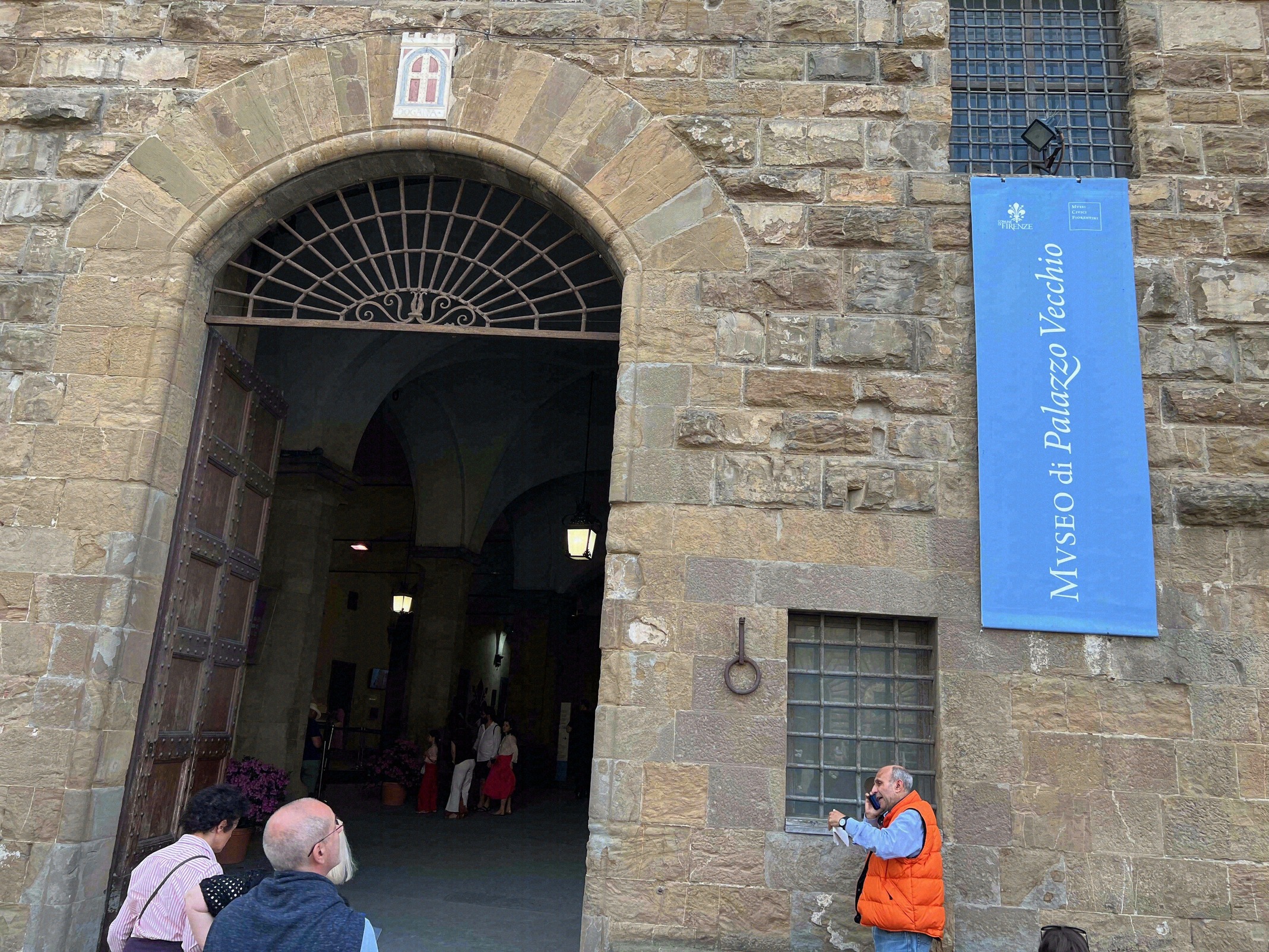
Palazzo Vecchio on Piazza della Signoria has been Florence's town hall since the 14th century, home to the Hall of the Five Hundred and the Torre di Arnolfo.
Uffizi Gallery
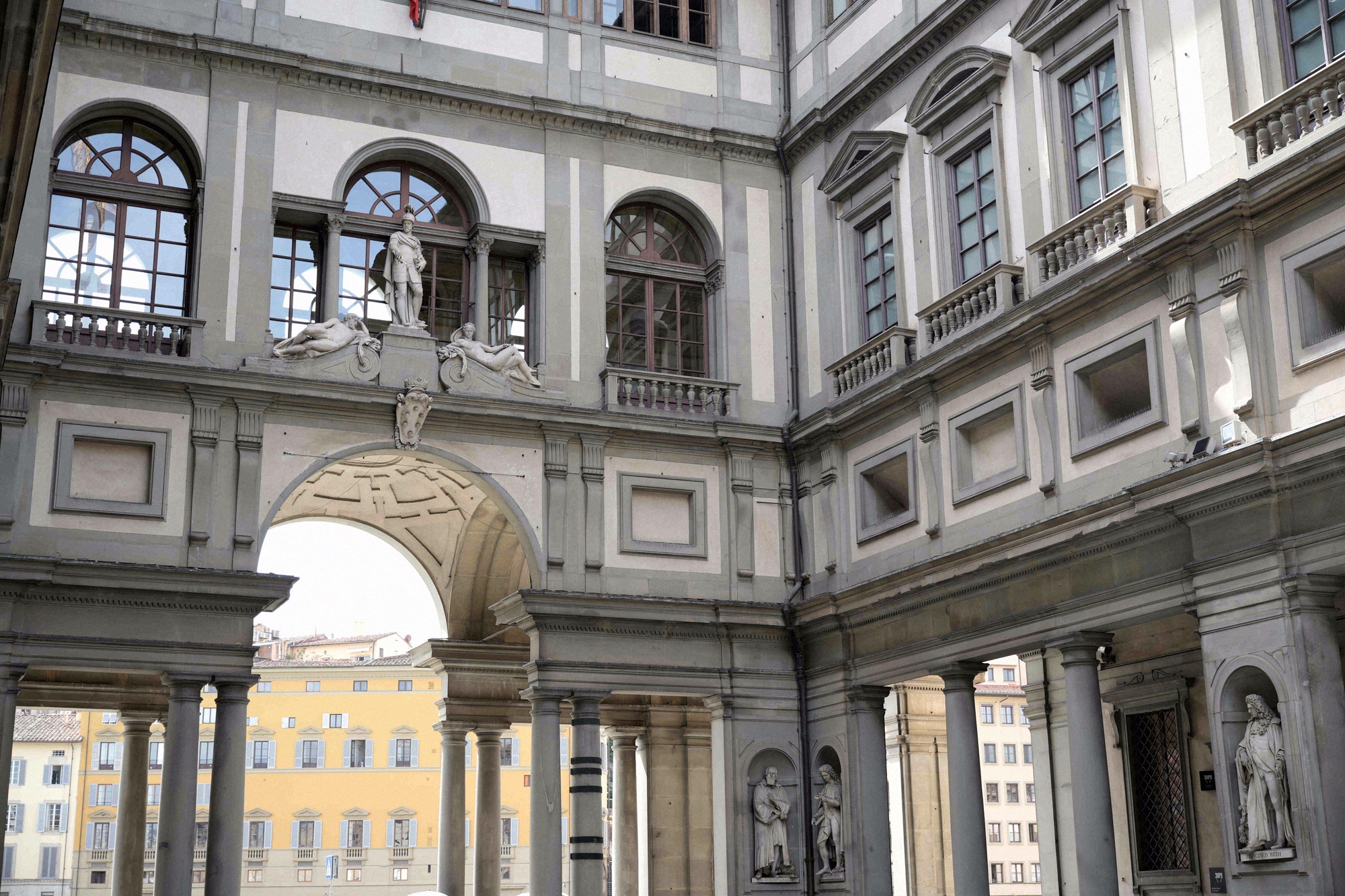
The Uffizi Gallery holds the world's finest Renaissance collection - Botticelli, Leonardo, Raphael, Caravaggio. Book a timed-entry ticket in advance.
Orsanmichele
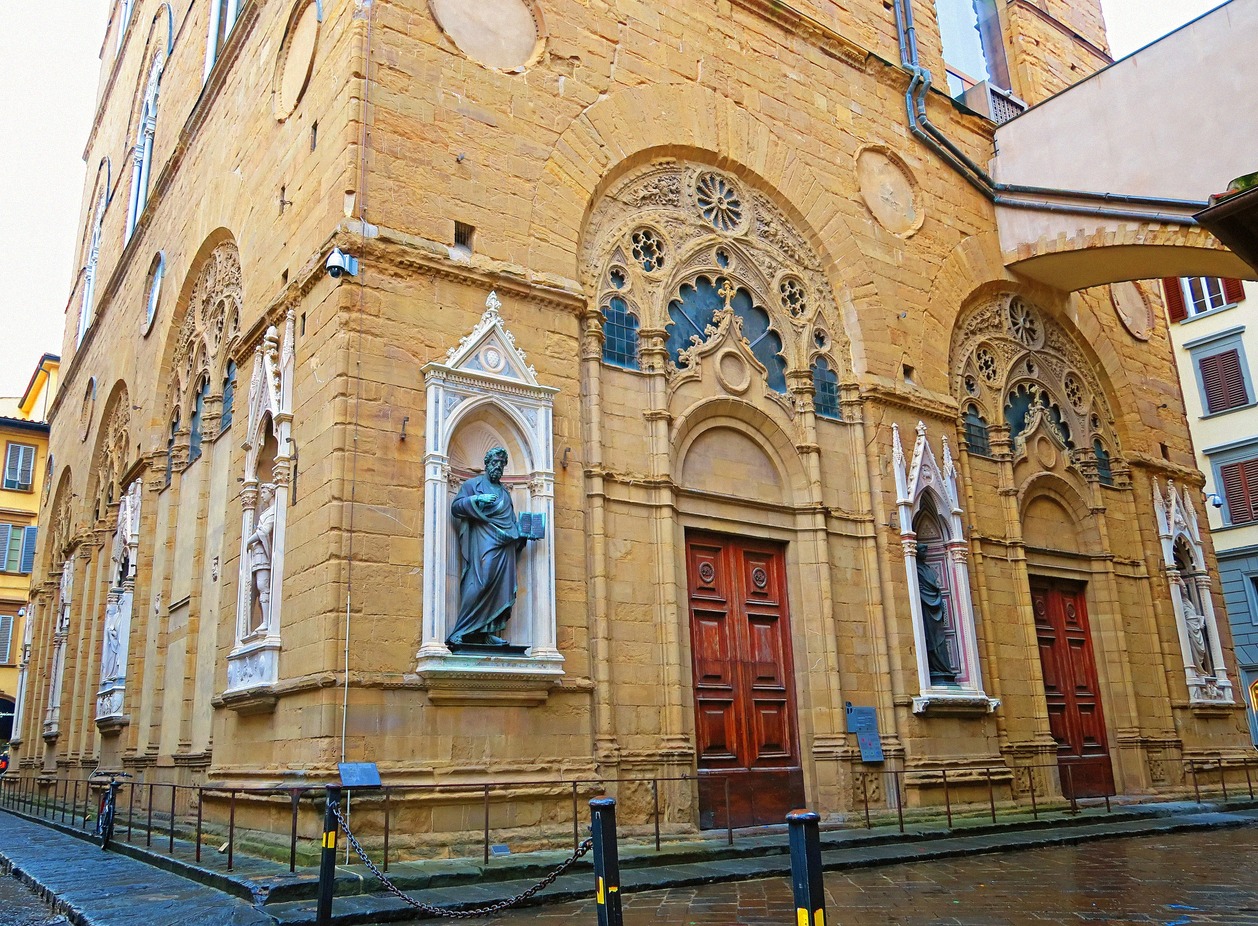
This solid guild church between the Duomo and Piazza della Signoria was once a grain market, famous for the saints' statues in its facade niches and the sculpture museum upstairs.
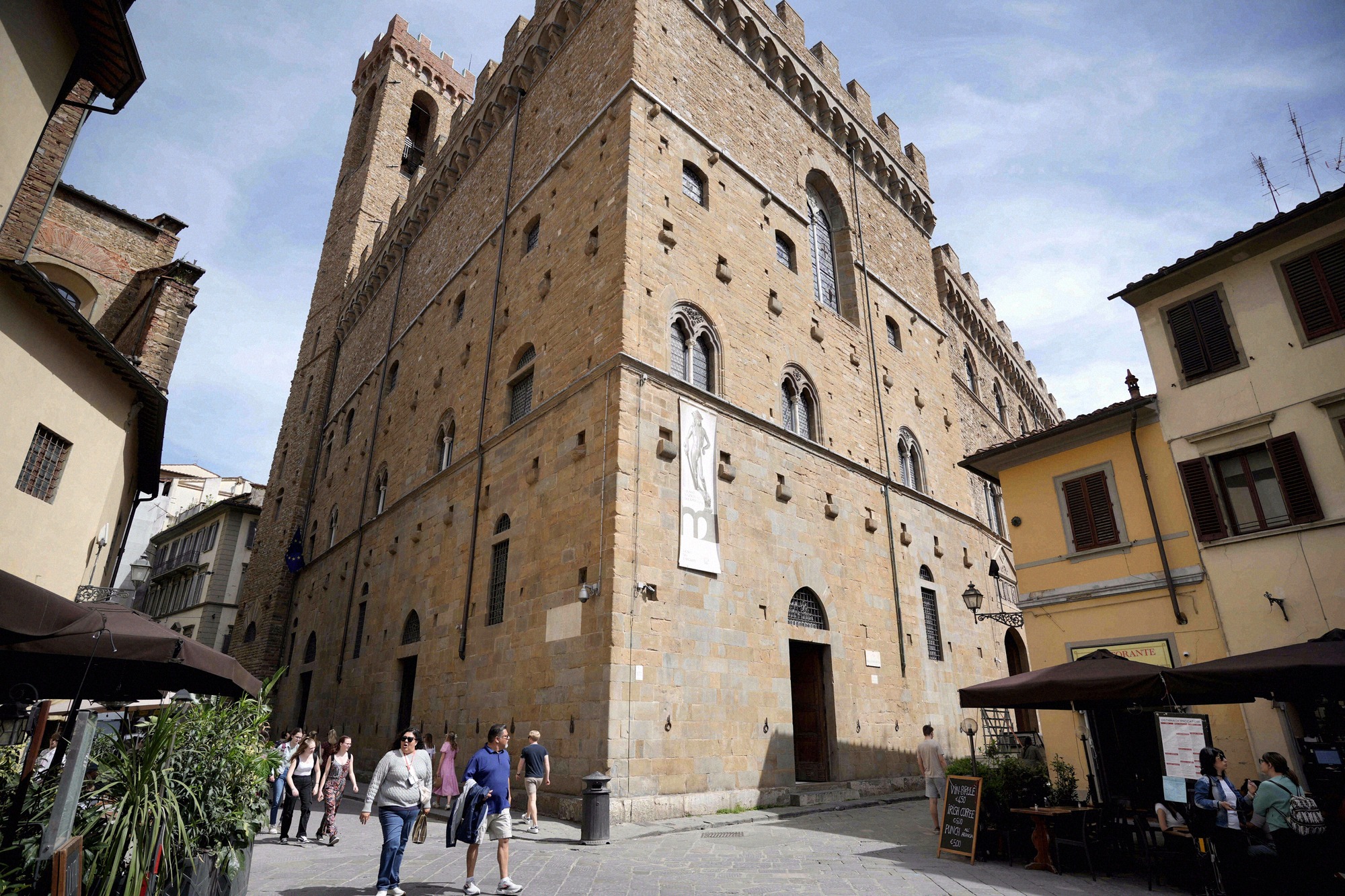
Museo Nazionale del Bargello
Florence's oldest public building holds the world's finest collection of Renaissance sculpture, including Donatello's bronze David and works by Michelangelo.
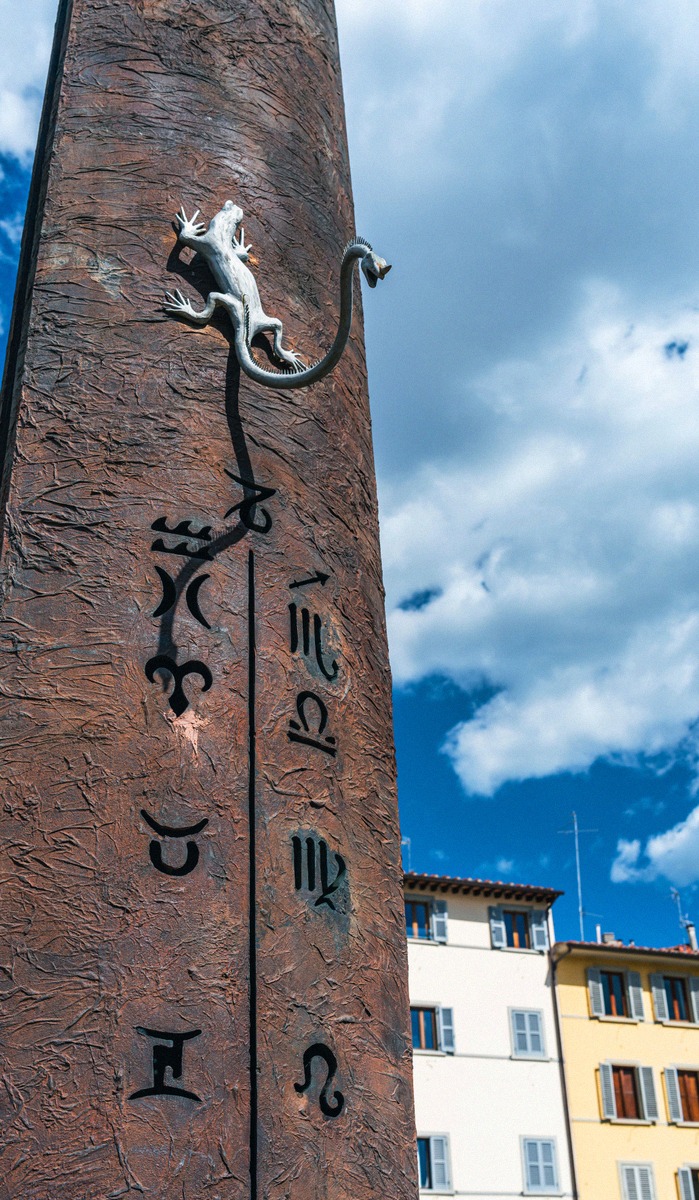
Museo Galileo
Right on the Arno behind the Uffizi, this science museum displays over 1000 historic instruments, ornate globes and Galileo's only two surviving telescopes.
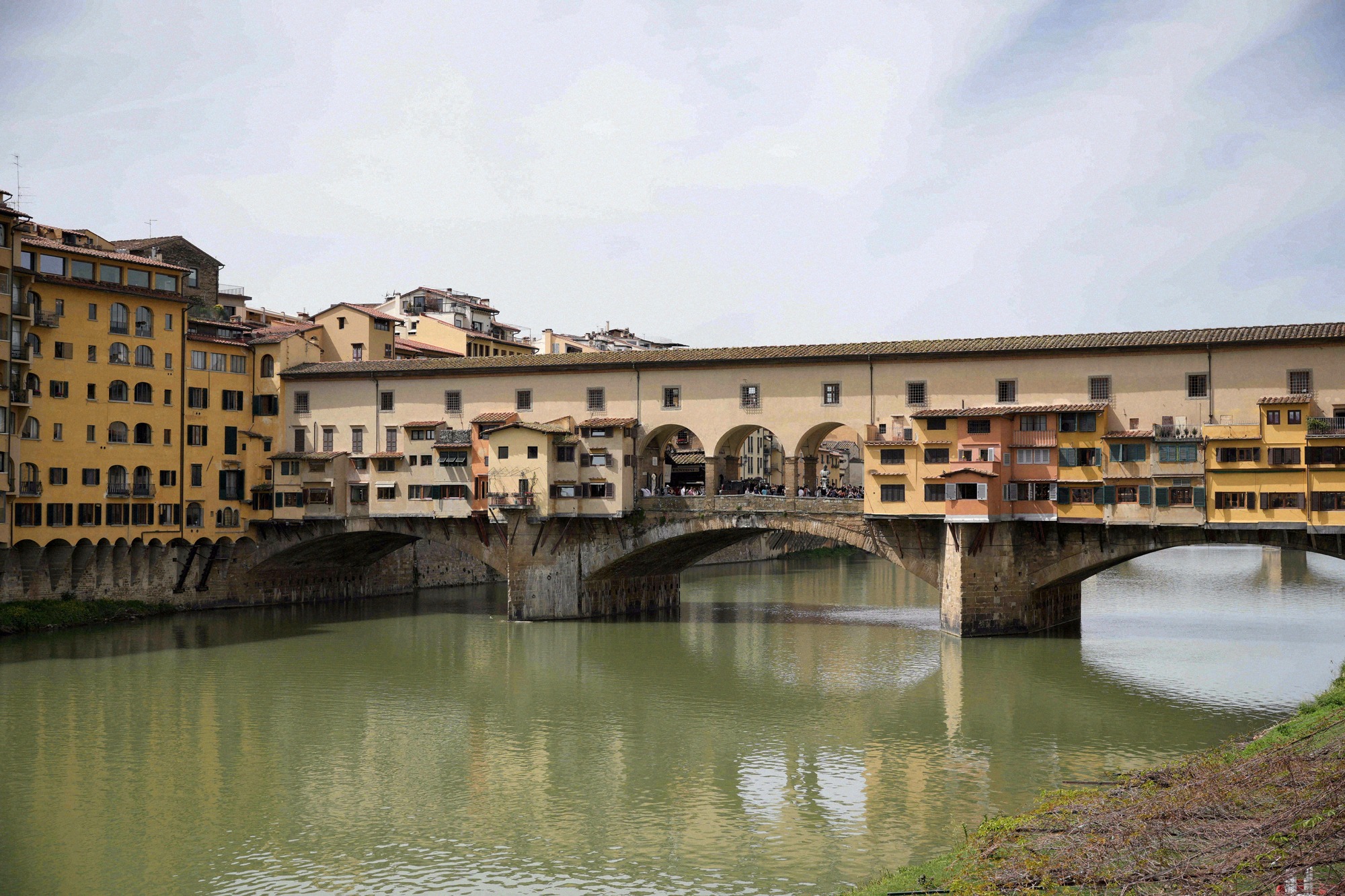
Ponte Vecchio
The Ponte Vecchio is Florence's oldest bridge, still lined with small goldsmiths' shops since 1593, with the reopened Vasari Corridor running above the Arno.