
Admission
Orsanmichele: church and museum
Entry to the church and the museum on the upper floor.
From €18
Book TicketGuild church with the statues of Florence's craft guilds
This solid guild church between the Duomo and Piazza della Signoria was once a grain market, famous for the saints' statues in its facade niches and the sculpture museum upstairs.
Tickets
Admission
Entry to the church and the museum on the upper floor.
From €18
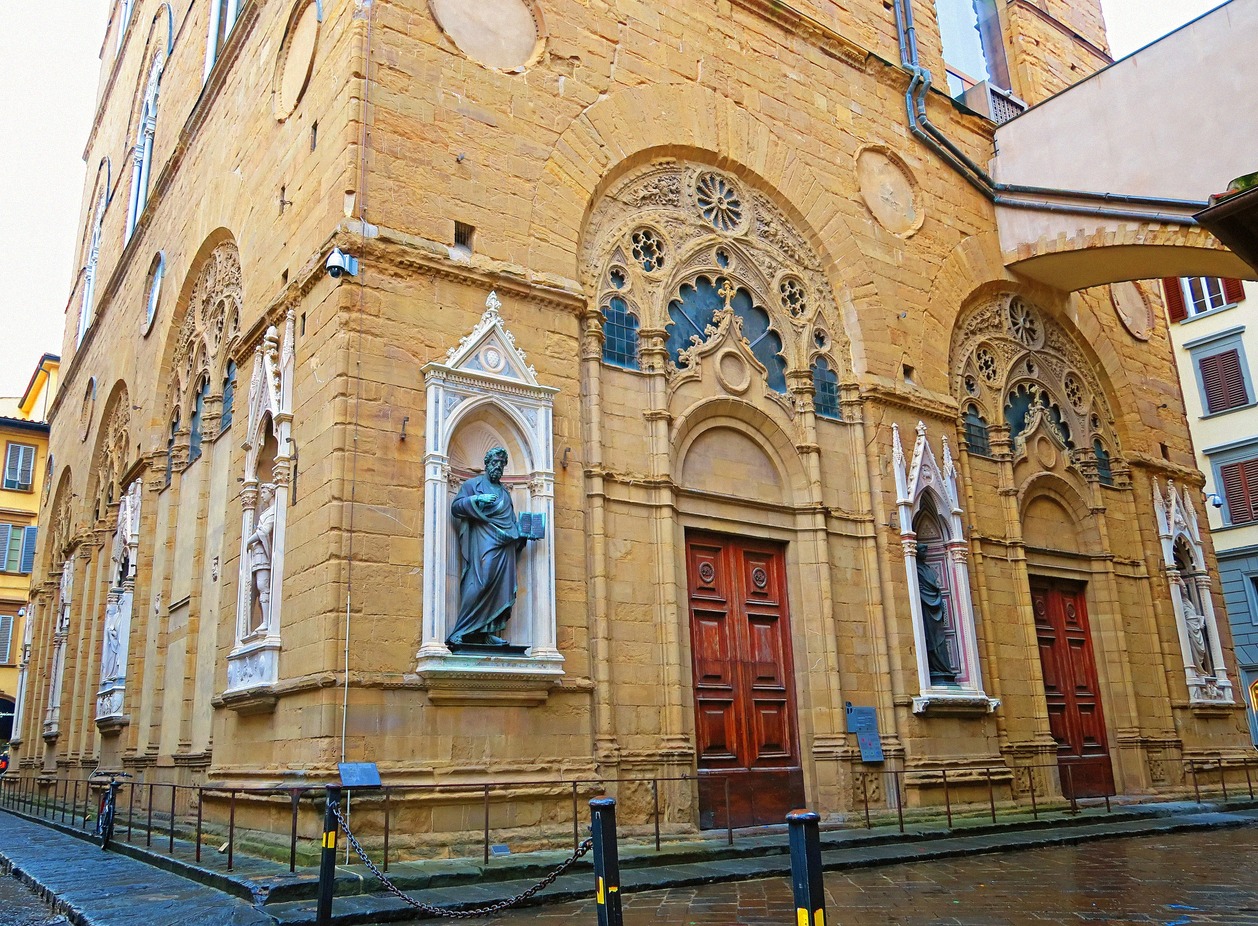
Book TicketOrsanmichele stands halfway between the Florence Cathedral and Piazza della Signoria, and it's one of the city's most unusual buildings, a solid, almost windowless block that looks like neither a typical church from outside nor from within. That's rather the point: the structure began life as an open-air grain market. A first loggia stood here as early as 1290, burned down in 1304, and from 1337 onwards Neri di Fioravante, Benci di Cione and Francesco Talenti built the structure you see today, an open market hall below, with grain stores for the city above.
Between 1380 and 1404, the open loggia arches were bricked up and the ground floor became the church of Florence's craft guilds, while the upper floors kept serving as grain stores. That dual history is still legible today: the former arches are visible on the outer walls, and the interior isn't a tall nave but a squat, two-aisled hall with richly painted piers and a magnificent tabernacle by Andrea Orcagna (1359).
Orsanmichele is famous for its 14 Gothic outer niches. Each of Florence's major guilds, wool weavers, cloth merchants, bankers, armourers and others, was permitted to place a statue of its patron saint here, and commissioned the finest sculptors of the age to carve it. The result, built up over several decades, was a unique contest that traces the shift from Gothic to Renaissance sculpture. Highlights include:
The figures visible outside today are copies, the fragile originals are kept safe in the museum upstairs. A walk around the building is still worthwhile, though: the niches with their coats of arms and reliefs form Florence's own open-air Renaissance museum.
Since its 2024 reinstallation, the sculpture museum on the upper floor has been open again, at the same hours as the church, with no extra charge. In the spacious halls once used as grain stores, the original statues from the outer niches stand on display, including Donatello's Saint George, free to view up close. Add to that a view over the rooftops of the old town through the tall arched windows. The upper floor is reached only by stairs; there is no step-free access.
Allow 30 to 60 minutes for the church and museum together. If you're short on time, you can still appreciate the building from outside and just work your way round the niches, but for understanding early Florentine sculpture, the trip upstairs is where the real reward lies.
Orsanmichele is run by the Musei del Bargello. Since 15 March 2026, unified hours apply: open Tuesday to Sunday, 8:15 to 18:50, closed on Mondays. Last entry is 50 minutes before closing. On Sundays, the complex closes at midday for Mass (roughly 12:20-13:30), worth building into your day's plan.
Admission is €10 for the whole complex, church and sculpture museum together. The reduced rate for EU citizens aged 18-25 is €2, and entry is free up to your 18th birthday and on the 1st Sunday of every month. If you're visiting several sites, the cumulative 72-hour ticket at €38 works out cheaper, alongside Orsanmichele it also covers the Accademia Gallery, Bargello Museum, Medici Chapels and Palazzo Davanzati. Buy tickets at the door or online through the official portal; booking online carries a €4 reservation fee.
Orsanmichele sits right in the Centro Storico on Via dell'Arte della Lana, just a few steps from Piazza della Signoria and about a five-minute walk from the Florence Cathedral. That makes the church an ideal stop along the way between the two main squares, the crowds you'll find at the Uffizi Gallery or the Accademia Gallery rarely build up here, so a timed-entry booking isn't necessary.
As an active church, modest dress is expected, with shoulders and knees covered. Visitor groups are capped at 20 people, school groups at 25 with advance notice. If you'd like to combine the visit with the nearby Bargello and Medici Chapels, check whether the cumulative ticket suits you, more on that in the ticket guide. Tips for getting around the old town on foot are in the transport guide.
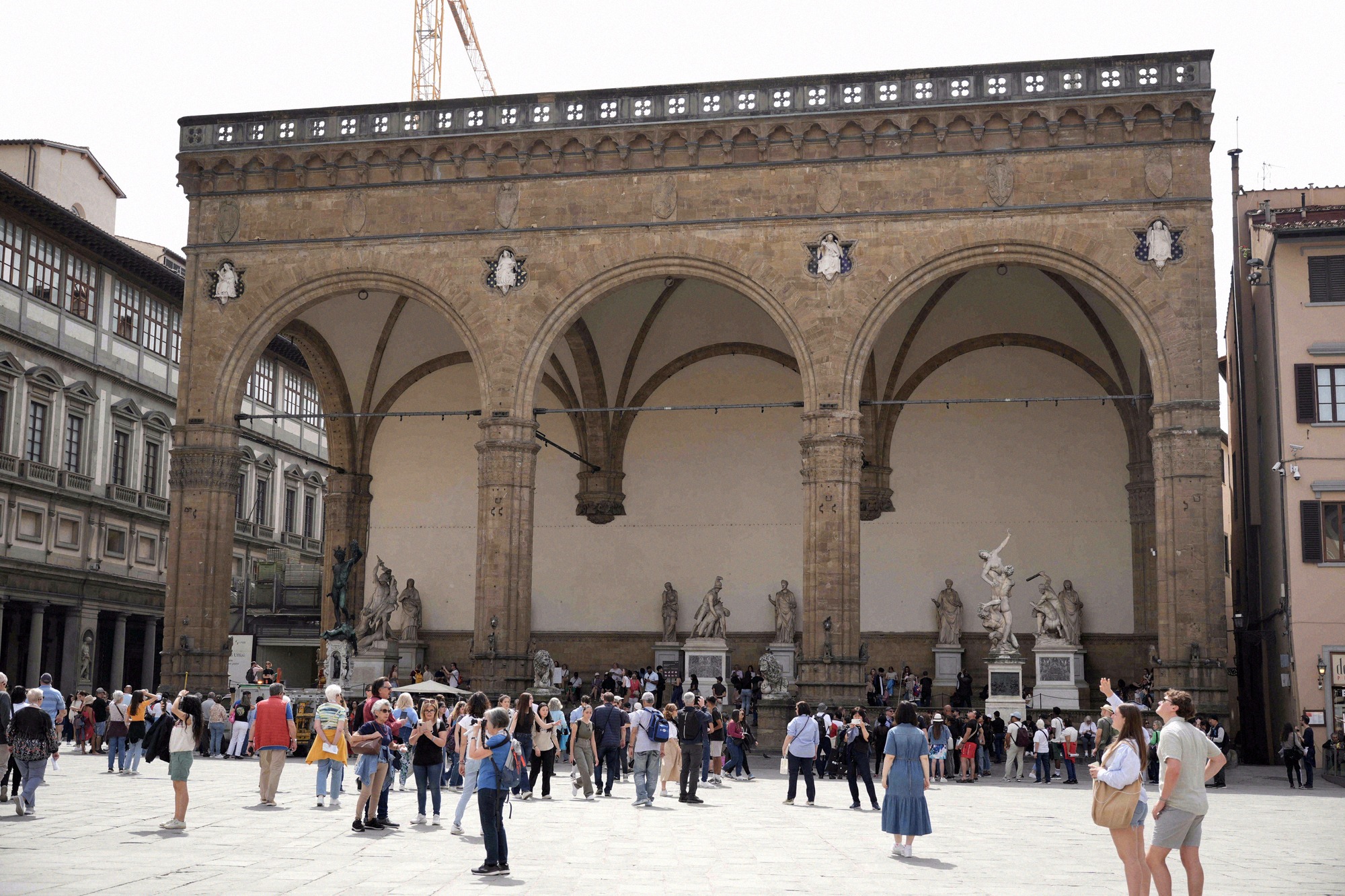
Florence's political square is a free open-air museum in front of the Palazzo Vecchio, with the Neptune Fountain, a copy of David and Renaissance sculpture in the Loggia dei Lanzi.
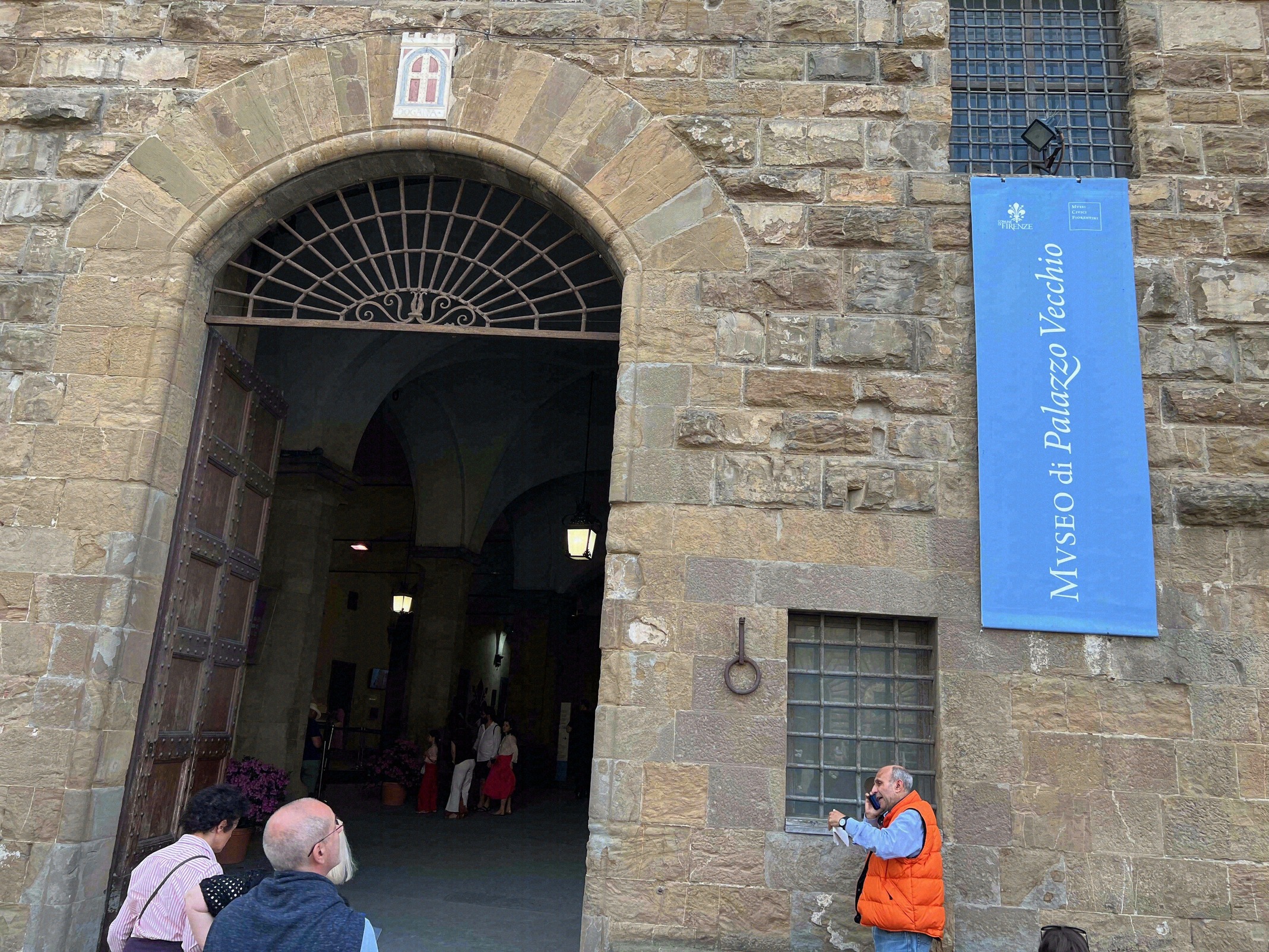
Palazzo Vecchio on Piazza della Signoria has been Florence's town hall since the 14th century, home to the Hall of the Five Hundred and the Torre di Arnolfo.
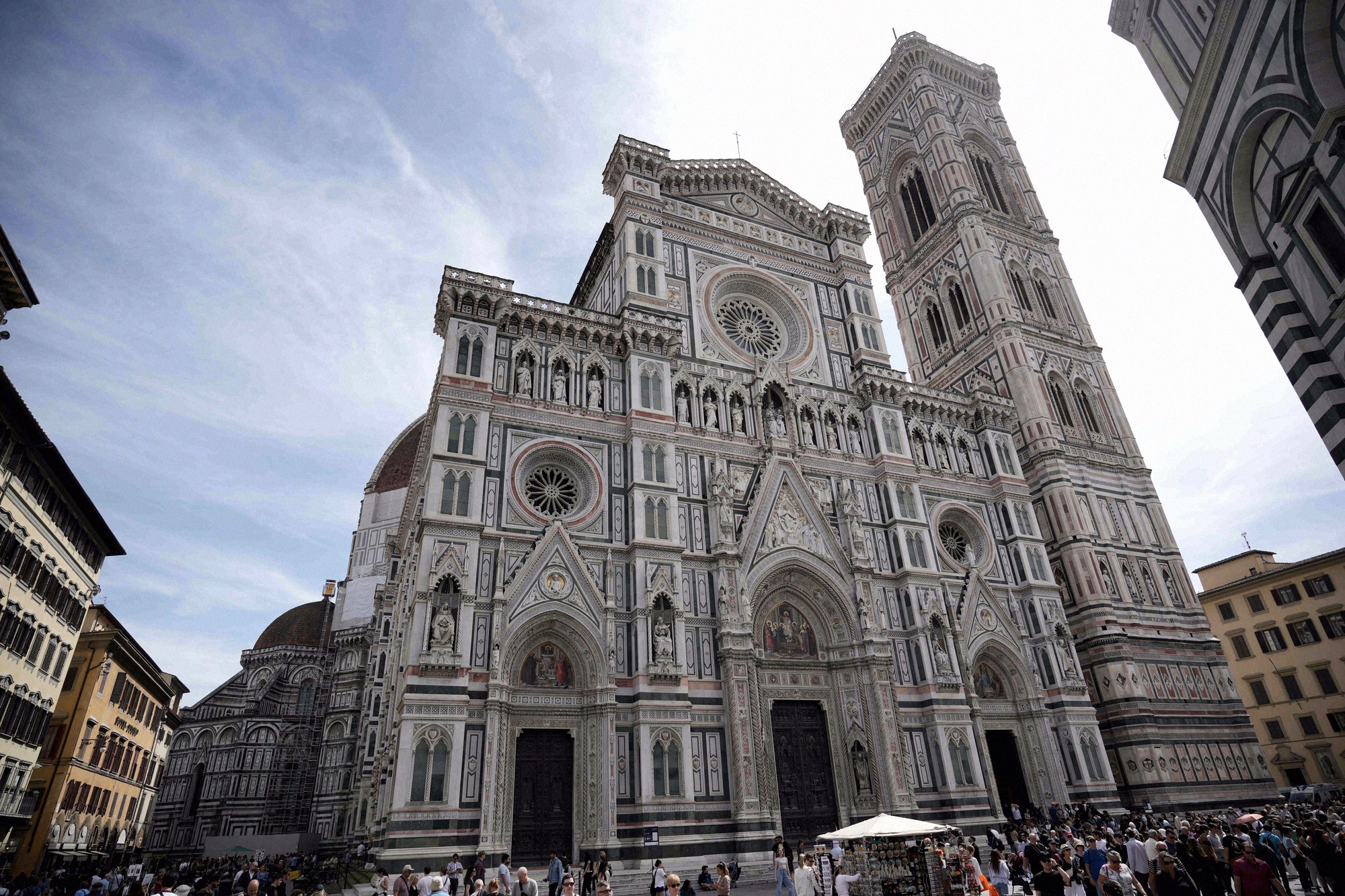
Giotto's marble-clad bell tower beside the Duomo climbs 414 steps to a terrace with the classic view of Brunelleschi's dome directly opposite.
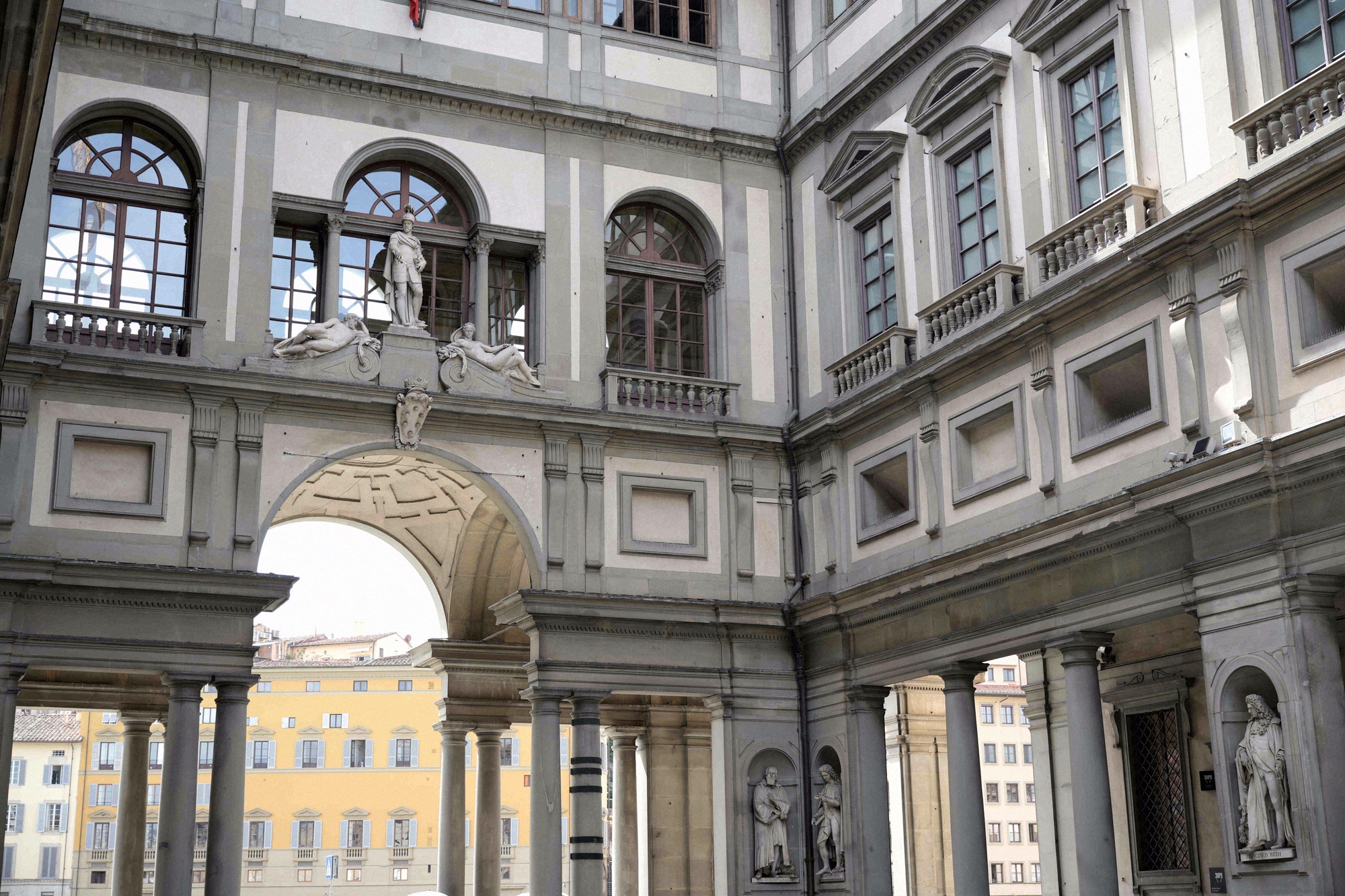
The Uffizi Gallery holds the world's finest Renaissance collection - Botticelli, Leonardo, Raphael, Caravaggio. Book a timed-entry ticket in advance.
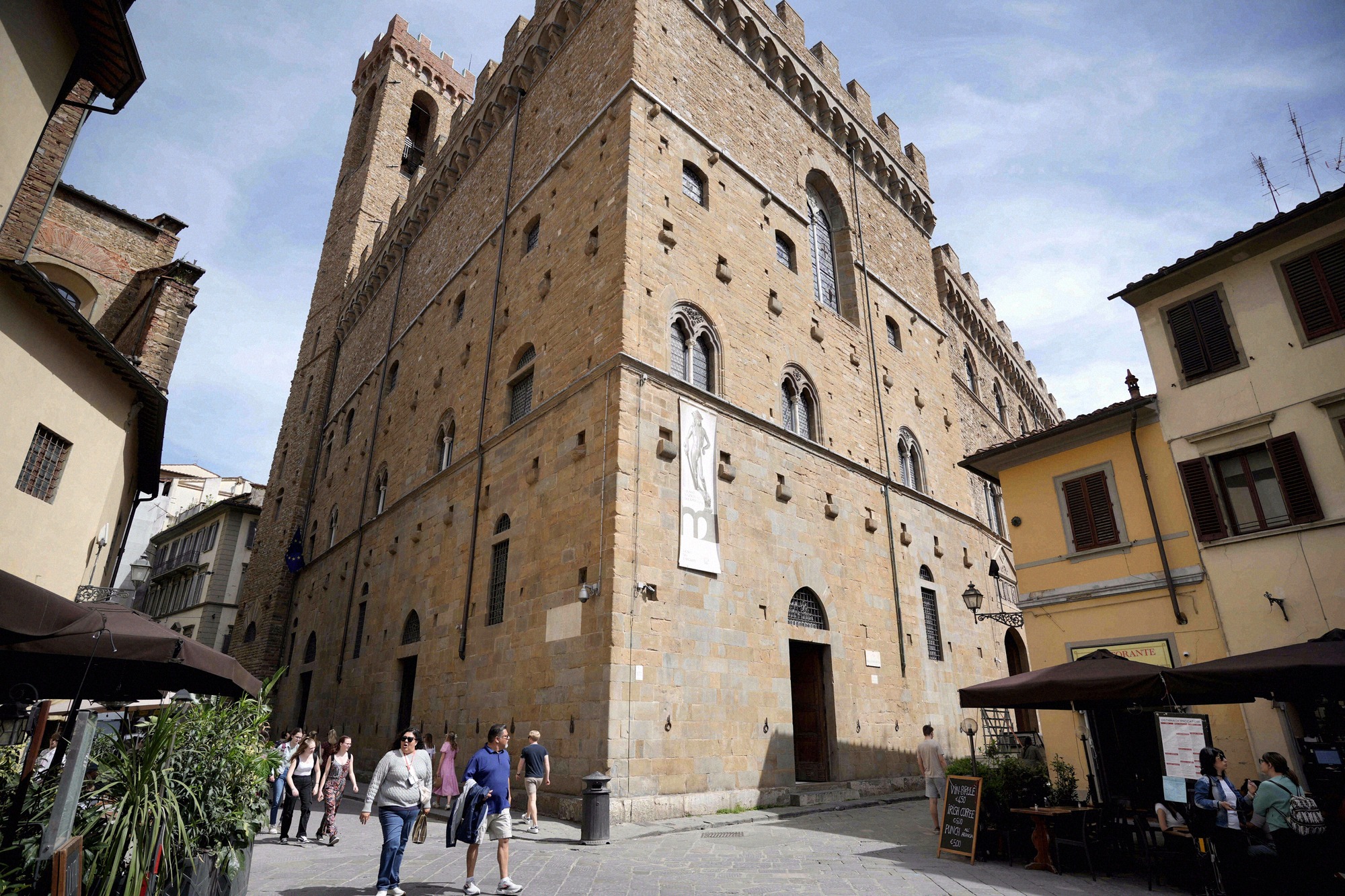
Florence's oldest public building holds the world's finest collection of Renaissance sculpture, including Donatello's bronze David and works by Michelangelo.
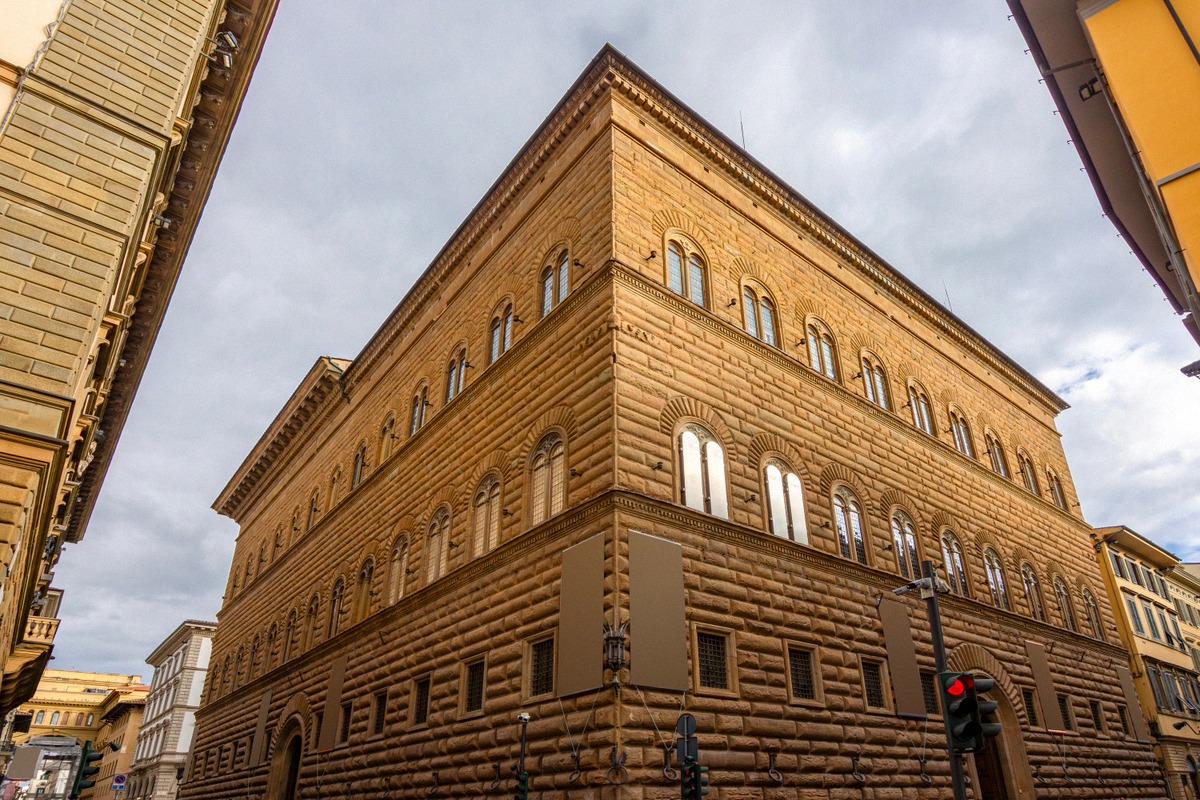
The imposing Renaissance palace on Via de' Tornabuoni is Florence's leading venue for major temporary exhibitions; the arcaded courtyard is free to enter.