
Without the dome
Campanile, Baptistery and Cathedral Museum
Climb Giotto's Campanile and visit the Baptistery, the Museo dell'Opera and Santa Reparata.
4.1 (999) · Tiqets
From €29.90
Book TicketMarble-clad bell tower on the cathedral square, 414 steps
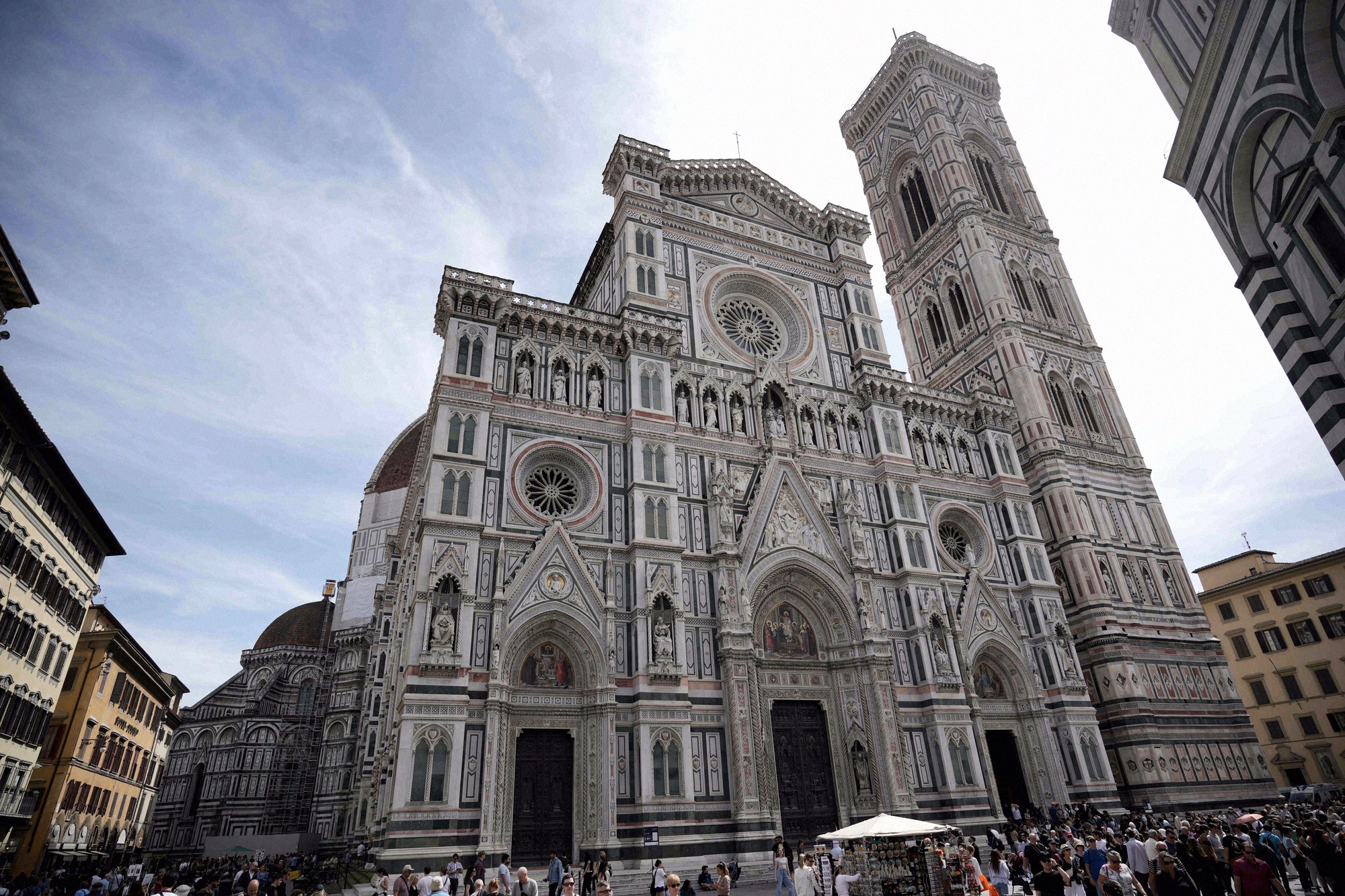
Giotto's marble-clad bell tower beside the Duomo climbs 414 steps to a terrace with the classic view of Brunelleschi's dome directly opposite.
Tickets
Without the dome
Climb Giotto's Campanile and visit the Baptistery, the Museo dell'Opera and Santa Reparata.
4.1 (999) · Tiqets
From €29.90
Book TicketThe Campanile next to the Duomo was designed in 1334 by the painter Giotto and completed after his death by Andrea Pisano and Francesco Talenti. At around 84.7 metres tall on a square base roughly 15 metres to a side, and clad in white, green and pink marble, the bell tower is a masterpiece of Florentine Gothic architecture, and one of the most striking buildings on the cathedral square.
The tower is decorated with around 56 hexagonal reliefs in two registers and 16 life-size statues. The reliefs are the work of Andrea Pisano and his workshop, later completed by Luca della Robbia; the statues include works by Donatello, among them the famous "Zuccone", and Nanni di Bartolo. What you see on the tower today are copies: the originals are kept for protection in the Museo dell'Opera del Duomo.
414 steps lead up without a lift to the top terrace, passing three stacked loggias with ever-widening views over the city. The reward at the top is the classic postcard view, with Brunelleschi's dome framed directly opposite, something the dome climb itself can't offer. The light is best for this shot in the morning. The operator advises against the climb for anyone with heart conditions, vertigo or claustrophobia.
There is no separate Campanile ticket, the climb is only part of a combined pass from the Opera di Santa Maria del Fiore. The Giotto Pass (€20) covers the Campanile, Cathedral Museum, the Baptistery and the Santa Reparata crypt; the Brunelleschi Pass (€30) also adds the cathedral dome. The Giotto Pass requires a fixed time slot at purchase, while the Brunelleschi Pass allows a flexible climb within three days. For which pass suits which tour, and what to watch for when booking, see the guide Booking tickets.
Open daily from 8:15 to 18:45 (last admission). Allow 45 to 60 minutes for the Campanile itself; it combines well with the Duomo and the other sights on the cathedral square for a half-day visit.
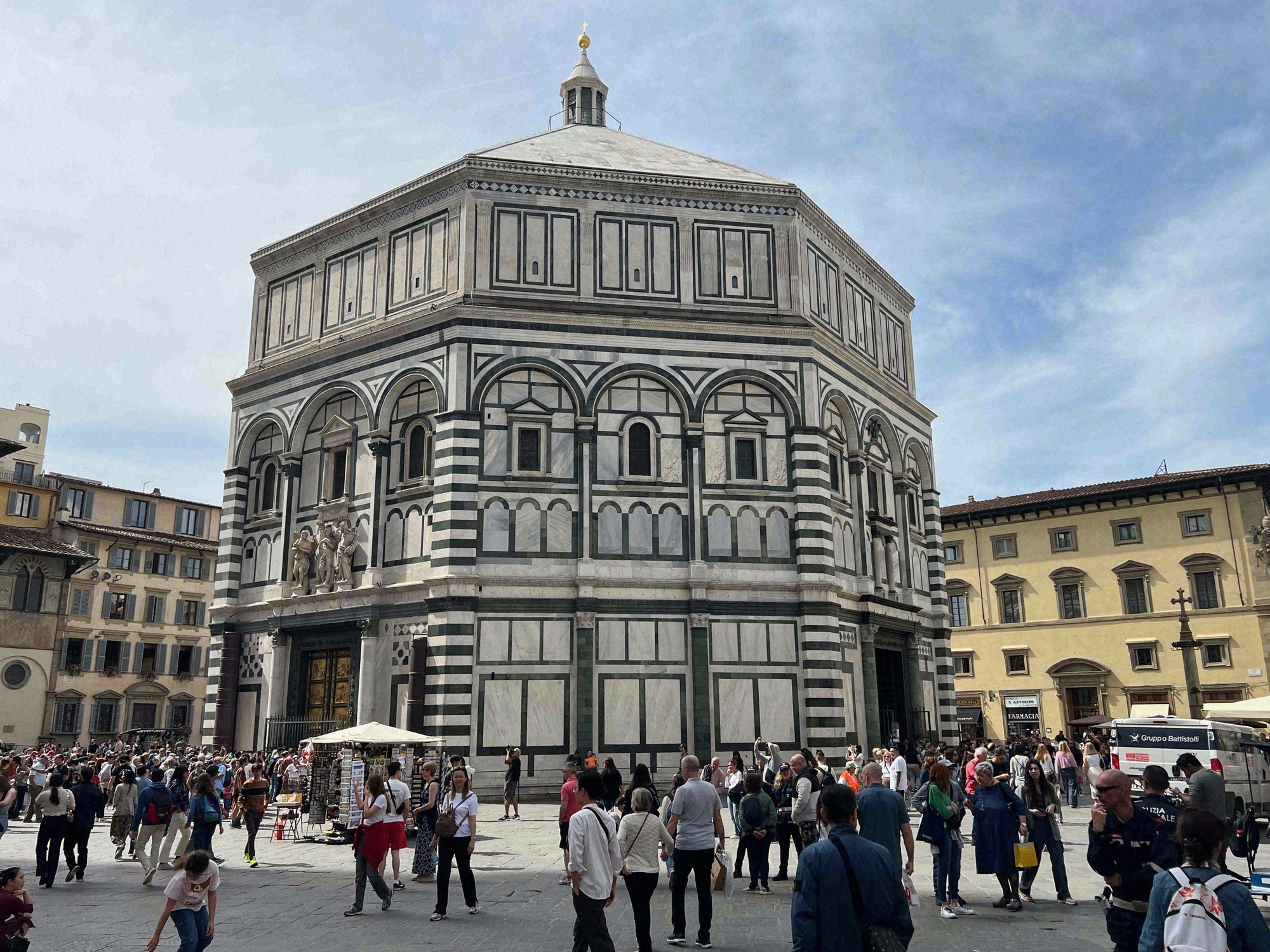
The Battistero di San Giovanni facing the Duomo is one of Florence's oldest buildings, famed for Ghiberti's gilded Gates of Paradise and its golden mosaic ceiling.
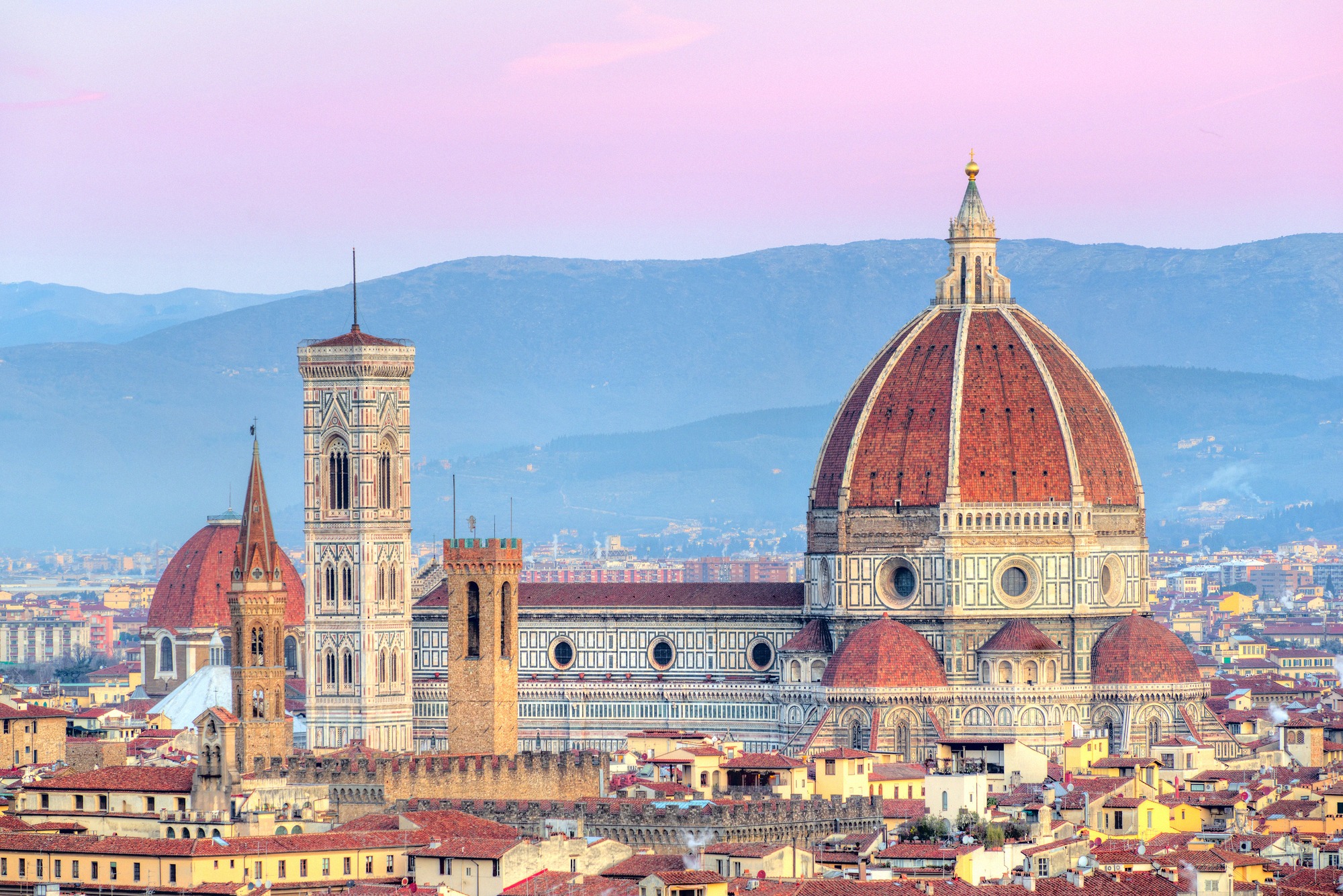
Santa Maria del Fiore, Florence's Gothic cathedral, is topped by Brunelleschi's world-famous dome. Entry is free; climbing the dome needs advance booking.
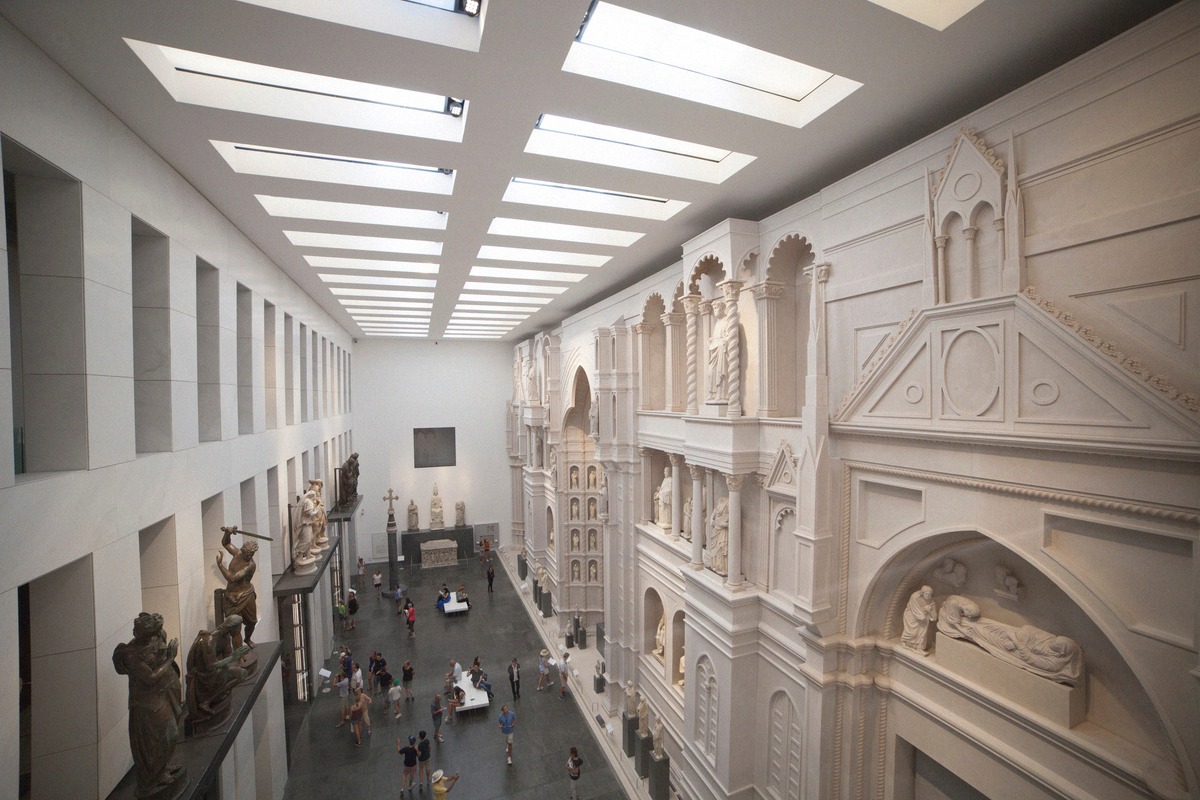
The Opera del Duomo Museum holds the originals from the cathedral square - Ghiberti's Gates of Paradise, Donatello's sculptures and Michelangelo's Bandini Pietà, in a 2015 building with a reconstructed facade.
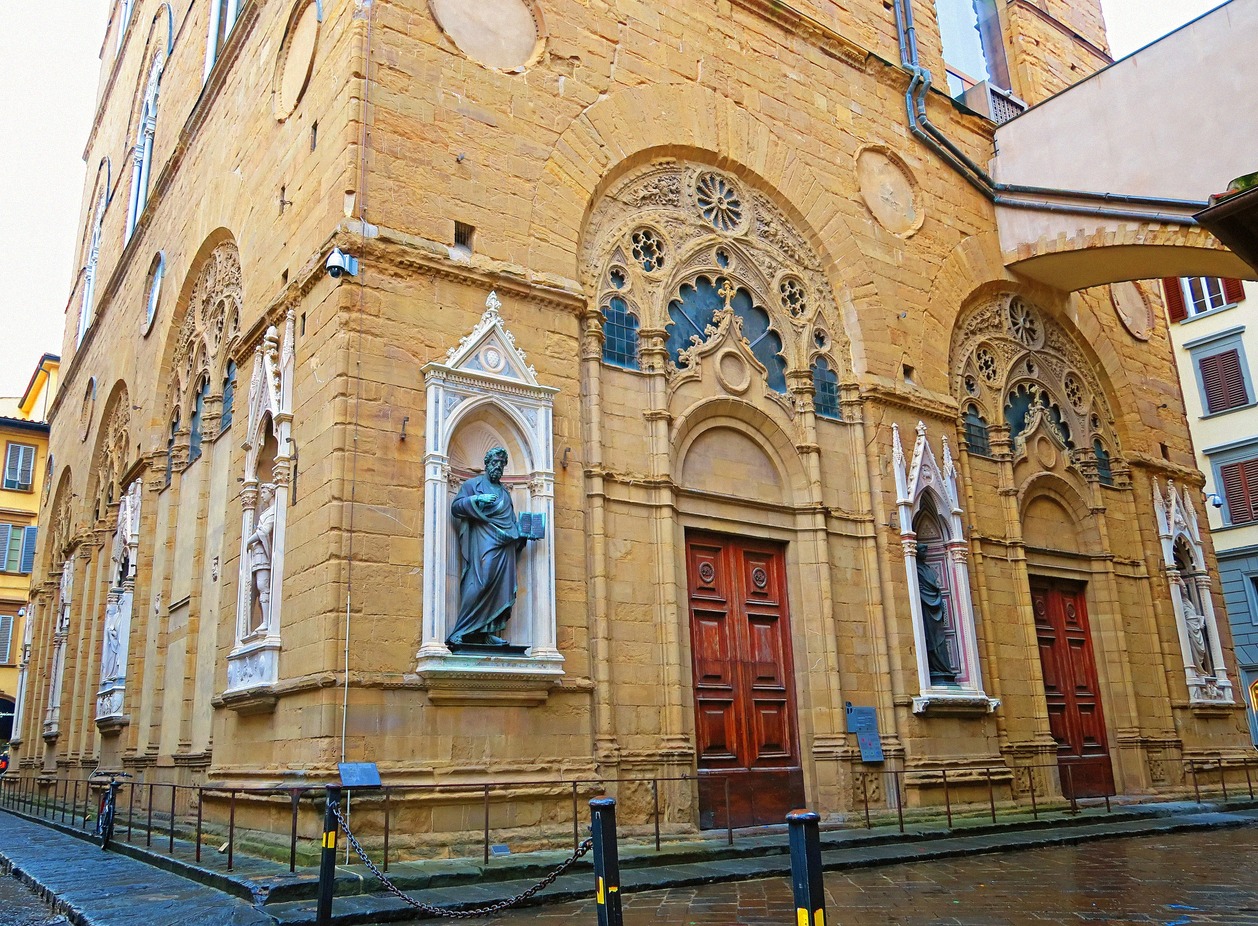
This solid guild church between the Duomo and Piazza della Signoria was once a grain market, famous for the saints' statues in its facade niches and the sculpture museum upstairs.
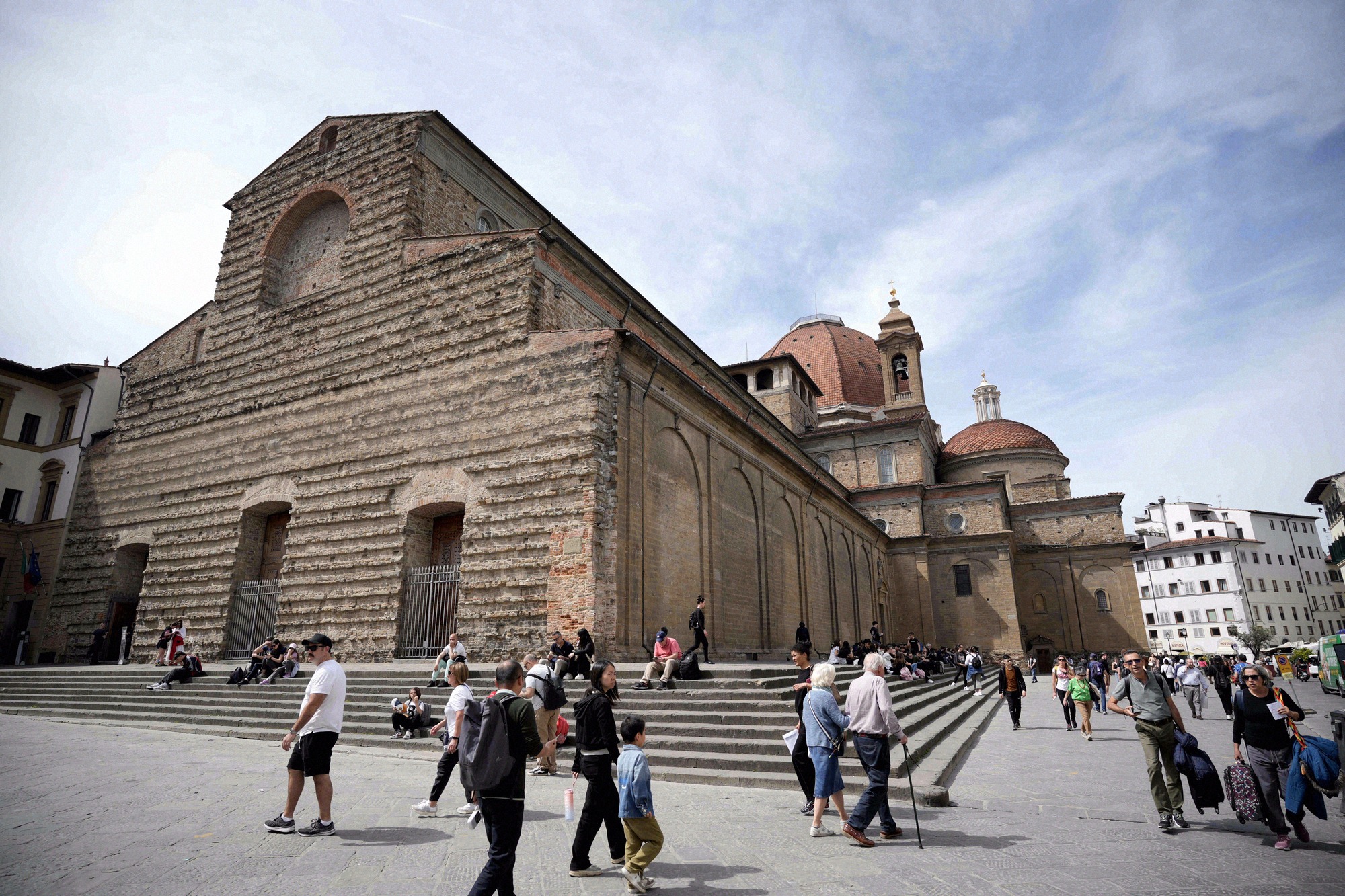
The Basilica di San Lorenzo was the Medici family's parish and burial church, with Brunelleschi's Renaissance architecture, Donatello's bronze pulpits and Michelangelo's Biblioteca Laurenziana.
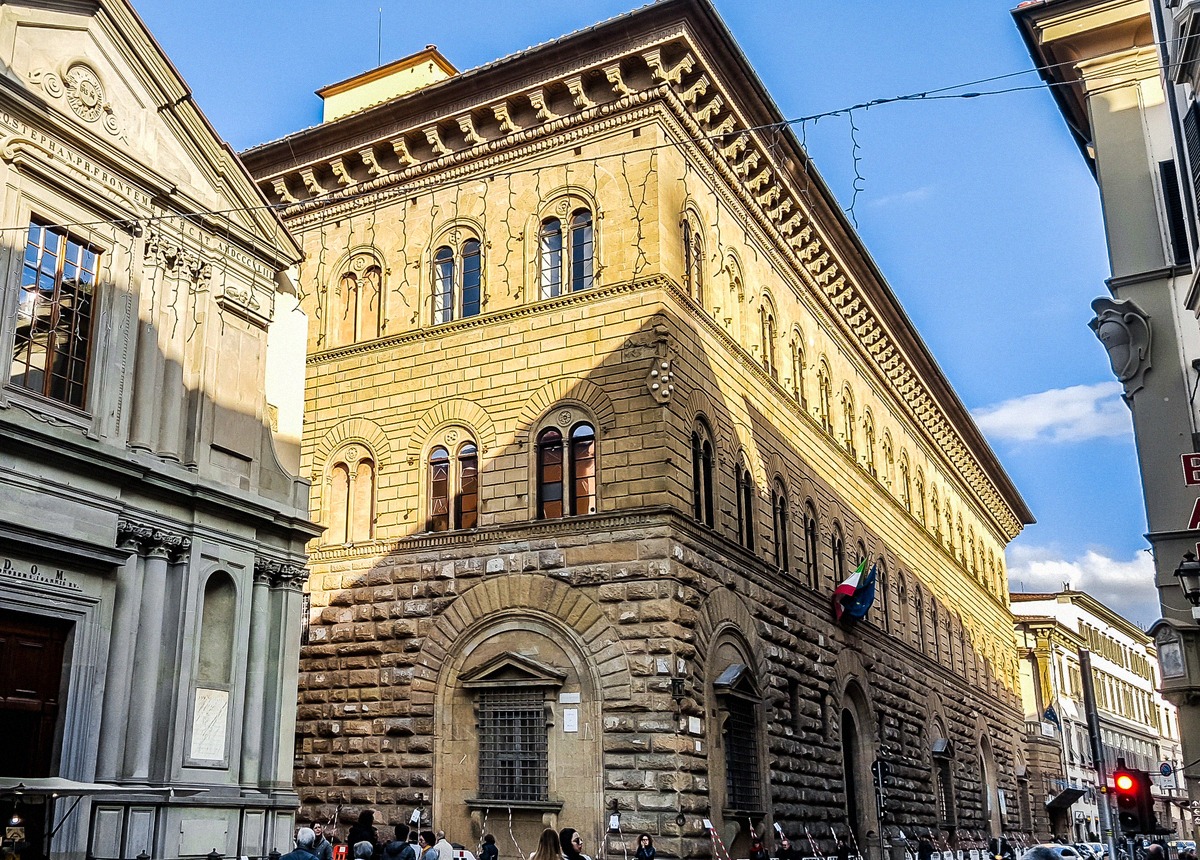
The first great Medici city palace, built from 1444 by Michelozzo. Famous for Benozzo Gozzoli's radiant fresco cycle of the Magi and Luca Giordano's Baroque Hall of Mirrors.