
Basilica di San Lorenzo
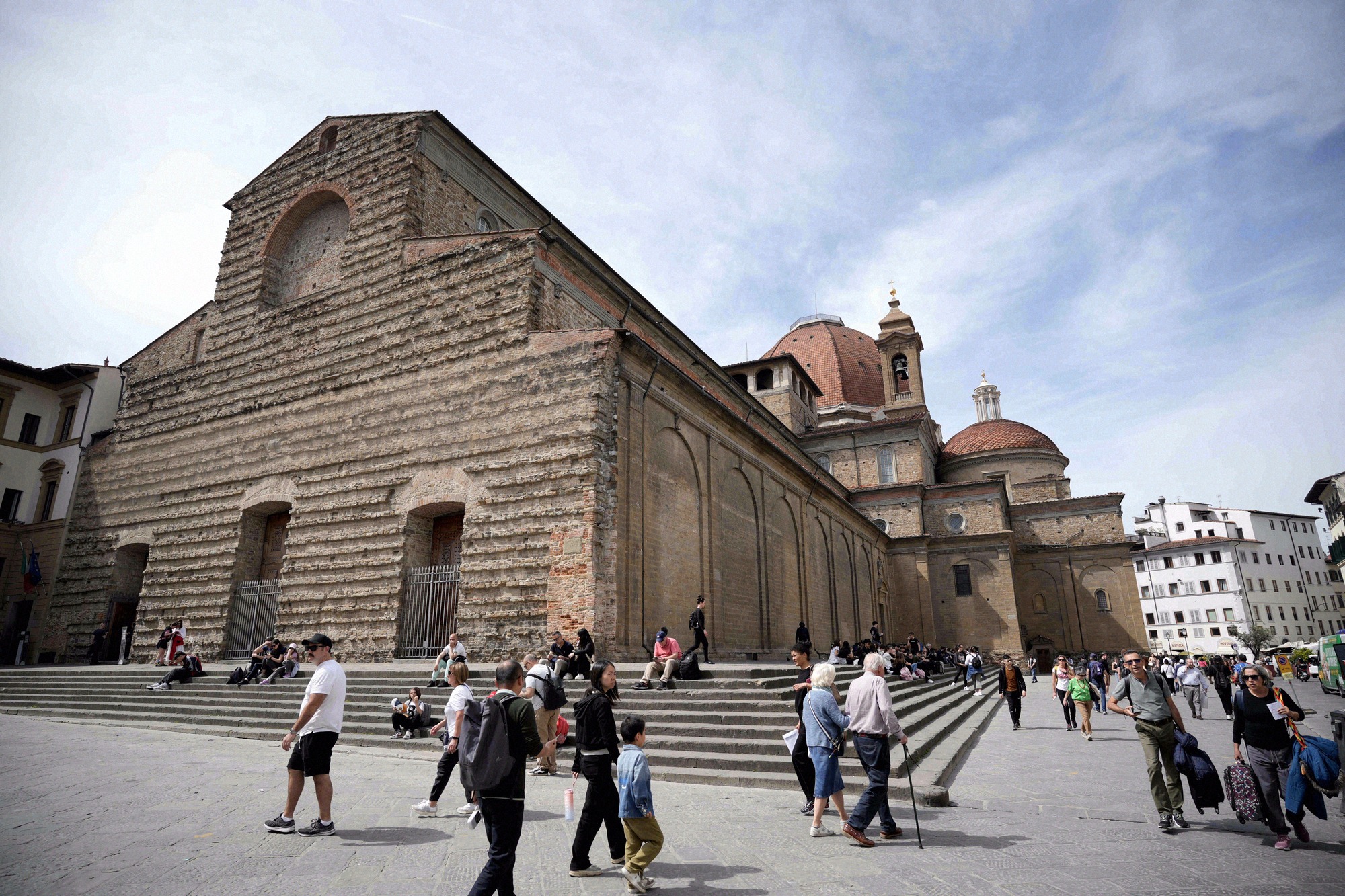
Medici burial church with an unfinished stone facade
The Basilica di San Lorenzo was the Medici family's parish and burial church, with Brunelleschi's Renaissance architecture, Donatello's bronze pulpits and Michelangelo's Biblioteca Laurenziana.
Contents
The Medici family's burial church
For generations, the Basilica di San Lorenzo was the parish and burial church of the Medici family, and one of the first churches that Filippo Brunelleschi reworked in the new style of the Renaissance. Its stone facade, still bare and unfinished to this day, gives no hint of what waits inside: a rigorously proportioned, light-filled interior with grey pietra serena columns set against white plaster, the system of proportion with which Brunelleschi defined the Florentine Renaissance.
The facade was never left unfinished through neglect: in 1518, Michelangelo was commissioned by Pope Leo X to design one in white Carrara marble. Lack of money and the pope's death brought the project to a halt, so San Lorenzo still shows its bare masonry today - a piece of unfinished Renaissance in the middle of the city.
Three sites, three tickets
San Lorenzo is not a single building but a complex of three separately managed sites, each with its own opening hours, tickets and entrance. If you want to see everything, plan ahead:
- The Basilica itself (€9) covers the nave, the Old Sacristy, the cloisters, the Treasury Museum and the crypt. The ticket is bought at the on-site ticket office.
- The Biblioteca Medicea Laurenziana (€7) is reached from the cloister and is a separate visit with its own entrance.
- The Cappelle Medicee (€11) have their entrance round the back, at Piazza Madonna degli Aldobrandini 6, and have been run by the Musei del Bargello since 2026, covered as its own attraction with its own page.
There is no single combined ticket covering all three parts. There is no official online pre-booking for the Basilica itself, skip-the-line offers only come from third-party sellers.
What to see
San Lorenzo's art-historical weight is concentrated in a small number of outstanding works:
- Donatello's two bronze pulpits (around 1460) in the nave, his dramatic late work packed with scenes from the Passion and Resurrection.
- The Sagrestia Vecchia (Old Sacristy) by Brunelleschi, a textbook example of early Renaissance geometry, decorated with eight tondi by Donatello (the Evangelists and scenes from the life of St John the Evangelist).
- The crypt beneath the high altar, the resting place of Cosimo il Vecchio, founder of Medici power, and the sculptor Donatello.
The Medici tombs are spread across the whole complex: Cosimo il Vecchio and Donatello lie in the crypt, while Cosimo's parents and sons rest in the Old Sacristy. The family's most famous tombs, though, are in the Cappelle Medicee, more on those below.
Michelangelo's library
The Biblioteca Medicea Laurenziana is reached via the cloister. Its vestibule is famous for the curved, almost stage-like staircase Michelangelo designed, a key work of Mannerism, in which he deliberately bent the classical rules of the Renaissance. Worth planning around: the monumental area is only open Mon-Fri until 13:30 (last entry 13:00) and closed at weekends. If you want to see the staircase, time your visit accordingly, early and on a weekday.
The Cappelle Medicee
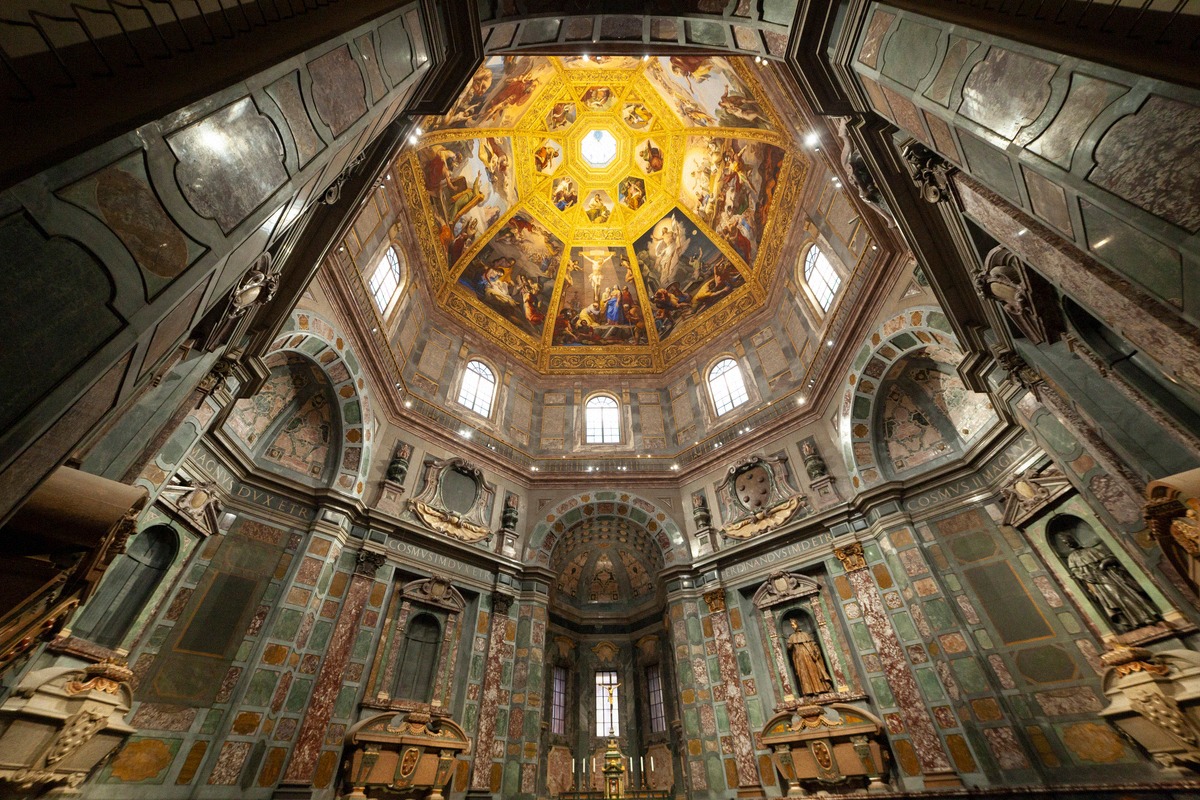
Behind the Basilica, with its own entrance, lie the Cappelle Medicee, the family's princely mausoleum and, for many visitors, the real highlight. Here is Michelangelo's Sagrestia Nuova (1519-1534), with the tombs of Lorenzo, Duke of Urbino, and Giuliano, Duke of Nemours, supported by the famous allegorical figures Day, Night, Dawn and Dusk. Adjoining it is the monumental Cappella dei Principi, faced in marble and semi-precious stone, the burial place of the grand dukes from Cosimo I to Gian Gastone. Since this part is ticketed separately and takes 60 to 90 minutes, we cover it in full on the Cappelle Medicee page.
Visiting and getting there
20 to 30 minutes is enough for the church alone; allow 45 to 75 minutes if you're also seeing the Old Sacristy, cloister and Laurenziana, plus another 60 to 90 minutes separately for the Cappelle Medicee. Morning is the best time to go, not least because the Laurenziana is only open on weekdays until 13:30 anyway. The Basilica is closed to visitors on Sundays, and the Cappelle Medicee are closed on Mondays, so on a badly chosen day only part of the complex will be open.
The main entrance is on Piazza San Lorenzo, in the heart of the San Lorenzo and San Marco neighbourhood, just a short walk from the Mercato Centrale, the food hall makes a good stop for a break. The lively San Lorenzo street market spreads out around the church too, and the Palazzo Medici-Riccardi, the family's city palace, is within sight and easy to combine with a visit. By public transport, the church is served by bus C1 (Cappelle Medicee stop), buses 20, 39, A and B, and tram T1 (Valfonda/Santa Maria Novella stop, about a six-minute walk); the nearest car park is Garage S. Antonio, around 200 metres away. More on this in the public transport guide.
Frequently asked questions
Why is the facade unfinished? +
How much does it cost to visit the Basilica? +
Are the Cappelle Medicee included in the Basilica ticket? +
What is the Biblioteca Laurenziana? +
Nearby
Medici Chapels
The Medici family's mausoleum behind San Lorenzo combines the opulent Chapel of the Princes with Michelangelo's New Sacristy and its famous Times of Day allegories.
Mercato Centrale
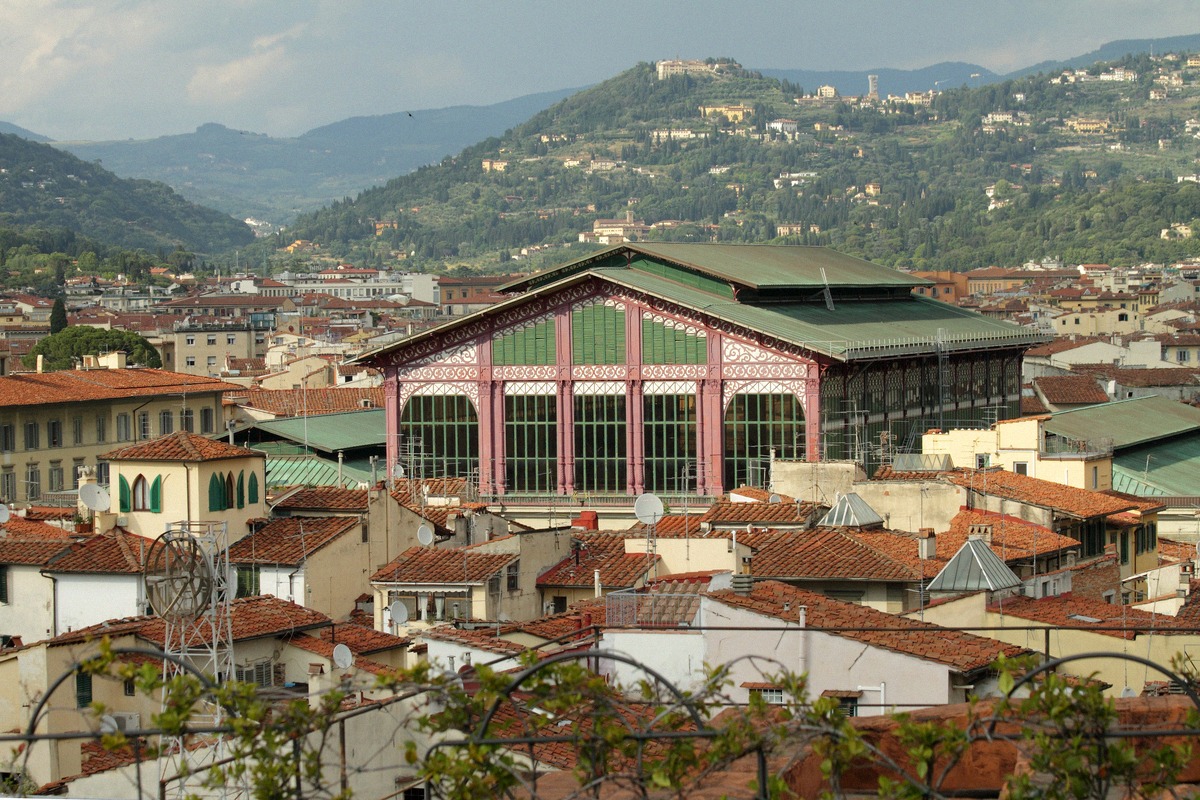
The Mercato Centrale near San Lorenzo, a cast-iron hall from 1874, combines a fresh-produce market downstairs with a food court of over twenty stalls upstairs.
Palazzo Medici Riccardi
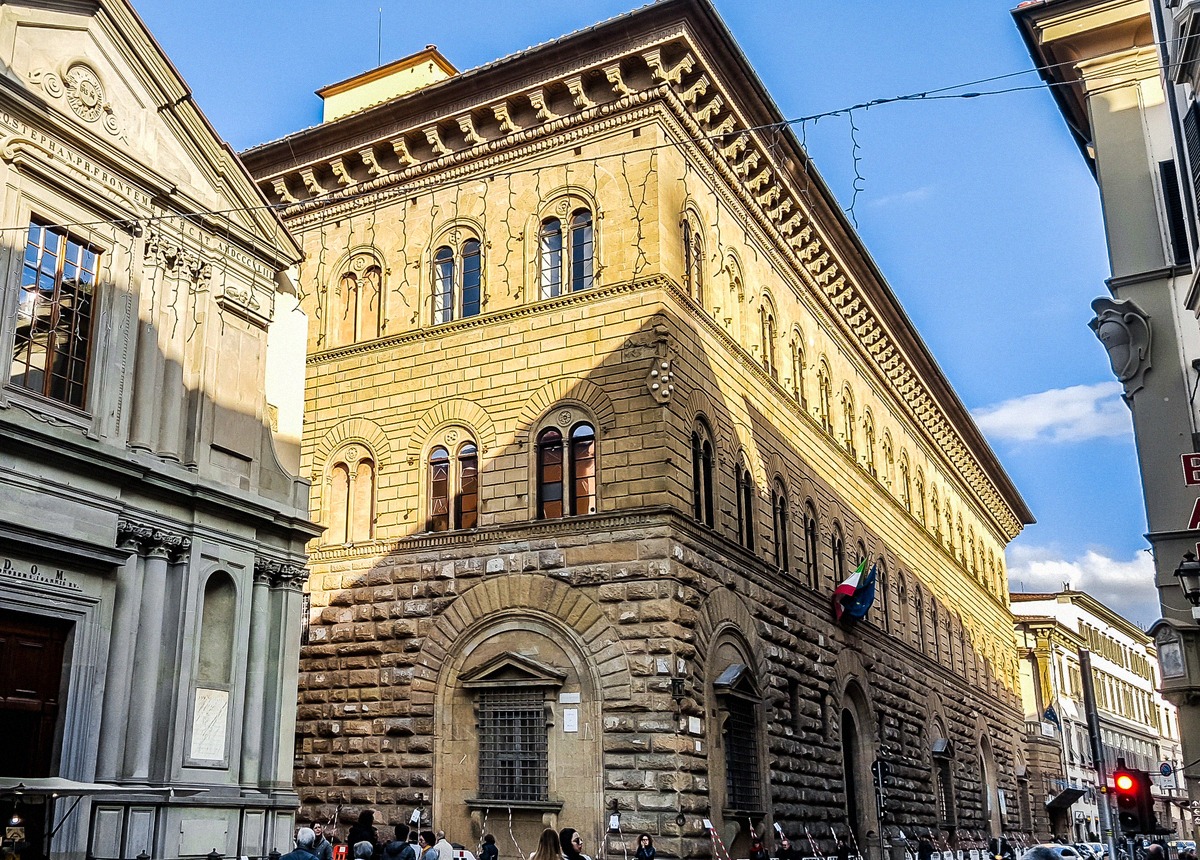
The first great Medici city palace, built from 1444 by Michelozzo. Famous for Benozzo Gozzoli's radiant fresco cycle of the Magi and Luca Giordano's Baroque Hall of Mirrors.
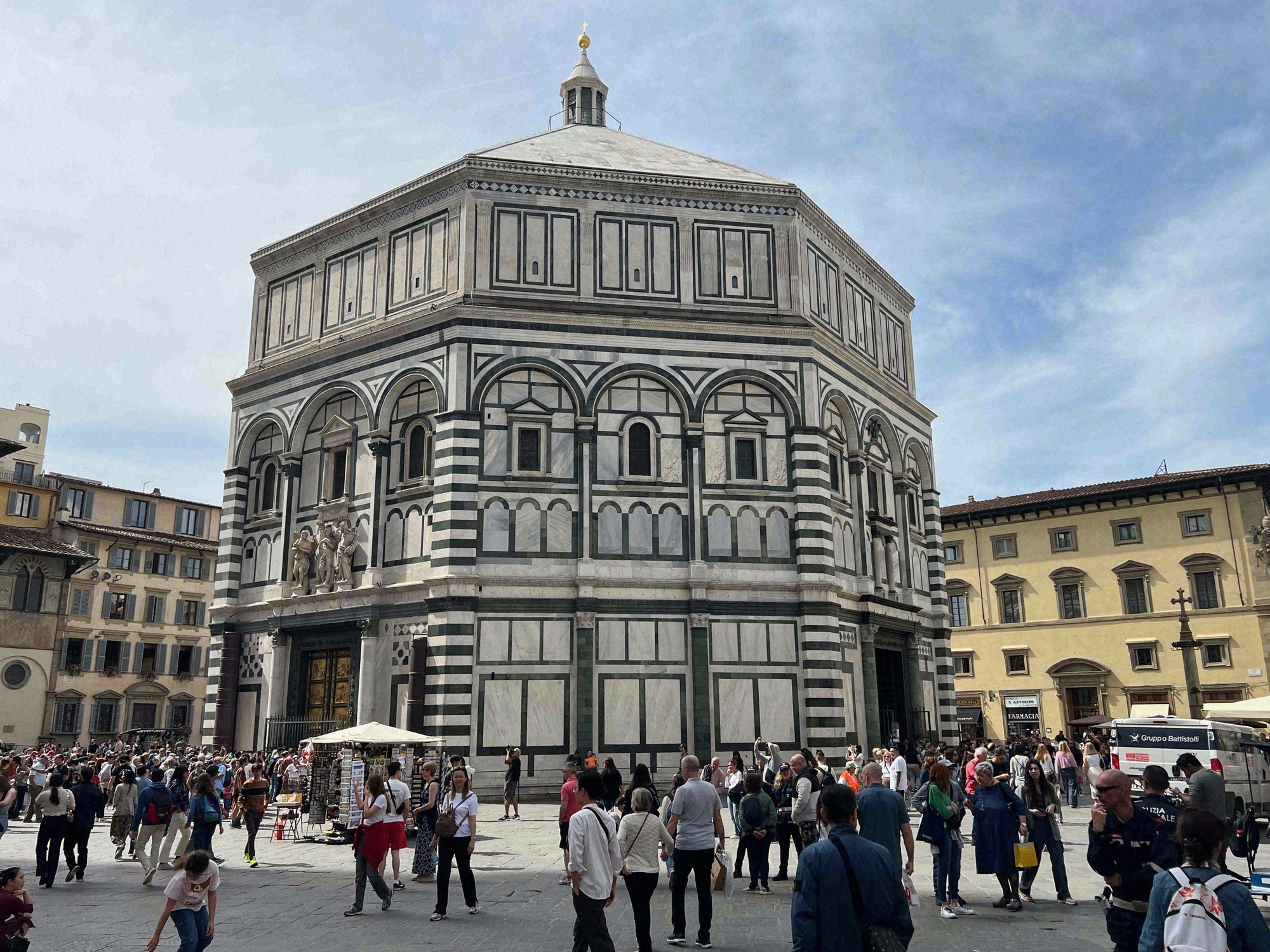
Florence Baptistery
The Battistero di San Giovanni facing the Duomo is one of Florence's oldest buildings, famed for Ghiberti's gilded Gates of Paradise and its golden mosaic ceiling.
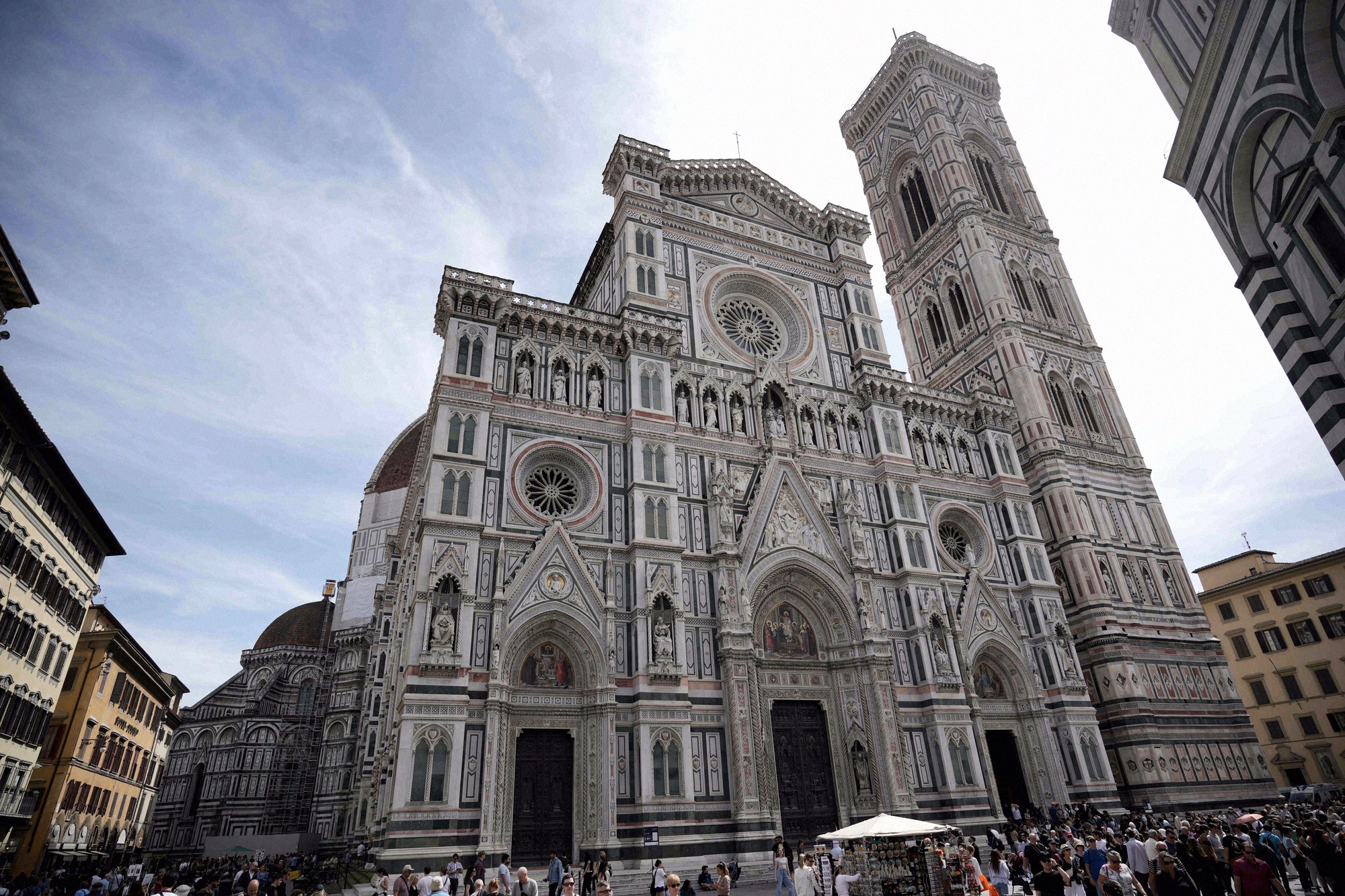
Giotto's Campanile
Giotto's marble-clad bell tower beside the Duomo climbs 414 steps to a terrace with the classic view of Brunelleschi's dome directly opposite.
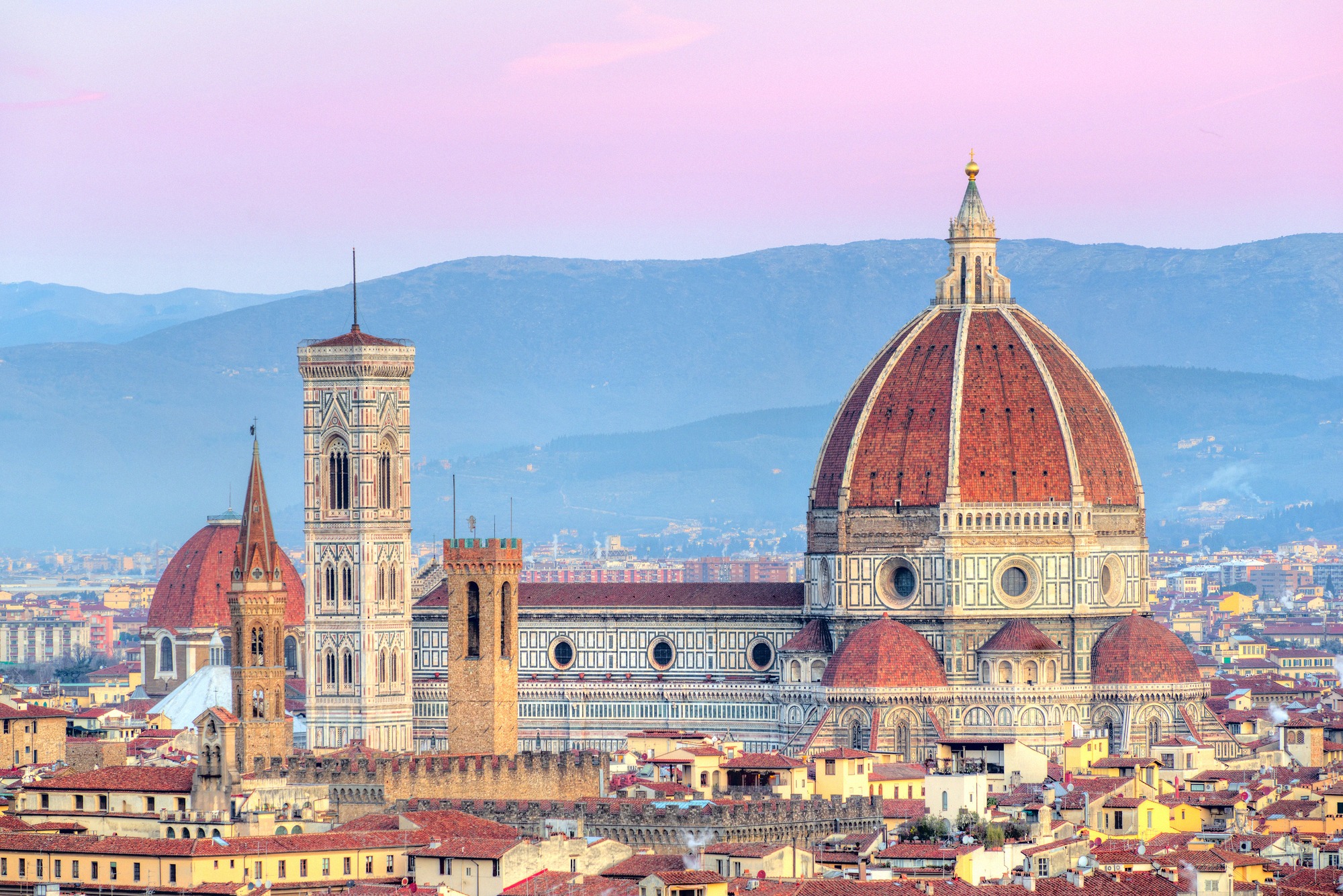
Florence Cathedral
Santa Maria del Fiore, Florence's Gothic cathedral, is topped by Brunelleschi's world-famous dome. Entry is free; climbing the dome needs advance booking.