With audio guide
Santa Maria Novella with audio guide
Entry to the Basilica of Santa Maria Novella with an audio guide.
4.3 (834) · GetYourGuide
From €15.50
Book TicketDominican church with Alberti's marble facade
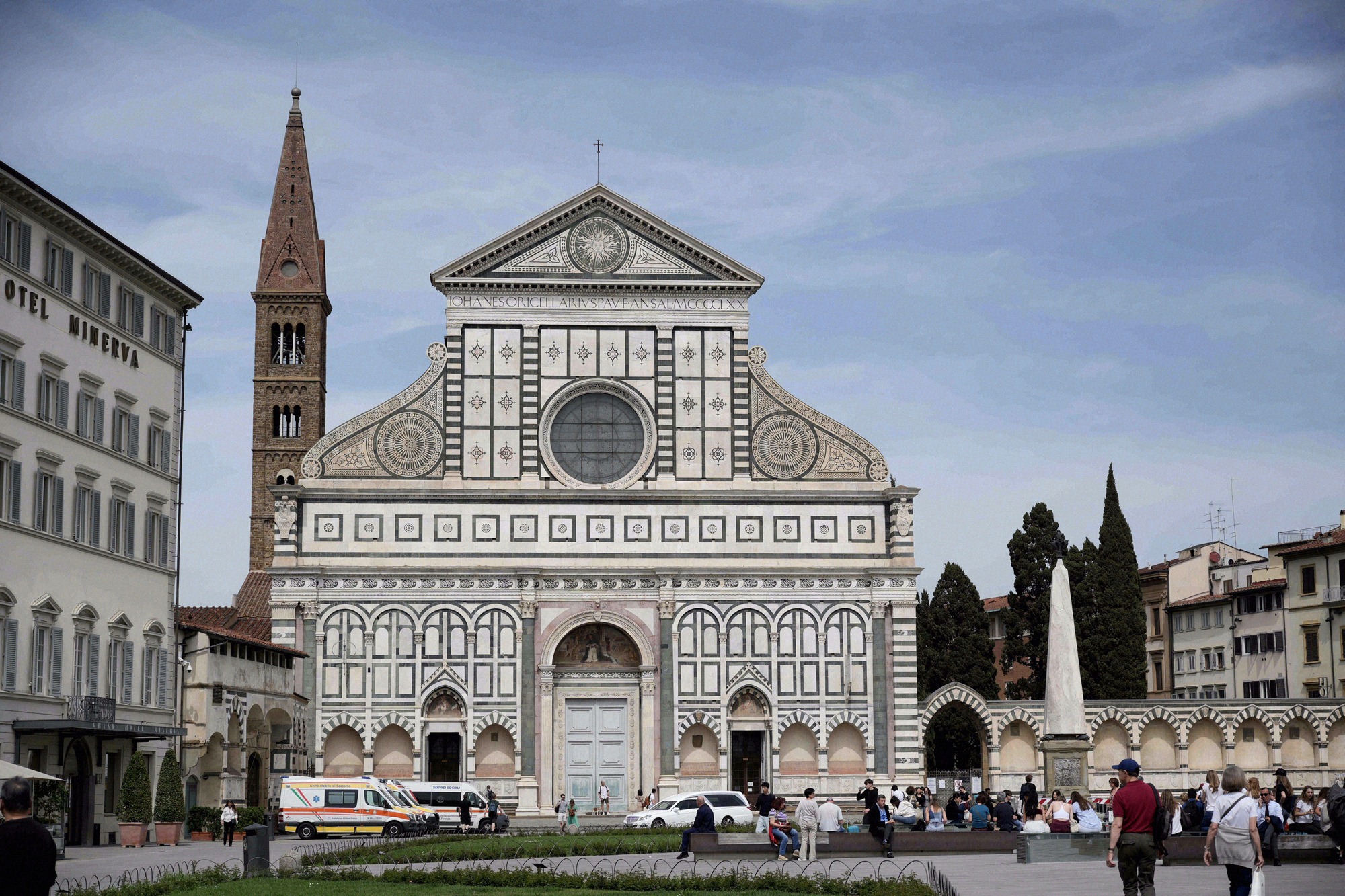
The Basilica di Santa Maria Novella by the main station pairs Alberti's Renaissance marble facade with Masaccio's groundbreaking Trinity fresco and Ghirlandaio's fresco cycle.
Tickets
With audio guide
Entry to the Basilica of Santa Maria Novella with an audio guide.
4.3 (834) · GetYourGuide
From €15.50
Book TicketThe Basilica di Santa Maria Novella is Florence's great Dominican church, standing on a broad piazza right next to the main railway station that shares its name, for many travellers arriving by train, it's the first sight of the city. Its famous upper marble facade in green and white was designed by Leon Battista Alberti, commissioned by the merchant Giovanni di Paolo Rucellai and completed in 1470 (the date MCCCCLXX appears in the frieze). Alberti tied the existing Gothic lower storey into a harmonious whole with clear Renaissance proportions, a widely cited model for later church facades.
Construction of the Gothic church began around 1276 and stretched over some 200 years; it was consecrated in 1420. The Dominicans turned Santa Maria Novella into a centre of preaching and scholarship, part of that tradition survives in the famous monastery pharmacy, where friars have made remedies and perfumes since the Middle Ages. Over the centuries, Florentine families such as the Tornabuoni and Strozzi commissioned frescoes and altarpieces from the leading artists of the day for their chapels, making the church a cross-section of Florentine painting from the late Middle Ages through the High Renaissance.
The art-historical highlight is Masaccio's "Trinity" (c. 1425-1427) in the left aisle, one of the first monumental works with mathematically exact central perspective, marking a turning point in art history. The fresco was plastered over for centuries, rediscovered in 1860 and returned to its original spot in 1952. Other highlights:
A single ticket covers the basilica, frescoed chapels, sacristy and the museum (Green Cloister, Spanish Chapel, refectory); the full price is €7.50. The entrance is on Piazza Santa Maria Novella. Because the church is an active parish, hours shift on Fridays and holidays, on Sundays it doesn't open until early afternoon, and it's closed to visitors on Good Friday and Holy Saturday. For groups: a maximum of 25 people plus guide, and headsets are compulsory from six people upwards.
Since the church sits practically on the station forecourt, it works well as the first or last stop of a Florence visit, unlike the Uffizi or the Accademia Gallery, no timed-entry booking is needed here. If you'd like to dig deeper into Florentine Renaissance art, the guide to Renaissance art puts it in context; the surrounding neighbourhood is covered on the Santa Maria Novella page.
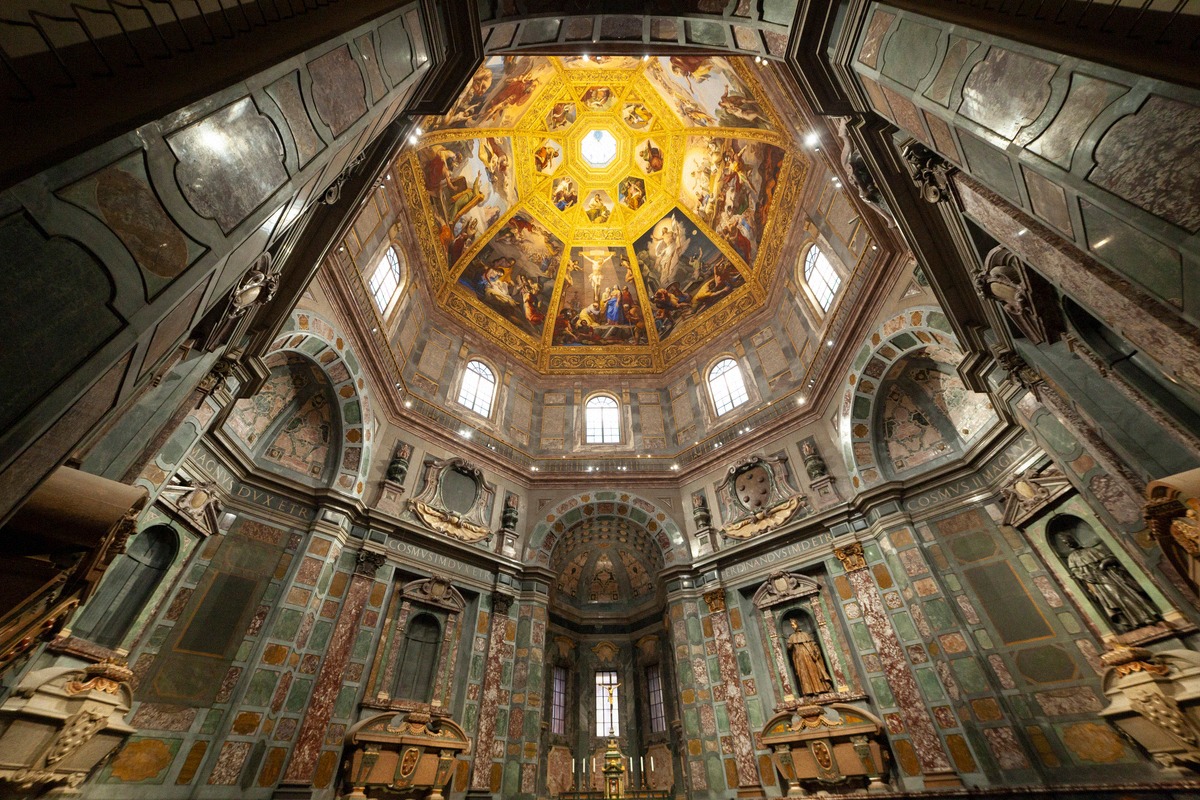
The Medici family's mausoleum behind San Lorenzo combines the opulent Chapel of the Princes with Michelangelo's New Sacristy and its famous Times of Day allegories.
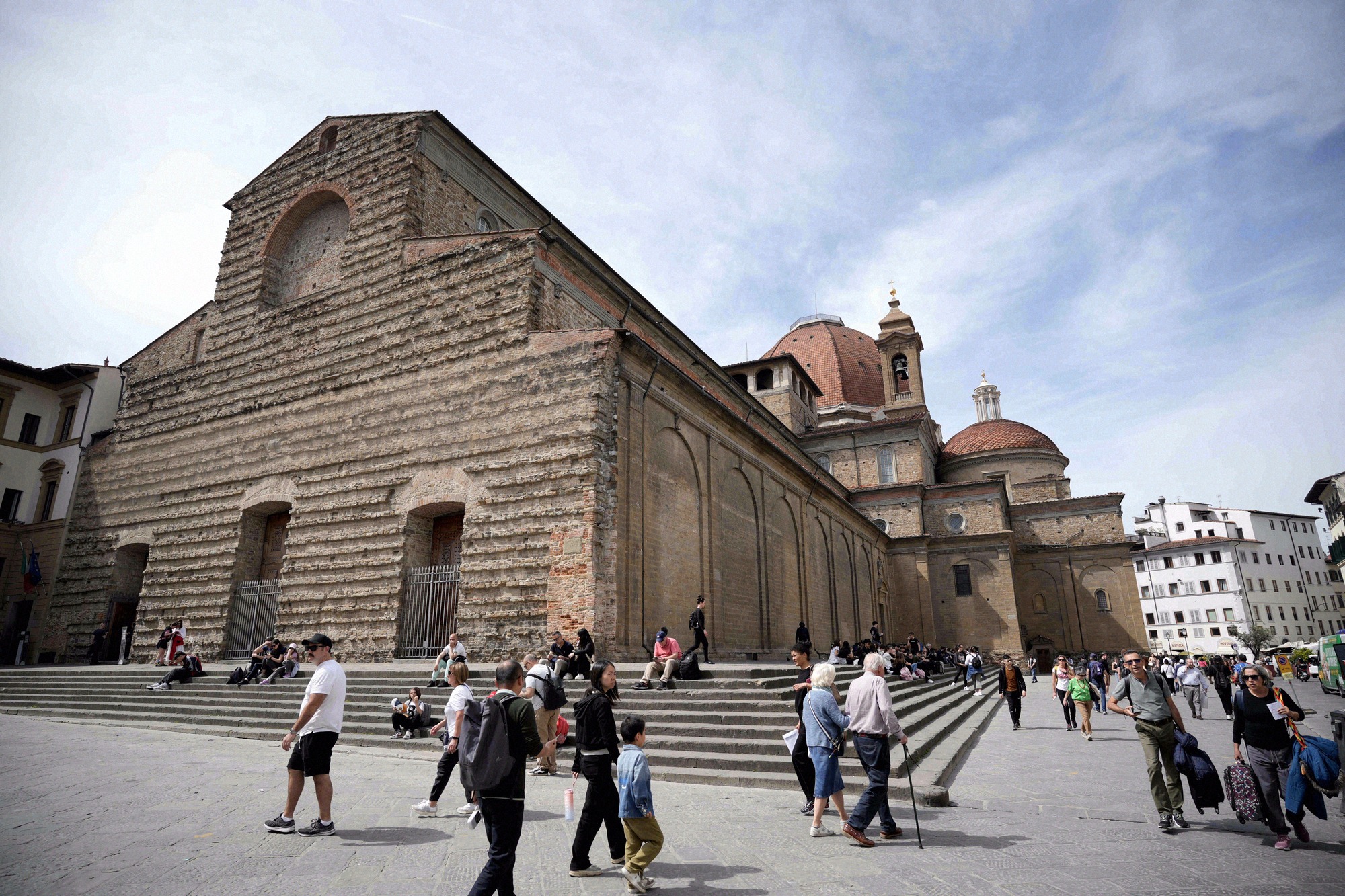
The Basilica di San Lorenzo was the Medici family's parish and burial church, with Brunelleschi's Renaissance architecture, Donatello's bronze pulpits and Michelangelo's Biblioteca Laurenziana.
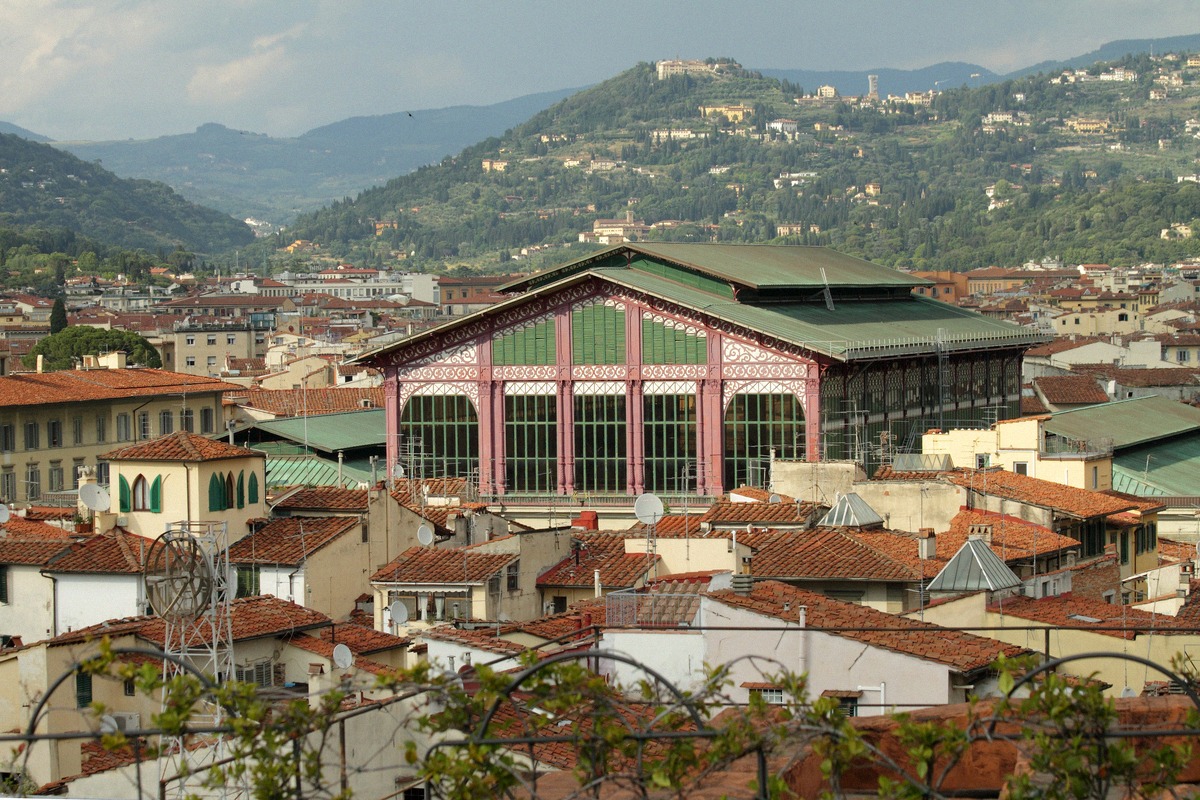
The Mercato Centrale near San Lorenzo, a cast-iron hall from 1874, combines a fresh-produce market downstairs with a food court of over twenty stalls upstairs.
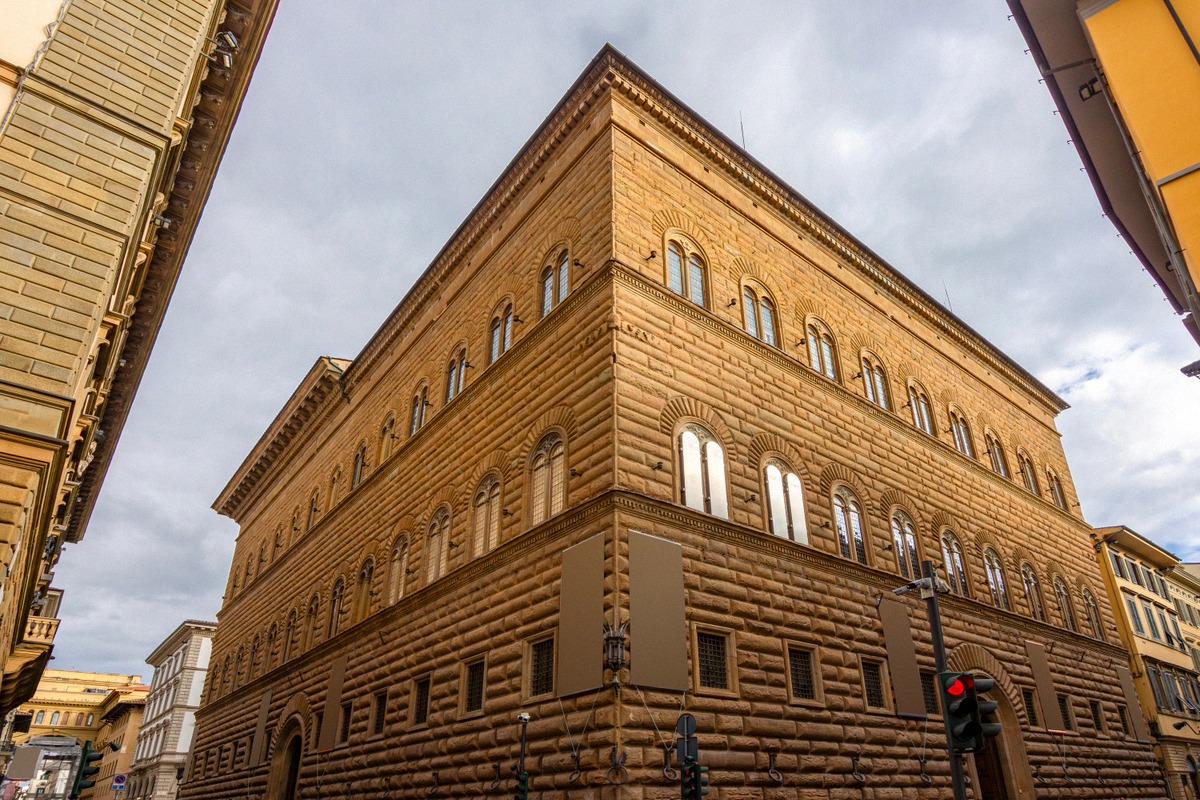
The imposing Renaissance palace on Via de' Tornabuoni is Florence's leading venue for major temporary exhibitions; the arcaded courtyard is free to enter.
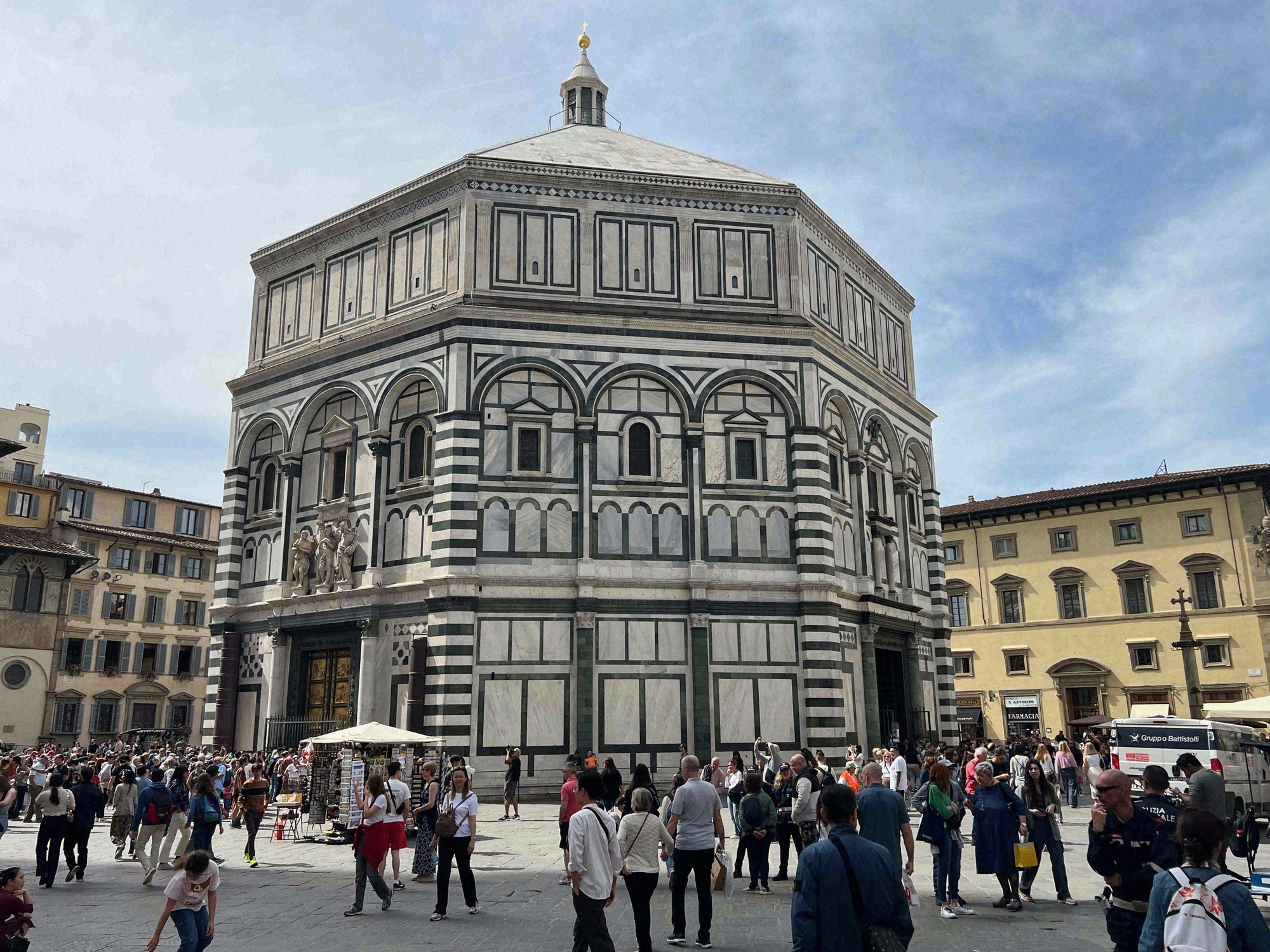
The Battistero di San Giovanni facing the Duomo is one of Florence's oldest buildings, famed for Ghiberti's gilded Gates of Paradise and its golden mosaic ceiling.
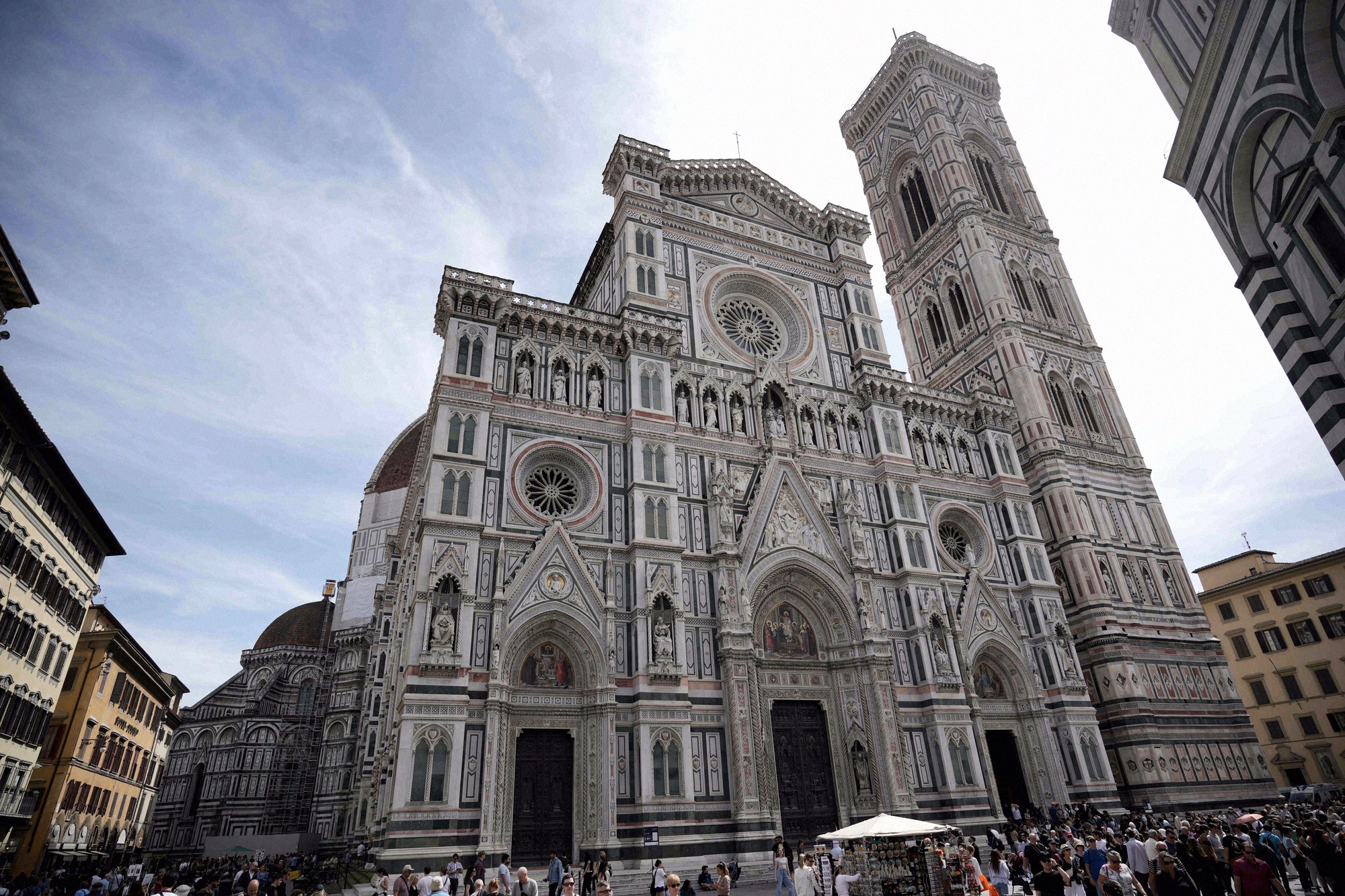
Giotto's marble-clad bell tower beside the Duomo climbs 414 steps to a terrace with the classic view of Brunelleschi's dome directly opposite.